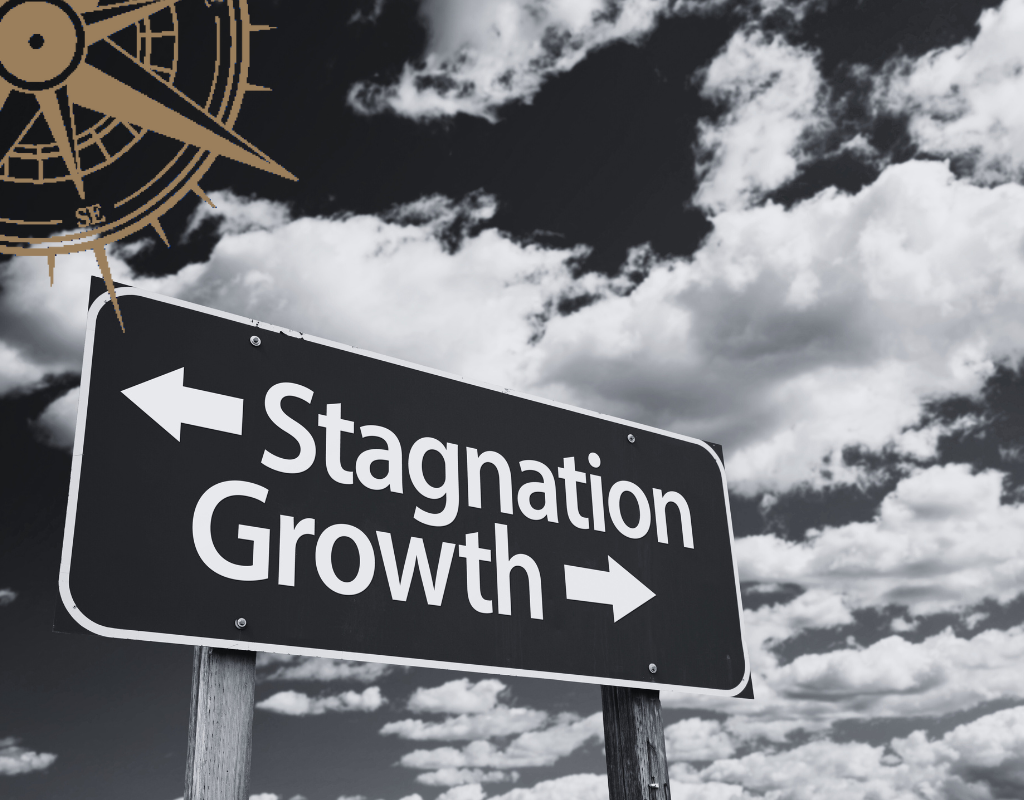
Dare You Not To Do This

It’s hard to believe that four years have passed since I led the team at the Breakthrough Experience.

let’s level up:

Grow Yourself To Grow Your Business

Smash through growth ceilings,
again and again to new heights
in business, leadership and life.

Looking back, I’m amazed at the journey we’ve all been on—investing in our own growth, building businesses, and navigating the complexities of life.


For me, this journey also involved raising a little one as a single mum, which added a whole new dimension to the adventure.


One thing I’ve realised is that true growth often comes from moments of challenge and deep reflection.


We never really see how far we’ve come until we pause and look back at the winding path we’ve travelled.


It’s like hiking up a mountain—sometimes the climb is tough, but when you reach a viewpoint and see how far you’ve come, it’s a new perspective.


I’ve been thinking a lot about authenticity and the importance of being true to ourselves.


We are here to “Become who you are” (Thanks Nietzsche).


Especially in business and as a coach.


When we build our business around our identity, when we bring our unique story to the marketplace, we create something that no one else can replicate.

There’s no competition when you’re true to yourself because no one else has your story, your perspective, or your voice.


In our journey, it’s easy to get caught up in what others are doing. Social media, industry trends, and external pressures can make us feel like we need to conform or compete.

But here’s the truth: the most impactful ideas and the most profound contributions come from within. When we focus on being our authentic selves, we create something truly original and transformative.

I have been geeking out on Søren Kierkegaard’s work lately, and something I came across has stuck in my mind.


“To dare is to lose one’s footing momentarily. Not to dare is to lose oneself.”


I read it and welled up with tears.


“To dare is to lose one’s footing momentarily. Not to dare is to lose oneself.”


It takes courage to stay true to our path, even when it’s difficult. Even when it feels like the whole world is against you.


It’s in those daring moments that we find our true strength and our most authentic selves.


Your greatest contribution to the world is to be yourself.


In a world that often emphasises competition and financial success, it’s easy to get caught up in chasing a quick buck.


But here’s the thing—when you pursue something that isn’t aligned with your true purpose, it rarely brings lasting fulfilment.


Instead, it can lead to burnout, dissatisfaction, and a sense of emptiness.


Focusing on service is where the real magic happens.


When you dedicate yourself to serving others, you tap into a deeper sense of purpose. You begin to realise that your unique experiences, perspectives, and ideas are exactly what the world needs.


By helping others, you not only contribute to their growth and transformation, but you also find meaning in your own life.


Trust that you can be paid for doing what is purposeful to you. This might seem counterintuitive in a society that often values quick financial gains, but it’s a profound truth.

Build a business that you love, not that you want to burn to the ground.


People are naturally drawn to authenticity and inspiration. They can sense when someone is truly dedicated to their craft and committed to making a difference.


Think about the people who inspire you the most. Chances are, they are individuals who have stayed true to themselves, even in the face of adversity.


They didn’t follow the crowd or compromise their values for short-term gains.


Instead, they focused on their mission and trusted that their dedication would pay off in the long run.


Financial rewards become a byproduct of the value you create rather than the primary goal.


So, don’t get distracted by what others are doing or how much money they’re making.


Stay focused on your journey and your mission…


Be patient.


Be persistent.


Be purposeful.


The world needs your unique contributions, and there is no one else who can do what you do.


With gratitude and love,


Tanya x

Leadership Coach & Master Certified Demartini Method Facilitator

BAppSoSc (Counselling)

Maximum Growth

The Hidden Trap

Human behaviour is fascinating.

Let’s take the psychological phenomena that influence it.

Each phenomenon offers you a little peek through a window into how people perceive, react to, and interact with the world around them.

Whether it’s understanding why we sometimes stick to decisions that aren’t beneficial (like in the sunk cost fallacy) or why we might feel oddly out of place despite our achievements (as with imposter syndrome), these phenomena help us make sense of complex human behaviours.

When we understand the complexities of human behaviour, we can then better understand how to solve problems at a deeper level.

There is one phenomenon that I find people get trapped in and how it impacts you.

Have you ever found yourself deeply invested in something—like a career, course, or financial investment—where you’ve put in significant time, money, and effort, but no longer feel it’s the perfect path for you?

Yet, instead of considering the potential benefits of changing direction, you find yourself focusing on the resources you’ve already spent.

In this moment you are prioritising past investments over future opportunities.

It’s known as the sunk cost fallacy.

It’s a cognitive bias impacting your life.

It leads you to stick with courses, career paths, or relationships that no longer bring value simply because abandoning them feels like admitting failure and wasting resources. You find it difficult to cut your losses and move on.

A client comes to mind when I think of the sunk cost fallacy.

They had invested money, time, and energy in choosing a niche in their coaching business. They had the website, the communication, the content.

But they weren’t getting clients.

When we refined their lane, who they were actually here to serve, and their message to share with the world, they thought ‘how can I change now, because I have invested so much into this other path.’

This is the sunk cost fallacy.

The trap becomes being stuck on a path that you don’t love because the money invested is more important than having a heart in what you do.

Another client who had invested so much money in a property, that if they sold it, they wouldn’t get a return on their investment, but to keep it, it would cost them more money, and a loss of not living life as all additional resources are being poured into the investment.

For anything you change, you have to acknowledge this cognitive bias.

You have to see the lens you are seeing the world, and then you can change it.

Instead of viewing your past investments as wasted, you have to understand how there are valuable learning experiences in everything you do.

Take the lessons with you, and it isn’t wasted.

Use the experience as building blocks rather than barriers, so you can live a life that you feel open to opportunities in the future, rather than being bound by the past.

So if you have a voice inside saying, ‘change your niche, stop the course you are doing and start a new course, or cut your losses and move on,’

Then, perhaps see the potential inside you and focus on what is wisest for the future rather than what has been lost in the past.

Be flexible to change and realign when you feel the inner calling.

Tanya x

Leadership Coach & Master Certified Demartini Method Facilitator

BAppSoSc (Counselling)

Maximum Growth

It’s not for you

You have a love to serve.

But…

Business is not your jam.

let’s level up:

Grow Yourself To Grow Your Business

Smash through growth ceilings,
again and again to new heights
in business, leadership and life.

Marketing, finance, or operations—it can feel like stepping into an entirely different and uncomfortable world unless you come into coaching with a background in sales, marketing, or something that directly supports your business.

Either way, business is outside of your comfort zone.

Embracing the business side can be daunting because it requires a different skill set.

Business demands you sometimes shift from a people-centric to a process-centric approach, dealing with admin, emails, automation, and operational tasks.

You have to have a priority shift.

Instead of deep diving into human behaviour, people, the mind, and methodology, you’re not in the trenches of learning about client avatars, sales funnels, google ads…

Plus, with budget constraints and being a one-person show, it’s not always commercially viable or profitable to invest in a team.

At some point in your coaching career, you must transition from being just a coach to owning a coaching business. This often forces you to stop thinking as an individual and start thinking as a business owner.

Imagine owning a product business without understanding the finances, having no processes in place for orders, or knowing what to communicate to customers about refunds or promotions. If you were in that situation, you’d feel overwhelmed and stressed, likely reluctant to grow or scale up your business.

Your coaching business is the same.

Embracing the business side of your coaching practice, while daunting, is essential and a profound opportunity for growth.

For me, it’s like my own personal development boot camp, where I learn to tackle complex challenges, create order, and grow.

As a coach, you already value learning and personal growth.

Applying this mindset to your business means integrating what you know, making your business a true reflection of you.

When you embrace the reality that you are not just a coach but a business owner, you’ll see that your business is an extension of your service.

Investing in yourself and your business enables you to harness its full potential, allowing you to make a greater impact through your coaching.

Remember, your business isn’t just a business—it’s a mission.

But don’t die with the music in you and know you have more to give.

Build an aligned business that reflects who you are to help you share your service with the world.

Tanya x

Leadership Coach & Master Certified Demartini Method Facilitator

BAppSoSc (Counselling)

Maximum Growth

What an adventure

Last weekend, Bonnie and I were gifted an adventure called Splash.

Picture this: an industrial shed, decked out with gear like we were about to take on a paintball war.

But instead of dodging bullets, we were diving into buckets of vibrant paint and balloons filled to the brim with colours.

Frozen was blasting in the background, adding to the surreal atmosphere.

And then came the best part—the moment we turned into human paintbrushes, splashing and smearing paint all over the walls.

At first, Bonnie was a bit hesitant to get messy.

She’s so used to colouring within the lines, to painting on a piece of paper where every stroke has its place.

But here, in this wild playground of paint, there were no rules, no boundaries—just pure creative expression.

I watched as Bonnie tentatively approached the wall, her cup of paint gripped tightly in her hand.

With a flick of her wrist, she attempted her first splash, but it fell short, landing with a disappointing thud on the floor.

Yet, instead of being discouraged, she tried again, this time standing closer to the wall, her determination growing with each attempt.

And then it happened—the moment of messy liberation.

With a bold toss, Bonnie sent a cascade of paint soaring through the air, splattering against the wall in a riot of colour.

Her face lit up, her preconceived expectations of how she should behave shattering like the paint against the wall.

But perhaps the most beautiful part was watching Bonnie let go of those invisible expectations—the ones that told her she had to be neat, orderly, and composed.

In that moment, she embraced the messiness of life, reveling in the freedom to create without constraints, to express without judgement.

Being in the personal development community for over 15 years can sometimes feel like an invisible expectation.

  • You’re expected to have it all figured out.
  • You’re expected to work through EVERY emotion you have.
  • You shouldn’t get angry or upset.
  • You have to be switched on.
  • When someone is in need or crisis, you have to help them (no matter if you are on holidays, or it is midnight)

So you are the one who shares advice on helping people in their relationships, but your relationship falls apart,

Or you help people with sales, and you are on an emotional rollercoaster with your own sales,

Or you help people with their health, and you are struggling privately with your own.

And every time you struggle with the very thing you teach, the message you share feels like a betrayal to your client.

Behind the sometimes shiny facade, there’s often a silent but hefty weight that many in this business carry on their shoulders.

You hold expectations that are often set at an elevated level, sometimes beyond what is realistically achievable.

And the greater the expectation, the greater the split between who you are portrayed in business and who you are privately is created.

And yet, you’re not alone in feeling this way.

It’s almost a stage of the journey as a leader and a coach.

The height of this experience was in 2015 for me.

My outer world was on fire, and my inner world was burning to the ground.

But what I realised during this time

You don’t have to be perfect with your clients.

You don’t have to have your sh*t together.

You just have to be real.

Because the moment you portray yourself to be someone you are not, is the moment you set your clients up for unrealistic expectations of themselves, and set them up for failing (or at the very least – judging themselves).

In fact, it’s this very vulnerability that connects you to your clients on a deeper level.

So, instead of beating yourself up for not living up to some impossible (and one-sided) standard of perfection, embrace your humanity.

Embrace the messy,

For within it lies the raw beauty of the human experience.

Tanya x

Leadership Coach & Master Certified Demartini Method Facilitator

BAppSoSc (Counselling)

All that dies inside

I have been seeing an acupuncturist in the city for the last three weeks.

She is the niece of the great-great-grandson of a type of Kung Fu.

Can you imagine all that wisdom and knowledge being passed down from generation to generation?

The depth of healing that would be shared on an intellectual and intuitive level would be incredible.

The conversations at family gatherings would be inspiring.

When I’m with her, I imagine I will soak up that knowledge.

“Absorb”.

I wish.

So, what is happening to the knowledge within you?

Because knowing you so well, you have a love to learn.

You’ve attended courses and classes and learned from some of the best.

You have a wealth of knowledge within you.

But too often, we play small and say, ‘I’m not ready, I don’t know enough’ to share your service with the world.

You think the path is to learn more.

Consume another course.

Attend another seminar.

Cram more into that beautiful mind of yours.

So you delay your service for another year.

Next year, you say.

Yet, another year passes.

As a byproduct, bigger doubt creeps in.

But to the degree of your doubt, you have equal confidence.

Your confidence is hidden. But it’s there.

Waiting to be unlocked.

Maybe it’s confidence on camera.

Maybe it’s confidence to deliver your service online in groups.

Maybe it’s confidence to leave your job and work for yourself.

Whatever shape or form you need confidence in,

Don’t die with the music inside.

You don’t need to know more.

You need to do more.

You don’t need more information.

You need more implementation.

And the moment you say you don’t know is the moment you are focused on self and not serving.

And remember this.

It’s a learning journey.

The journey will teach you all you need to know.

You learn on the job.

So, channel a little wisdom from Abraham Lincoln.

You’re not born to win, you’re not born to success. You’re born to live up to the light within you.

Tanya x

Leadership Coach & Master Certified Demartini Method Facilitator

BAppSoSc (Counselling)

I’d never been so scared

I was so scared.

I couldn’t sleep.

I’d wake up in the middle of the night with my brain running a million miles an hour.

I was more than scared.

Making the leap.

Into the unknown.

But deep inside, I’d had a calling to change, but I didn’t want to hear it.

I wasn’t ready.

I resisted.

I insisted, ‘No’, it’s not the right time.

But deep down I was really thinking what if it fails, what if people don’t want my service, what if everyone says no.

I open my feed, and it’s coach after coach after coach.

The markets flooded.

Who am I to do this?

But the inner voice persisted.

My animal mind couldn’t drown it out.

Then it happened.

One day, 9 months ago, while attending the Demartini Method Training Program, I was drawn into a room with two newbie coaches.

I coached the coaches, and an intense fire lit inside me.

THIS IS IT.

This is what I’m born to do.

Teaching, educating, training, coaching, and serving.

A blend of all five.

To help coaches share their service with the world.

Lights my heart on fire.

And that moment of calling Justin.

“I have to share something, and it’s really scary to admit”.

Patiently, he waited.

“I want to coach coaches”.

Silence.

“I was thinking the same thought this morning”.

Tears filled my eyes.

That was the day the decision was made.

But it took 9 months for us to reposition Maximum Growth’s marketing, message, the Academy to match our new vision.

Working quietly while no one else is watching, creating training, courses, and content so coaches can do their inner work to shift their business.

It’s inspiring to see a coach create and build their own business.

They get to express themselves in the world.

So Sunday, a few weeks ago, I’m lying in bed.

I’m still scared.

But what I have is certainty.

Certain about the lane we picked. Certain with the direction we’re going. Certain with whom and how we’d love to serve.

I’m settling into being scared.

It’s a part of the transition process.

But each day I take the next step, I fill my heart with the love of service and the service of love.

And everything can be taken away, the business, clients, income but my love to serve will remain.

Tanya x

Leadership Coach & Master Certified Demartini Method Facilitator

BAppSoSc (Counselling)

I haven’t done this in years

Picture this. A little kids whines “I’m bored”. Almost instinctively parent A jumps in to alleviate it. “Go do x, x or z”. It’s like we’re wired to give an instant solution. It’s so tempting to fill kids up with moment by moment activities, thinking we’re helping them – and helping our own sanity. But maybe. Just maybe we could lean into being bored.

What Would You Do?

Imagine this: you’re handed $10,000, no strings attached. What’s the first thing you do with it? Put it away for a rainy day? Invest in your education? Maybe you’d splurge on something you’ve been eyeing for a while or use it to pay off lingering bills?

Show me the money

Show me the money. 

Oh I have your attention. 

Speaking with a client this week, we talked about the ways in which people put growth ceilings on their wealth. 

  1. Struggles with attracting money
  2. Keeping money in your pocket 
  3. Building on your wealth and growing it

Which one are you? 

One, two or three? Or a couple or a mix of all three?

Let me paint you a picture of each.

Struggles with attracting money

If it was as easy as x, y, z and make money, then everyone would do it. But it isn’t. But two key factors to attracting money is knowing your values and prioritising your money as important.

If you prioritise other values over earning money or lack a sense of purpose in serving others, it can hinder your ability to attract wealth. 

Similarly, if you cap your earning potential due to resistance towards financial obligations like taxes or payments to others, it limits your financial growth. 

Not valuing your own offerings, whether it be a product, service, or idea, can make it challenging to attract money as you may struggle to convey its worth or promote yourself effectively. 

The purpose of the Financial Responsibility course is to increase your mindset towards money, but at the same time recognizing the value you bring to the table are important steps towards becoming a money magnet.

Keeping money in your pocket 

Here are some factors that contribute to why people may have difficulty holding onto money, based on research:

Impulsive Spending: Many individuals struggle with impulse control when it comes to making financial decisions, leading to impulsive purchases and a depletion of savings. We’ll address this in Step X, Hold Onto Money.

Lifestyle Inflation: As individuals’ income increases, they may succumb to lifestyle inflation, increasing their expenses in line with their earnings, making it difficult to build savings or hold onto money. 

Unexpected Financial Emergencies: Unforeseen events, such as medical emergencies or major repairs, can significantly impact one’s finances and make it challenging to hold onto money. 

Building on your wealth and growing it

Building your wealth will become easier as you know more as well as know how to think rich. Don’t hesitate to develop your mind. It is the single most powerful asset you have to build wealth. And no one can take it away from you. If well trained, you can create the wealth you’d love. 

To help ensure that you’re savvy about your own finances, here’s a list of the top 6 key terms to know.

Revenue: Profit is closely tied to revenue, which represents the total income generated by a business from its operations, sales, or services. Profit is calculated by subtracting the total expenses from the revenue.

Expenses: Expenses are the costs incurred by a business in its day-to-day operations. They include various items such as salaries, rent, utilities, raw materials, and marketing expenses. Profit is determined by deducting these expenses from the revenue.

Net Profit: Net profit, also known as the bottom line or net income, is the amount left after subtracting all expenses, including taxes and interest, from the revenue. It represents the actual profit generated by a business.

By mastering these basic finance terms, you get to understand your business, and can analyse the performance of business. 

So, some words of wisdom on your finances. 

I’m mid-way through creating a course called “Wealth Creation Formula” and it’s going to drop inside of Maximum Growth Academy in April. 


Oh I can’t wait for you to get your mittens on this one. It’ll be a financial game changer for you. 

Tanya x

Leadership Coach & Master Certified Demartini Method Facilitator

BAppSoSc (Counselling)

I felt compelled

I saw this in my studies this week and it moved me that I felt compelled to share it with you. 

let’s level up:

Grow Yourself To Grow Your Business

Smash through growth ceilings,
again and again to new heights
in business, leadership and life.

‘The soul has been given it’s own ears to hear things the mind does not understand’. Rumi

We try to use our smarts, our logically brain to understand and grasp things, but sometimes it is the exploration to a realm beyond logic that is needed.

Let me explain…

In our Coaches Class, each and every month we have coaches share their inner world, their blocks and challenges in starting, building and growing a coaching practice.


Our logical brain says, ‘ok, what is your plan, your service, your offer. How are you going to communicate with the outside world, on what platforms…’

All head stuff hey. 

And that is important.

Buuuttt….

Coaching is more than reason. 

Coaching is more than the mind. 

It is a deeply healing experience. 

It is an journey where you are connected to the divine. 

We help people to move through their heads into their hearts to access their soul, the divine. 

It is by moving deeper beyond the physical world, the sensing world to, one that can only be apprehended through the inner knowing of the soul.

This is where it whispers to you true wisdom.


A connection with the nature of your existence where you delve into the depths of your own souls.


It is from here you can cultivate your inner self, know your identity and know your path and purpose. 

It’s like the power is switched on. 

What sparked the idea inside me from the quote was to not only listen with our ears but also with our hearts, to perceive the whispers of the YOUniverse that eludes rational analysis.

This is where we discover the profound truths that is within us, and you have access to. 

I hope that this has inspired you with coaching a little more…

Until next week, 

Tanya x

Are you struggling with this?

So you have a desire for things to be different?

let’s level up:

Grow Yourself To Grow Your Business

Smash through growth ceilings,
again and again to new heights
in business, leadership and life.

You say this is the day, month or year…

I’m going to do more of the inner work. 

But the end of February rolls around and here we are, not yet taking the biggest action steps towards your inner world goals. 

When you find yourself in the land of inaction – with a heart full of desire for action, this is for you.

My question to you is simple.

What is the resistance?

What stops you from self-reflecting?

Self-reflection is a transformative experience.

But it is not uncommon to have obstacles or even resistance along the way. 

Here is what I have learned through the 15 years of coaching about doing ‘the work’;

  1. Time constraints with being too busy. Other priorities in life can make it challenging to set aside dedicated time for self-reflection. Because we may prioritize other values or responsibilities or feel overwhelmed, too tired and then self-reflection can be too hard to integrate into our daily life.
  2. Fear of uncomfortable emotions, this old chestnut, arises when we self reflect. We may have spent a lifetime avoiding or repressing, suppress emotions that we fear feeling all the feelz. The fear of facing these emotions acts as a barrier to engaging in deep introspection.
  3. The loud inner critic of judgy judgy self. The “inner critic” may arise during self-reflection, fueling self-doubt and judgment. Thinking you’re too slow, not doing it right, or not getting it makes it challenging to explore moments. 
  4. A resistance to change can creep up as self-reflection often leads to insights and realizations that bring on change in your life. Each breakthrough shifts how you perceive yourself and life. A resistance to change impedes the process of self-reflection and inner transformation. 
  5. Uncertainty about how to practice self-reflection leads you to feel unsure about where to begin, what questions to ask, and how to do self-reflection and get maximum results.  

Self-reflection is a beautiful journey to be on. 

Knowing thy self is the beginning of all learning, so they say. 

Understanding yourself—your thinking, experiences, emotions, drive, desire, values, vision – is esssential to personal growth which creates a fulfilling life. 

When you understand yourself, what is birthed is your identity. 

You don’t know who you are if you don’t dive deep into what makes you you. 

Your identity emerges from the depths of self-awareness, deep introspection, and exploration of your inner world. 

But often, the outer world has laid you with expectations. 

From society, family, teachers, friends, colleagues, world leaders…

The influence comes in all shapes and sizes. 

As you introspect, you go on a journey of self-understanding, and you uncover layers of your true self.

Then, your true self doesn’t waver with who is around you.

It means when you know your identity, it serves as a compass, guiding you through life and helping you on a path that feels aligned and congruent to you. 

It means when life is uncertain and changing, your identity and your sense of self are clear and steady.

So, how do you work through the resistance to self-reflect?

Have a drive to know your identity. 

Build up a curiosity to self-reflect. 

If you’d love a set of questions to self-reflect, reply with “Self Reflect”, and we will send them over to you. 

Answering these self-reflection questions is the best guide I know to turn inward to understand yourself more deeply. 

Whether you choose to dive into these questions in one sitting or select a few to ponder upon each day, the aim is to spark profound self-awareness, develop a sense of self and guide you on a path of fulfilment and purpose. 

Tanya x

Leadership Coach & Master Certified Demartini Method Facilitator

BAppSoSc (Counselling)

Maximum Growth

Let me tell you a story

Let me share a story. It isn’t my story; it is a polarised, inflamed story that you might not have heard before. 

let’s level up:

Grow Yourself To Grow Your Business

Smash through growth ceilings,
again and again to new heights
in business, leadership and life.

The story goes like this…

Echo found herself on the wrong side of Venus’s wrath, cursed and unable to speak on her own. 

While wandering the woods one day, she stumbled upon the strikingly handsome Narcissus amidst a hunting expedition. 

Despite her desire to call out to him, the curse held her tongue captive, frustrating her attempts. 

Fortunately for Echo, fate intervened as Narcissus became separated from his companions, prompting him to shout, “Is anyone there?” 

Echo seized the opportunity to initiate a conversation by completing his phrase, her echoing voice catching his attention.

Their meeting, however, took a tragic turn when Echo, overwhelmed by her infatuation, made advances towards Narcissus, only to be rejected. Ouch!

Undeterred, her unrequited love intensified, mirroring the timeless pattern of unreciprocated affection. AKA to want but not to be wanted in return. 

Ultimately, Echo’s journey culminated in a solitary demise within a desolate cave, a poignant end to her unfulfilled longing. 

Meanwhile, Narcissus, ensnared by his own vanity, garnered admiration from numerous admirers but remained fixated solely on himself.

In a twist of fate, Narcissus met his demise while gazing at his own reflection in a pool, unable to extend his love beyond his own image. 

Thus, their intertwined destinies serve as a cautionary tale of the perils of self-absorption.

This story has fascinated people for centuries. 

And it was only in 1968 that Heinz Kohut invented the term for Narcissus in which he labelled “narcissistic personality disorder”.

However, if you read about “narcissism,” you’ll find that there is the following behavioural actions, 

  • Sense of entitlement
  • Manipulative behavior
  • Need for admiration
  • Lack of empathy

So let’s look a little further into the behaviours from the DSM-5.

  • Grandiosity is a pervasive pattern (making themselves appear impressive)
  • Desire for adoration
  • Power fantasies, success fantasies, beauty fantasies, or an exaggerated view of love fantasies
  • A feeling of being entitled
  • Belief in one’s own specialness, uniqueness, or high status
  • Empathy for others is lacking
  • A proclivity to take advantage of others
  • Arrogant attitude

Really, it is just meaning ‘arsehole’.

People use narcissism in so many environments, work, relationships, politics and everything in between. 

And we’ve all met a few of them.

And if we hold a mirror up in true self-reflection style, we are one too. 

So why do labels exist in human behaviour, why do we box people in?

A part of our development in our brain is to learn to categorise. Our brains are wired to organise and make sense of the world around us, including the people we encounter. 

Labels will essentially help you to simplify complex information and categorise individuals based on behaviors, and make predictions about how they might behave in the future.

But with the double-edged sword, while labels can be useful in certain contexts, they can also be limiting. 

How do you know you have labelled someone? 


Think of it as catagorising. It is a bunching together a number of traits, actions and inactions.

Some examples are “introvert” or “extrovert,” identities such as “student” or  “parent,” or groups of people like “Republican,” “Democrat,” or ‘Labor’ Or “Liberal” or an action like ‘“lazy”. 

Let’s explore lazy as a label.

Lazy is avoiding or delaying tasks or responsibilities, lacks drive in x, y or z, and chooses leisure over productive work…

Or extrovert

Energised by interactions with others, engages with talking, or thinks out loud.

A label is a bias and assumption, challenging stereotypes, but doesn’t describe specifically enough what they are doing or not doing. 

You can face gaslighting, emotional abuse, being ignored, or being made into a villain if you’re in a relationship with a narcissist. 

You can feel as if you’re going insane or as if you’re always walking on eggshells. 

Swinging back to the narcissist, 

Removing labels helps us to appreciate the individual, but putting a label on them does the same thing too. 

Labelling can be a way for you to communicate your experience so others get a picture of what you are describing. 

Imagine trying to list everything in one go, but the quick way to say it in one to two words.

Makes sense hey Coach.

So, let’s not label labels as negative. 

They serve a purpose. 

Now, if you feel you are playing Echo to the Narcissus in your life right now, and want to dissolve this dynamic, then reply with ‘Echo,’  

We have a Transformation Day coming up and it’s perfect to work through this dynamic. 

We’ll dissolve the dynamic and get you to find your voice. 

With oodles of love,

Tanya x

Leadership Coach & Master Certified Demartini Method Facilitator

BAppSoSc (Counselling)

Maximum Growth

I Guarantee This Coach

Hi Coach,


When a person is stuck in the trauma of their past, they find it hard to imagine a future for themselves. 


Couple this with the loss of identity – who the hell are you? And not having a sense of self can lead to deep dark depression and even a suicidal state of mind.


I want to explore with you later, the suicidal thoughts. 


Now, this might not be you now, but I hope that this information is stored in your mind for if you fall into the darkness, or you are working with a client who is. And, if this is you right now, reading this, you have come to the perfect place for the perfect message.  


For some people, their struggle is with choices they make that do not seem to align with who they wish to be. 


Some struggle with regrets of the past. Some do not love the skin they are in. 


The struggle is real. 


Some people grappled with a sense of stagnation. It’s like their identity is rooted in the past, and they can’t seem to move forward. 


Time becomes this eternal loop. Stuck in the past. No conscious perception of a brighter future.


When a problem arises, it feels like a replication of a past problem. Over and over again, unable to envision a viable escape, this is when people can think about committing suicide. 


Instead of dealing with the mayhem in their memories, they push them away.


It takes courage to review your life, face things that are painful, and ask quality questions to appreciate the choices you made under challenging circumstances.


Yes, it is so difficult to face yourself. 


But what do you do when you are having thoughts of ending your life?


Do this one thing immediately. 


  • Change any “you” statements to “we” to give you a greater sense of belonging.


When you belong, you feel connected to communication, and that people care, you feel less isolated and alone, and can build connections that make you want to stay there. 


The next is to tell you that it will get better – but that means nothing to you, and, in fact, is only selling you an illusion of a bright and sparkly future, which you are rejecting anyway. 


Instead – I am going to get real with you. 


Life is hard.


Life is a struggle.


It is difficult. 


But your struggle is what makes you beautiful. 


You have the choice to perceive things through a different lens. 


Because a little wisdom in the confusion of Confucius (hehe) is the greatest gift in living lies not in never falling, but in rising every time we fall.”  


At Maximum Growth, week in, and week out, we share tools for you to be able to shift the lens to get up and find the light. 


Come join us for our weekly Demartini Method Classes in our Mindset Evolution Membership, or join the Business Growth Membership to create an aligned business (do business your way baby).


We show up each and every week to class, throughout the year. 


Make 2024 the best year yet!


With love and oodles of life,


Tanya “Coach” Cross

Leadership Coach & Master Certified Demartini Method Facilitator

BAppSoSc (Counselling)


P.S. I’m doing the Power Walkshop in Sydney this year, want to know more?! Click here. 

P.P.S. The Transformational Experience is coming up, come join us! Click here.


What About This Dynamic?

As a coach, I’ve dealt with clients who have experienced all sorts of challenges.

Passive-aggressive behaviour is one of them.

It’s when someone deals with anger or frustration by, for example:

  • Saying they’re ok when they are not
  • Pouting
  • Giving the silent treatment
  • Agreeing to do something and then not following through
  • Responding with sarcasm

When a client wants this dynamic to shift, here is what is important.

Find the problem under the problem.

Why?

Let’s define what exactly passive-aggressive behaviour is and why people demonstrate it.

Then, we’ll see how and why this phrase is so effective at shifting the perspective of the client.

Passive aggression is the display of perceived negative feelings, resentment, and aggression in an unassertive or “passive” manner.

It often involves subtle and covert actions that may not be immediately recognizable as hostile.

Some characteristics of passive aggression:

  • Indirect Communication: Passive-aggressive individuals may avoid direct communication of their feelings or needs, making it challenging for others to understand their true emotions. This is shown when someone repeatedly states that they’re fine, even when it’s obvious that they’re not. Or, they completely shut down communication and refuse to discuss what is going on in their mind.
  • Procrastination: Deliberate delays and procrastination can be a way for passive-aggressive individuals to express resistance or opposition.
  • Sarcasm and Veiled Criticism: Passive aggression often involves the use of sarcasm or veiled criticism, making it difficult for others to pinpoint the issue.

Passive aggression can stem from various sources, including childhood experiences, interpersonal conflicts, or a fear of expressing one’s needs directly.

Further, since the underlying situation never gets resolved, it continues to be a problem and often comes back up repeatedly.

But if it is eroding relationships, why do people do it?

It is because people who are demonstrating passive aggressive behaviour are conflict-avoidant.

Instead of addressing conflicts directly and head-on, they tend to express their negative feelings or opposition in more indirect ways. This behaviour stems from a reluctance to openly confront or engage in conflicts, possibly due to fear of rejection, criticism, or feeling emotions they perceive to be uncomfortable.

So when you have a client dealing with passive aggressiveness.

Asking – how does them demonstrating passive aggressiveness serve only shifts the surface dynamic.

Let’s get back to finding the problem under the problem.

  • Not expressing themselves
  • Avoiding communication
  • Avoiding conflict
  • Avoid responsibility
  • Power imbalance (passive aggressive increases power within them)
  • Fear of rejection/not being liked
  • Not responding in a timely manner in arguments

These are some of the problems under the problem for the person being passive aggressive.

But for the client, you want to be thinking about

  • Their communication style
  • Giving mixed messages
  • Information being withheld
  • Competitive communication
  • Inconsistent communication

So for the client, the experience of passive aggressive can be an opportunity for them to step up!

Active communication is one skill that people can learn that’ll help with disarming people and shifting communication dynamics.

Here are some examples of active communication:

  • “I feel overwhelmed when there’s too much on my plate.”
  • “It’s important for me to have some alone time. I value my personal space.”
  • “I’d appreciate it if you could be more mindful of your tone when speaking to me.”
  • “I don’t like feeling pressured to do this.”
  • “I find it challenging to concentrate in a noisy environment. Can we keep it quieter?”
  • “I need more notice. It’s important for me to plan things like this.”
  • “I value punctuality. It’s frustrating for me when meetings start late.”
  • “I need acknowledgment for my contributions. It’s important for my motivation.”
  • “Can you please ask me before making this type of decision?”
  • “I’m uncomfortable with gossip. Let’s focus on positive and constructive conversations.”
  • “I prefer to receive feedback privately rather than in a group setting.”
  • “I don’t like it when assumptions are made about my intentions. Let’s clarify things.”
  • “I need time to decompress after a long day. Can we discuss important matters later in the evening?

‘I’ statements are not ‘you’ statements. You statements are accusatory and blaming and of course, people will not manage those conversations well. I statements help you to communicate how you feel, from your perspective.

When you clearly communicate your own feelings and expectations while also telling the other person that you don’t know what’s wrong and that you’d like them to express how they’re thinking or feeling.

As a coach, it is not just mindset that can help your client, it is also communication skill sets that can help your clients to navigate passive aggressiveness.

With love and sprinkles of wisdom,

Tanya “not so cross” Cross

Leadership Coach & Master Certified Demartini Method Facilitator
BAppSoSc (Counselling)
Maximum Growth

P.S. I’m doing the Power Walkshop in Sydney this year, want to know more?! Click here.
P.P.S. Interested in joining the Power Walkshop in Sydney? Click here.

Which One Are You?

Australia did well at the Golden Globes this week. 


3 Aussie actresses won. 


Sarah Snook, Elizabeth Debicki, and Margot Robbie.


  • Snook, who grew up in Adelaide, was awarded Best Actress in a Drama Series in Succession. 

  • Elizabeth Debicki, who grew up in Melbourne, won the award for the best supporting actress on television for her role as Princess Diana in The Crown. 

  • Margot Robbie, from Queensland, didn’t receive a specific award, but instead, Barbie won the award for the best cinematic and box office achievement.


You see, all three actors made their film or TV debut in 2009, 2011, and 2008 respectively. 


That’s only 15, 13, and 16 years later that they are being recognised globally for their work.


Sarah Snook’s breakthrough in her career happened in 2014, 5 years after she started acting in TV and film.

Elizabeth Debicki’s breakthrough in her career happened in 2017, 6 years after she began her craft.


Margot Robbie’s breakthrough in her career happened in 2013, 5 years after she started acting in TV and film.


Inexperienced Initiation

Let’s face it, at the beginning of any career there is a lot of uncertainty. And certainly as a coach. 


Because it isn’t about acting on a screen, it is about helping people with their lives. 


When it comes to producing the results you want, it isn’t happening. You’re not fully aware of your skills, or the individual’s problems. 


However, what is beautiful about this stage is it is the starting point for growth. This, coupled with the love to serve, you are on your way to mastery.


Awareness Awakening

Then you begin to see the path, you gain experience, and become consciously aware of your gaps in knowledge and skills. 


During this phase, we have early challenges and setbacks at this time. Maybe it is a lack of clients streaming through the door or a failed session. 


This allows you the opportunity to be tested, ‘Do you really want this?’ 


As you begin to develop your skills, you’re becoming more conscious of your incompetence (ouch – but true).


This is where you are seeking coaches, classes, and courses to upskill. 


Proficiency Pursuit

With dedication to your craft as a coach, and continuous learning, you then move onto the stage of being dedicated to your craft. 


You know you want this path, you have overcome the hurdles along the way, and you want to be persistent to achieve mastery. 


This is where you have honed your craft, actively applying your skills with a heightened awareness.


Sarah Snook’s breakthrough in 2014, Elizabeth Debicki’s in 2017, and Margot Robbie’s in 2013 reflect this phase of deliberate skill application.


As a coach, when you start witnessing significant outcomes with clients, there’s a heightened awareness of your skill level. However, it can often feel like a rollercoaster of confidence and uncertainty.


There are moments when you feel assured and confident in your abilities, and everything seems to align seamlessly.


Yet, with the arrival of the next client, you suddenly feel unfamiliar, and you find yourself grappling with uncertainty once again. 


Effortless Expertise

Now, this is where the magic really happens…


The pinnacle of mastery is reaching a state of unconscious competence. Kind of like, ‘I can do this with my eyes closed’ moment. 


This is when skills become second nature, and you, as the coach, can perform at a high level without thinking. 


The recognition at the Golden Globes symbolizes the culmination of their journey, showcasing that they’ve reached a point where their mastery is second nature.


This is where you think ‘Ah, I don’t need a coach anymore.’


But, what is important to remember when you get to this stage… 


Pinnacle, means the top, but the moment you don’t see another pinnacle in the distance (that you create), then you’re on the way down. 


There is room for growth and mastery here. 


So curious, which stage are you at on your coaching journey?

Tanya x

Leadership Coach & Master Certified Demartini Method Facilitator

BAppSoSc (Counselling)

Maximum Growth

An Important Message For You

Hey Coach,


2024 starts in one sleep, and we wanted to share an inspiring story that we hope will ignite something in you…


This is an incredible story of determination and resilience with someone who has no barriers and knows no age or experience limit.


Clifford Young was not your typical athlete, he was born and raised as a farmer in Victoria, Australia, Cliff had never shown any particular interest in sports during his youth.


However, at the age of 57, he had a change in his values. The farmer from Down Under discovered he was inspired by long-distance running.


In 1982, at the age of 60, Cliff attempted to run a thousand miles (approximately 1.6 thousand kilometres) around Memorial Square in Colac, Victoria, aiming to break a world record.


Although he fell short of his goal, Cliff’s failure did not deter his pursuit.


Just a year later, at 61, he entered the Australian Super Marathon—a gruelling 864-kilometre race from Melbourne to Sydney (that’s 9 hours drive – imagine).


Unconventional Competitor

On the day of the race, seasoned athletes and spectators were bewildered when they saw Cliff Young at the starting line.


Sporting overalls and galoshes over his boots (think booty covers), he was at the start line, ready.


Many initially assumed he was a spectator, while others expressed genuine concern for his well-being.


After all, attempting such a feat at his age without sponsors or specialised training seemed implausible and even impossible.


But Cliff was undeterred by the outside world.


When interviewed by the media, he declared, “No, I can do it. I grew up on a farm where we couldn’t afford horses or a car until very recently. When the storm was approaching, I went out to herd the sheep. We had 2,000 sheep grazing on 2,000 acres. Sometimes I caught sheep for 2-3 days – it was not easy, but I always caught them. I think I can participate in the race because it is only 2 days longer and is only 5 days, while I run after the sheep for 3 days.”


So he’d be training for this moment most of his life.


The Journey

As the race began, professional athletes quickly left Cliff far behind.


Spectators from across Australia watched in awe, praying for his safe finish.


Little did Cliff know that completing the 864-kilometre journey required running for 18 hours a day and sleeping for only 6 hours, a fact unknown to him at the time.


To everyone’s astonishment, Cliff didn’t sleep during the race’s early stages and trailed behind.


However, each night, he gradually caught up with his competitors.


On the final day, he surged ahead and ultimately claimed victory in the Sydney-Melbourne Supermarathon, completing the gruelling race in just 5 days, 15 hours, and 4 minutes


That was 10 hours faster than his nearest rival.


Inspiring Others

In his victory, Cliff refused to claim any prizes for himself.


Instead, he divided his $10,000 prize money among the other runners, winning the hearts of the entire nation.


Cliff Young continued his love for running, participating in international events, and even taking on the challenge of running to raise money for homeless children.


His final running accomplishment was setting a world record in a six-day marathon in 2000 (so that is 18 years of doing his craft).


In 2003, at the age of 81, Cliff Young passed away, leaving behind a legacy of endurance and inspiration that continues to inspire generations to this day.


INSPIRATION & GROWTH

So 2024 is around the corner. What can we learn from Cliff?

  1. If you fail once, it doesn’t mean give up, it means keep going. The magic is in what you are avoiding.
  2. Your childhood experiences have meaning to your mission today.
  3. Don’t let the outside world influence your inner determination.
  4. Age nor experience doesn’t have to be a barrier to your mission. If you have an inner calling to coach, then coach.


Let’s make 2024 all about chasing our dreams and achieving more than we once thought possible.


With love,

Tanya, Justin & the Maximum Growth Team

Maximum Growth

Have you lost a sense of self?

When a person is stuck in the trauma of their past, they find it hard to imagine a future for themselves.


Coupled with the loss of identity, you question ‘who the hell are you?


Not having a sense of self can lead to a downward spiralling state of mind (think Alice in Wonderland – but you don’t go to such a wonderful place.)


For some people, their struggle is with choices they made in the past that have not aligned with who they want to be.


Some struggle with regretting the past.


Some do not love the skin they are in.


Whatever it is. The struggle is real.


What is common to these people is, they have a sense of stagnation.


Their identity is rooted in the past, and they can’t move forward. Time becomes this eternal loop. Stuck in the past.


When problems came up, it felt like a replication of a past problem.

Over and over again, unable to envision a solution.


Instead of dealing with the mayhem in their memories, they push them away.


Compress. Repress. Suppress.

All leading to depression. Depressed self.


It takes courage to review your life, face things that are painful, and ask quality questions to appreciate the choices you made under challenging circumstances.


It takes courage to draw a line in the sand to say, enough! No one else can make the change but me.


Yes, it is so difficult to face yourself.


But let’s face it (not you, but in a more general sense).


Facing it alone sucks.


That’s why we have doubled our Maximum Growth Community Co Working Space each week.


These classes give you an opportunity, when you are part of the membership, to join other like-minded coaches to do the work together. Face your staff as a team.


When you change any “you” statement to “we”, it gives a greater sense of belonging.


When you belong, you feel connected to a community, that people care, you feel less isolated and alone and can build connections and you get inspiration cooties to rub off on you.


So, when you have trauma, and you lose a sense of self, the next thing is to tell you that it will get better – but that means anything.


And in fact, it is only selling you a fantasy of the future.


But you want to imagine a future for yourself.

And you have to be willing to do the hard work to shift your perspective.

Because it is hard work staying where you are.

So you may as well roll your sleeves up, and get to work.


Come join us for Maximum Growth classes. The community co-working space is on 4 times a week, every week.


Be with others who are on the same journey.


Hang out with Justin, myself and the community.


Love to see you there. Hit “yes I’m in” if you show up next week.

Tanya “mind (and sometimes spoon) bending’ Cross – or just call me Bendy for short.

Unveiling the Intimate Mirror: How Sexual Expression Reflects and Shapes Our Inner World

A few weeks ago, I did a series of newsletters on The Mirrors of Human Relationships: Reflections on Growth and Self-Discovery (Read part 1, part 2, part 3 & part 4).


It was such a hit, and people loved it. I even noticed another coach using it in their program – Yah, to see the ripple effect of the work that is being shared. (You know who you are – I see you and honour you).


On reflection, it sparked the idea of two more to add to the series.


Today, let’s talk about how our sexual expressions and relationships also play a significant role in our personal growth and self-discovery.


Sexuality, a fundamental aspect of human existence, has the power to illuminate the innermost recesses of our identities. Sexual expression and intimate relationships serve as mirrors, revealing our desires, insecurities, vulnerabilities, and self-acceptance.


Let’s go deep. Really deep. Oh yeeaaah….. Hey! Where did your mind go?!?


I’m talking about the deep dive into the intricate dynamics of sexual expression and how it reflects and shapes our inner world.


Sexuality as a Mirror: Reflecting Desires and Insecurities

Our sexual desires and preferences often mirror our deeper emotional and psychological needs. Philosopher Simone de Beauvoir, who was about feminist empowerment, eloquently observed, “One is not born, but rather becomes, a woman.”


Our sexuality is not solely an innate aspect but is also shaped by societal norms, personal experiences, and self-identity.


We have to work at our sexual expression, and our desires, and speak up. Like a muscle where you go to the gym, sexuality and the expression of it is important.


Navigating Sexual Relationships:

Effective communication is paramount in intimate relationships. Open, honest and transparent discussions about desires, boundaries, and consent can lead to more fulfilling sexual dynamics.


Sexual intimacy often requires a high degree of vulnerability. Trusting our partners with our deepest desires and insecurities can lead to greater emotional intimacy.


And this can be hard. Because after years or even decades, you might realise you like cucumbers but you never did before. And now your dream about the cucumber, you want it, you want it in every way, shredded, sliced, in its raw form… You get my drift.. But how did you have this conversation when your spouse thinks you don’t like cucumbers at all?

We’re allowed to change, hey! That’s a yes.


Sexual exploration can be a journey of self-discovery. It allows us to understand our bodies, desires, and preferences, shedding light on our evolving identities.


Sexuality as a Shaper: Transforming Self-Appreciation and Identity

On the flip side, sexual experiences have the power to shape our self-identity. They can lead to profound insights into our attitudes toward our bodies, self-worth, and emotional well-being.


Social norms play a role in our own perception of ourselves, our bodies and our expression. Here are some ways we can transform our perceptions and find a stronger sense of self in relationships and our sexual expressions.


Society often imposes unrealistic beauty standards that can impact our self-image. Exploring our sexuality can challenge these norms, allowing us to embrace and appreciate our bodies as they are.

For some, sexual experiences may involve healing from past traumas or exploring newfound empowerment.


QUESTIONS OF GROWTH

What I love about the Demartini Method is that it can be used for so many challenges, including sexual trauma and challenges, dissolving judgement and awakening more sexual expression within ourselves and with our spouse.


  1. What is one thing you have never done but wish you had?
  2. How would it benefit you to be able to express this/do this for both yourself and your spouse? Keep asking and answering the question until you feel the shift and feel ready to have a conversation.
  3. The material you have with question 2 you can use as your sales pitch. Go have a conversation. ie. “I asked my partner if they wanted to try a little role-playing. They said, ‘Sure, you can be the doctor and pay off my medical bills.'” Resistance or not getting the reaction you wanted means you haven’t sold it to them yet.

In the realm of sexual expression and relationships, self-awareness and self-appreciation are key. Communication becomes the way to break down barriers and get your needs and desires met.


By recognizing the ways in which our sexual desires, experiences, and identities reflect and shape our inner world, we can embark on a journey of self-discovery and growth.


It is through open dialogue, exploration, and self-acceptance that we can harness the transformative power of our sexuality.


Ultimately, our sexual expression can be a profound avenue for personal growth.

Feeling adventurous? Are you up for it?

Your hidden relationship pattern

Once upon a time, in a quaint little town, there lived a woman named Sarah. She was vibrant and intelligent and valued her relationships. 


Yet, Sarah had a way of approaching relationships that often left her feeling lost and unfulfilled.


Sarah was the kind of person who believed that her happiness hinged on her partner being there with her. She couldn’t help but rely heavily on them for reassurance and a sense of security. This made her relationships feel like a rollercoaster, with moments of euphoria followed by sharp drops of anxiety.


One day, Sarah’s close friend Jake sat her down for a heart-to-heart conversation. “Sarah,” he said gently, “It’s wonderful to value your partner, but don’t forget to nurture your own sense of self. It can help break the cycle of emotional dependence.”


Sarah’s trust issues had her worrying that her partner would abandon her for someone else. She found herself feeling suspicious whenever her partner spent time with friends, family, or anyone close to them. Paranoia was high. It was like a never-ending loop of jealousy and insecurity.


Sarah’s sister, Jane, offered her some valuable insight. “Sarah,” she said, “Every healthy relationship requires you to work on your own pain point that you bring into the relationship that is interfering with having closeness. Which is the very thing you want.’


Sarah yearned to hear that she was loved, appreciated, and valued by her partner. Without these external actions, she often spiralled into feelings of emptiness and sadness.


Sarah was inherently demanding when it came to her relationships. She craved her partner’s attention and affection. Whenever she was alone with her partner, she felt uneasy, and if her needs weren’t met, she would explode in frustration.


During the session, we explored this fear of someone leaving her, when she wanted to be chosen. Be the number one. Where does it stem from?


Digging deep down, it was her mother. Her mother chose God over her. And so then she clung so tightly to her partner for fear of abandonment, and that not being chosen. 


Emotional charges, left unresolved, create a hypervigilant state. This is where the individual monitors her partner’s every move, searching for any signs of disappointment or anger. Seeking a confirmation bias of affirming what they felt as a child being projected into the adult relationship.  


This led her to adopt a pattern of people-pleasing to avoid conflict. 


In the journey of Sarah’s life, she learned that recognizing these patterns was the first step towards healthier relationships. Becoming aware is the beginning of change. 


QUESTIONS OF GROWTH

  1. Reflect on your own relationship dynamic (or if you are single, choose a family member, friend or business dynamic), what is the underlying dynamic, and where it stems from (eg. Sarah – relationship dynamic of people please, avoid conflict, fear of abandonment – that stemmed from a mother’s wound.)

What is it for you? I’m curious. Feel free to hit reply and tell me your story.


Just like Sarah, we all have our unique relationship dynamics to navigate. 


Navigating the seas of relationships requires not just sailing together but exploring the uncharted depths beneath the surface. Explore the very charges that are hazing and interfering with truly being and loving ourselves and our spouse. 


By understanding these patterns and actively working on the deeper layers of the problem under the problem, we can create fulfilling relationships. 


Tanya “Heart Open” Cross


Leadership Coach & Master Certified Demartini Method Facilitator

BAppSoSc (Counselling)

Maximum Growth


P.S.📅 SYDNEY BREAKTHROUGH EXPERIENCE 2024 📅


Save the date for SYDNEY BREAKTHROUGH EXPERIENCE 2024 on May 25th & 26th! 🥳 Use our link to join and be part of our BONUS event on May 27th at 8 pm Sydney time. We’re giving away the entire referral fee collected! Share love with friends and family—whether you’re a refresher or a new attendee, it’s for everyone. Can’t wait to see you there! 🤗


Navigating Survival Mode: The Mental and Emotional Burden on Money and Business

In the journey of life, we all face moments when we find ourselves in survival mode. 


Maybe because there isn’t a steady stream of work, you’re financially under pressure, or you are on the verge of a relationship breakdown. 


These challenging times can be emotionally and mentally draining, often casting a shadow on your financial well-being and business endeavours. 


As a coach, it’s essential to understand and address the intricate interplay between the mental and emotional burden of survival mode and its impact on money and business. 


Today, I thought it would be important to delve into these aspects and explore strategies and questions to help both you and your clients weather the storm.


Understanding Survival Mode:

We have all experienced survival mode, where you feel heightened stress and anxiety which is triggered by various life challenges. Maybe for you, it is a lack of clients, loss of inspiration, or feeling burnt out.


This mode often leads to a fight-flight-freeze response, where you prioritize immediate survival over long-term goals. 


The Mental and Emotional Toll:

 Let’s address what actually happens in your mind and body during this period of time. 


Survival mode can be mentally exhausting. Constantly worrying about making ends meet or the future of one’s business can lead to high levels of stress and anxiety. Sleepless nights, hiding away from the world. Struggling to concentrate. 


Clients in survival mode may struggle with thought patterns, such as self-doubt, fear, and hopelessness. These emotions can make it difficult to see opportunities or make rational decisions. It is also challenging to switch them off unless you have tools and techniques to help. 


Prolonged survival mode can take a toll on mental health, potentially leading to depression, burnout, or other psychological issues. Coming back from this point takes a. Lot. of. Work. Sometimes it’s easier to catch it and work on it before it gets to this point. 


The Burden on Money and Business:


Financial worries often intensify during survival mode. Clients may face income loss, mounting debt, or uncertainty about the viability of their business. That can then lead to questioning everything. 


Fear and uncertainty can lead to decision fatigue or decision paralysis in both personal and business matters. Clients may avoid making necessary financial choices, hindering progress and growth. Maybe it isn’t decision paralysis but just decision fatigue but this has an impact on change.


Survival mode can also strain personal relationships, as the stress from financial and emotional burdens spills over into interactions with all our relationships.


COACHING STRATEGIES

As a coach, I am surprised how many coaches don’t have basic financial literacy skills. These skills help you to make informed decisions during tough times. I’d encourage everyone in business to learn about budgeting, debt management, and long-term financial planning. 


Challenge thought patterns and help you to reframe their perspectives. Check out the questions of growth for what specific questions to ask. 


Lean on your support systems. That’s why we have classes each and every week of the year so that you can lean on us during stressful times, so we can help you get back inspired and energised about business. 


QUESTIONS OF GROWTH

  1. What is it specifically that is creating you to perceive survival?

  1. How does what you listed in question 1, serve you? Keep asking until you are certain the benefits and drawbacks are equal. 


These questions will begin to shift your mind from survival to thriving. And from the fight-flight-fright response to more long-term vision for your business and your life. 


We can sometimes stay stuck in this perpetual loop of survival, and it takes work to get you thinking differently. However, it takes energy and effort to survive.


So what would you prefer to do? The work to stay the same or the work to shift your thinking?

The Breakthrough Experience: Lessons Learned from The Breakthrough Experience

Last weekend I embarked on a whirlwind adventure, spanning 31 hours of travel, to immerse myself in the transformative The Breakthrough Experience with Dr. John Demartini. 


You might be wondering, “Why go to such lengths for just 22 hours in a room?” 


Well, as they say, sometimes you have to go the extra mile to smash through your growth ceilings blocking you from growing because…


A static state stifles the seeds of evolution. 


And deep down, I have the drive to evolve (you might relate?!). 


But I could feel stagnation creeping into my life, a subtle sense of plateauing in my personal and professional journey. 


The application of the Demartini Method in an intensely concentrated period of time has a way of shifting me, there and then and seeing the results, fast.


I see changes in my internal thinking, my business, my finances, and my relationships. 


As I navigated through the challenges of flight cancellations, airport sprints and 1 am wake-up calls, I clung to Demartini’s wisdom: “In every challenge, there is an opportunity.”


Entering the room filled with anticipation, like a kid on the eve of your birthday, knowing you have a new year ahead and wondering what life will be like at the new phase. 


One of the statements he made on the first day that still echoes in my mind is, “The moment you decide to master your time and attention, your life will change.”  


(funny – as we had worked on mastering priorities in our Business Class the week before, so it was a perfect message that aligned with our group learning)


The weekend challenged my perspectives, pushing me to reassess my priorities and redefine the areas where I invested my time and my energy.


As Richard Brandson says, ‘Time is the new money.’ But it is ‘time and energy is the new money.’


You can have a lot of time, and no energy, a lot of energy and no time. Both combined – wow!


It became clear that breaking through stagnation meant aligning my actions with my true values, fueling a renewed sense of purpose.


What is it that I truly value, and what is my true vision? Where do I really want to take my life over the next decade and beyond?


As he reminded us often, “The quality of your life is based upon the quality of the questions you ask.” 


Asking myself some uncomfortable and powerful questions helped me to get crystal clear about what I want, what i really, really want. (I wanna, (ha) I wanna, (ha) I wanna, (ha) I wanna, (ha) I wanna really, really, really wanna zigazig ah).


I left The Breakthrough Experience with a new fire in my belly.


And isn’t it beautiful that when you make a decision, the people who are not aligned fall away, the people who are aligned, magnetise you? 


So, was it crazy to embark on a 31-hour pilgrimage for a mere 22 hours in a room? 


Yes, if it means more inspiration to share with you, I’d do it again next week.


What are you prepared to do to set a goal and sail?


If you would love to be aligned with your goals for 2024, then find out more details here.


Relationships Unveiled Part 4 of 4: Navigating the Labyrinth of Workplace Relationships

The workplace, with its intricate web of professional relationships, is a microcosm of human interactions. Just as children reflect our inner landscapes, siblings uncover our unresolved past, and intimate partners reveal our shadow selves, colleagues and superiors in the workplace bring forth their own unique dynamics. 


This is our last week of exploring the multifaceted world of Relationships Unveiled. Today, we explore workplace relationships, offering insights and strategies for personal growth and fulfilment.


The Workplace Mirror: Reflecting Professional Identities

Your workplace colleagues often serve as mirrors, reflecting back our professional identities. Our interactions with them reveal our communication styles, leadership qualities, and collaborative skills. 


Management guru Peter Drucker says, “The most important thing in communication is hearing what isn’t said.” Learning to read between the lines and use your intuition to check in with reading the room. 


Navigating Colleague Relationships:

Workplace relationships serve as a way to grow yourself. Constructive feedback is a powerful tool for personal and professional development. Embracing feedback as a means to grow can lead to stronger workplace relationships.


Plus, it is an opportunity to build a network of professional relationships can open doors to mentorship and growth. Especially if you are a coach and you are working on your own most of the time, having mentors and role models can guide you, share their experiences, and help you navigate your business.


Leadership Dynamics

Supervisors and managers hold a unique position in the workplace ecosystem. They not only guide the team but also influence its dynamics. Leadership qualities, both positive and negative, can have a profound impact on the work environment and employee morale.


But as a coach, you might not have someone to supervise you. As a psychologist, a doctors, most healthcare workers have supervisors. But coaches do no. Finding a coach who can supervise you, who can share their knowledge, guide you, and help you with your own self-care is essential as a leader. 


With leadership comes influence. In the workplace, you have the opportunity to initiate and guide change. You can influence your community, clients and your colleagues. 


In workplace relationships, success lies in self-awareness, effective communication, and leadership skills. By recognizing that colleagues and superiors serve as mirrors reflecting our professional identities, as we navigate relationships and step into our leadership, we can use our workplace relationships as a means for growth and influence. 


As philosopher Confucius wisely noted, “Our greatest glory is not in never falling, but in rising every time we fall.” 

In the workplace, setbacks and challenges are opportunities for growth and learning. Embracing these opportunities, and harnessing the power of workplace relationships, can lead to a fulfilling career journey.


Remember that each relationship is a stepping stone on the path to personal and professional development. By nurturing these connections, you can not only excel in your career but also contribute to a positive and thriving community and culture.

Relationships Unveiled Part 3 of 4: The Power of Sibling Relationships

Let’s delve into the fascinating world of sibling relationships, drawing inspiration from both psychology and philosophy to provide valuable insights for coaches who seek to understand their clients facing challenges in work and home life.


When I reflected on the Relationships Unveiled series and thought about the niches coaches go into, it was interesting that there are many parenting coaches and relationship coaches, but how many sibling coaches do you know?


I can’t think of one. Can you?


Yet this relationship is your first peer relationship, the one you spend the most time with, that you have known and know you the longest. With such a foundational relationship, let’s deep dive into this together.  


In the realm of human psychology, sibling relationships have often been relegated to the sidelines, a lesser-explored facet of the intricate tapestry of human interactions. 


Sigmund Freud himself granted siblings mere passing mentions in his extensive body of work. 


I had to do some digging to find research on this topic and found recent decades have witnessed a profound awakening in the field as researchers begin to unveil the profound impact of siblings on one another’s lives. 


Karen Gail Lewis, Ph.D., a sibling therapist of five decades, has recently authored ‘Sibling Therapy,’ an eye-opening work that delves into how sibling dynamics significantly shape personalities and destinies. 


I know that, I have a complicated sibling dynamic. There was my older brother and I for 5.5 years. Then along came two younger siblings. But then I lived with my Dad, his new partner (AKA my new mumma bear) and brother full time. My mumma bear had a daughter who was 12 years older and was like a sister, friend, and mum all rolled into one. 


During my teen years, my brother was staying with his girlfriend a lot and wasn’t home. My sister was out of home and so I spent my teen years as, what felt like, being an only child. This definitely was formative in my ability to go inward. 


So it felt like lots of sibling relationships were coming and going.


Dr. Lewis beautifully unveils how early experiences and perceptions with our first companions lay the foundation for adult relationships, both at home and in the workplace.


The Sibling Crucible: A Laboratory of Life

Dr. Lewis believes that the sibling relationship is the crucible where individuals first learn to navigate the complex terrain of human interactions. It is during this formative period that children discover the art of conflict resolution, cooperation, negotiation, and competition. 


These skills, etched into their psyches during sibling interactions, often resurface in their adult relationships. This echoes the timeless wisdom of the philosopher Aristotle, who remarked, “We are what we repeatedly do..” Indeed, our early sibling experiences shape the habits that govern our later relationships, both at home and at work.


Parental Echoes: Recreating Sibling Dynamics

Parents, whether consciously or not, tend to project their own sibling experiences onto their children. Those who enjoy harmonious sibling bonds may expect the same for their offspring, while those burdened with sibling conflicts may fear their children will tread a similar path. 


Consequently, parents may inadvertently intensify normal sibling disagreements by intervening too hastily, inadvertently signalling to their children that they cannot resolve their issues independently.


Philosopher Friedrich Nietzsche, said, “He who fights with monsters should be careful lest he thereby become a monster.” AKA, you become what you condemn. 


In their attempts to shield their children from the adversities they experience, parents may unknowingly perpetuate these very conflicts.


Sibling Dynamics in the Workplace

Sibling dynamics extend their tendrils into the professional arena as well. Research reveals that unresolved sibling issues from childhood can manifest as self-sabotage patterns in the workplace.


Neuroscientific studies have demonstrated that these patterns are deeply ingrained in the brain’s neural pathways, making them difficult to break free from without introspection and change in perspective. Luckily you have the Demartini Method, which does both. 


As coaches, understanding these deeply rooted patterns is instrumental in helping clients navigate workplace challenges.


Sibling as ‘First Marriage’ and Relationship Choices

Dr. Lewis refers to the sibling relationship as a “first marriage.” It is within this initial bond that individuals learn to live intimately with peers of the same generation. 

Philosophers like Simone de Beauvoir emphasized the importance of choice in relationships, and this extends to sibling dynamics. 


Adults may find that they unknowingly replicate patterns from their ‘first marriage’ in their choice of romantic partners. 


For instance, individuals who experienced abuse from a sibling may unconsciously gravitate towards abusive partners, echoing the philosopher George Santayana’s says, “Those who cannot remember the past are condemned to repeat it.”


Sibling Dynamics in Friendships

Our early experiences with siblings can reverberate through our choices in friendships. Children who feel inferior to their siblings may, in adulthood, be drawn to friends who assert dominance and make decisions on their behalf. 


Understanding these dynamics can be vital for coaches working with clients who grapple with perceived toxic friendships, shedding light on the roots of these relationships.


The sibling relationship is a profound force that weaves through the tapestry of our lives. As a coach, armed with insights from both psychology and philosophy, can deeply understand their clients’ challenges, whether in the workplace or at home from a new lens. 


Recognizing the echoes of sibling dynamics in adulthood equips you to guide your clients toward self-awareness, healing, and fulfilling relationships. With this knowledge, you can empower your clients to embrace their early life experiences and rewrite the scripts of their lives.

Relationships Unvieled Part 2 of 4: The Mirror of Parenthood: Embracing Unconditional Self-Love Through Our Children

Parenthood, that remarkable journey of nurturing and guiding the next generation, is often filled with moments of profound self-discovery. 


As parents, we embark on this voyage with the intention of imparting wisdom and love to our children (or just doing the opposite of what our parents did haha). 


Yet, in the process, our little ones can become powerful mirrors, reflecting aspects of ourselves that we have long neglected or disowned. 


In this journey of reflection, children can be catalysts for our own growth and transformation, leading us on a path of unconditional self-love.


The Mirror Effect: Children As Reflectors

Children possess an uncanny ability to mirror our thoughts, behaviours, and emotions. They hold up a mirror to our subconscious, reflecting back to us aspects of ourselves that we may not have fully embraced or acknowledged. 


This phenomenon is not merely coincidental; it is deeply rooted in psychology.


Psychologist Carl Jung introduced the concept of the “shadow self” – the parts of our psyche that we have repressed or disowned due to societal conditioning or personal discomfort. 


Children, in their authenticity, often bring these shadow aspects to the surface. 


It can be as simple as a child exhibiting stubbornness when we, as parents, have strived to be accommodating. Or it can manifest as a child expressing vulnerability when we’ve habitually concealed our own.


The Lesson in Reflection: Embracing Disowned Parts

Children’s reflections can serve as valuable lessons. Rather than viewing these reflections with resistance or judgment, we can choose to explore them with curiosity and fascination


When a child exhibits a trait, action or inaction that triggers discomfort within us, it is an invitation to examine our own thoughts and experiences.


Perhaps we have been suppressing these very traits, actions or inactions due to societal expectations or past experiences.


As philosopher Søren Kierkegaard wisely noted, “Life can only be understood backward, but it must be lived forwards.” By engaging in this introspective journey, we can gradually uncover and integrate these disowned parts of ourselves. 


This process can be challenging, as it often requires us to confront long-buried emotions and unresolved experiences. It is through this that we find the path to love.


Parenting as Self-Reflection: Breaking the Cycle

In addition to mirroring our disowned parts, children can also challenge us to break free from cycles of generational patterns and conditioning. 


Many of us inherit behaviours and beliefs from our parents and ancestors, both positive and negative. Children, by their very presence, prompt us to question these patterns. 


Are we perpetuating cycles of emotional suppression, perfectionism, or inadequacy? Or are we actively working to create fulfilled environments for our children?


To quote philosopher Friedrich Nietzsche, “Become who you are.” Parenthood can be a profound opportunity to become more authentically ourselves by shedding the layers of inherited expectations and embracing our true selves.


Unconditional Self-Love: The Ultimate Gift to Our Children

As we journey through self-reflection and integration of our disowned parts, we ultimately arrive at the destination of unconditional love. This form of love is not dependent on external validation or perfection.


It is a love that embraces our flaws, vulnerabilities, and imperfections, recognizing them as integral parts of our unique human experience.


When we model unconditional love, we gift our children with a powerful lesson – the importance of self-appreciation. This invaluable lesson equips them to navigate their own lives with resilience and authenticity, unburdened by the need for external approval and acceptance.


Conclusion: The Transformative Mirror of Parenthood

Parenthood is a profound journey of self-discovery and growth. Our children, as mirrors of our disowned parts, beckon us to embark on a voyage of self-reflection and integration. 


Through this process, we can break free from generational patterns and conditioning, ultimately arriving at the shores of unconditional love. 


In doing so, we not only transform ourselves but also gift our children with the wisdom and inner strength to embrace their own unique journeys with love and authenticity. 


As the philosopher Rumi reminds us, “The wound is the place where the light enters you.” 


Let us embrace the reflective power of parenthood and let the light of love illuminate our lives and the lives of our precious little ones.


P.S. At 15 weeks pregnant, Kate’s unborn baby had a heart condition. She decided to end the baby’s life against the medical team pushing for her to keep the baby. The client struggled with having to be the one to make it and felt she had taken someone’s life. She also didn’t feel supported by the medical team in the process. Watch the Hot Seat Class here.

Relationships Unveiled Part 1 of 4: How Intimate Relationships Reveal and Heal Our Repressed Parts

Over the next 4 weeks I’m going to be sharing a series of newsletters on ‘Relationships Unvield.’  


Each newsletter in the series explores this theme in a different context – children, siblings, intimate partners, workplace colleagues, and sexual expression and how the different types of relationships serve as mirrors, reflecting and shaping various aspects of our inner selves.


We start off with the individual closest to us, our intimate relationship. 


Intimate relationships are more than just romantic unions; they are profound mirrors reflecting our inner landscapes. 


These relationships have the ability to possess a unique power – they can illuminate the darkest corners of your soul, bringing to light the parts of ourselves that we may have long repressed or maybe even deemed unlovable. #canyoufeelthelovetonight


In the sacred space of intimacy, we have the opportunity to embark on a transformative journey of self-discovery, healing, and ultimately, embracing our whole selves.


The Reflective Power of Intimacy

Intimate relationships act as a mirror, offering us glimpses of our hidden, disowned parts. Intimate partners can bring to the surface aspects of ourselves that we may have buried due to societal conditioning, past trauma, or self-judgment.


These repressed parts often manifest as insecurities, fears, or unresolved emotional wounds.


Psychologist and philosopher William James famously said, “We are like islands in the sea, separate on the surface but connected in the deep.” 


Intimate relationships bridge the gap between these islands, exposing our interconnectedness and inviting us to explore deeper within ourselves to realise our whole self.


Confronting the Shadows: Embracing Our Repressed Parts

Intimate relationships provide a safe space to confront our shadows – those aspects of ourselves that we may have deemed unworthy of love. 


When our partners trigger feelings of insecurity, jealousy, or vulnerability, it is an invitation to look within and explore the origins of these emotions. 


Perhaps they stem from past perceived wounds or beliefs we adopted about ourselves.


Philosopher Carl Jung coined the term “individuation” to describe the process of integrating the different facets of our personality into a unified whole. 


Intimate relationships serve as catalysts for this process, prompting a journey of self-discovery and healing, if we choose. 


The Healing Power of Unconditional Love

Intimate partners play a unique role in our healing journey. When they witness and love our repressed parts, it can be profoundly transformative. 


This shows we are lovable and worthy of love, even in our perceived flaws and vulnerabilities.


When we receive unconditional love from our spouses, it becomes a catalyst for self-love. We begin to see that we are deserving of love not just in spite of our imperfections but because of them. #deeplove


Intimacy as a Journey of Self-Discovery

Intimate relationships are a journey, not a destination. 


As we explore our repressed parts within the context of a loving partnership, we become more intimately acquainted with ourselves. 


We uncover the layers of conditioning, insecurities, and fears that have shaped us, and in doing so, we gain the power to reshape our narratives.

Philosopher Jean-Paul Sartre famously said, “We are our choices.” In intimate relationships, we are confronted with choices – to confront our shadows, to heal, and to love unconditionally. 

Each choice we make brings us closer to embracing our whole selves and, in turn, enriches the depth of our intimacy. 


Questions of Growth

Here are some questions to ask to grow in your relationship.

  1. What is my relationship reflecting to me?
  2. What parts am I trying to hide from my spouse or the world that they are bringing to the surface for me to face?
  3. How is my spouse helping me to unconditionally love myself and/or others.


Intimate relationships are alchemical laboratories where the lead of our repressed and unloved parts can be transformed into the gold of self-love and acceptance. 


They hold the power to reveal, heal, and ultimately integrate these hidden aspects of ourselves, enabling us to become more complete and loving beings.


In the sacred space of intimacy, we learn that to love another deeply, we must first love and embrace our own repressed parts. 


In doing so, we unlock the potential for profound personal growth and the kind of love that transcends illusions and limitations.


In the sacred space of intimacy, we learn that to love another deeply, we must first love and embrace our own repressed parts. 


In doing so, we unlock the potential for profound personal growth and the kind of love that transcends illusions and limitations. 

So, as a coach, or as a spouse, I hope that you found this valuable.


Until next week.


Tanya x

Leadership Coach & Master Certified Demartini Method Facilitator

BAppSoSc (Counselling)

Maximum Growth

I Can’t Believe This Happened

Have you ever sat down to do ‘the work’ but then…


Oh, you forgot your water. 


Off you go to fill up your bottle.  


Back at your Demartini Method form, you start thinking about what you want to work on. 


A colleague? A friend? A leader?…’


Your phone beeps with a notification.     


You check it. It’s a message from a client. Better respond. 


Back to form again. 


Rumble. 


What’s that sound? 


Rumble. Rumble. 


What’s going on? Where is that sound coming from? 


Rumble. Rumble. Rumble.


Of course! It’s my belly! 


Better go eat. Can’t work when I’m hungry.  


Off to make a snack.


And then you’ve 30 minutes into applying the Demartini Method and you haven’t even selected the trait, action or inaction. 


This was me recently when I went to sit down to do the work. 


But what’s going on? 


Distraction. Yes. That’s obvious. 


Seeking pleasure. At times. Yes.


Let’s deep dive into this as I know you’ve had moments like this in your journey of applying the work. 


What’s the problem behind the problem?


  1. Afraid of shining your light in the world? Because with you light comes accountability and responsibility. And that’s scary.
  2. Worried about the changes to your life? Maybe it’s outgrowing your life, your philosophies, your friends. Maybe it means less time with your children. Not embracing the change and holding tightly onto the current experience. 
  3. Comparison with how sllllloooowww you are at doing the work compared to others. But this old chestnut isn’t something that shows up here when you’re doing the work when you do business, friendships, or life. 


Have you thought of this {name}… 


Maybe how you show up and do the Demartini Method is how you do life? 

  1. Run from it 
  2. Stay stuck 
  3. Talk about it but don’t do it
  4. Devote to it and stick at it even when it’s tough


Maybe all these show up in your life where you run from challenges and problems, choose to stay stuck and not move, mentally masticate but don’t take action in business and life, or devote to the things that you value, roll up your sleeves and do the hard work that it takes to grow and get your service to the world. 


Marriam Williamson said it perfectly ‘We are more afraid of our light than our dark.’ 


But a little wisdom from Abraham Lincoln “you’re not bound to succeed, you are bound to live up to the light within you.”  


QUESTIONS OF GROWTH 


Here are some Demartini Method Questions you can ask yourself.


  • If not now? When?


  • If not, who? Why not you? 


So, in those moments of distraction, when you find yourself avoiding work that could potentially change your life… 


Remember, Maximum Growth is here, week in, week out to hold your hand or your feet to the fire to do the inner work. 


And if you are scared, if you are resisting, just on the edge of that is greatness


It’s time to shine brightly, to step into your power, and to share your story with the world. The world needs your light, and it’s your responsibility to let it shine.


The journey will be worth it.


Tanya ‘Counsellort’ Cross


Leadership Coach & Master Certified Demartini Method Facilitator

BAppSoSc (Counselling)

Maximum Growth

The Unveiling Truth: Gossip, Reflection, and Coaching


In the world of coaching, we often find ourselves peeling back the layers of our clients’ lives, seeking to uncover the mysteries that lie beneath the surface. 


But what about the stories that swirl around a client, or even yourself? 


People love talking about other people. 


Especially when they put them in a pit, to indirectly build themselves up.


But how do you know what they are saying is true?


When I first started doing ‘the work,’ there were whispers and rumours about me, lots of untruths. 


Maybe you can relate to the intrigue that surrounds a seemingly quiet person who chooses to form deep connections rather than share themselves with the world.


One day, a close friend approached me with an unsettling revelation.


What gossip does, it allows us to own more of ourselves. 


Because no matter what someone says about it is true on some level.


But hey, wait?! Are you confused?


Yes, what someone was spreading was untrue, in the form they were saying. 


When you find yourself at the center of that story, it’s natural to deflect, to say, “That’s not me.” 


BUT… here’s the thing: every trait, action, or inaction, no matter how foreign it may seem, resides within us. To deny this is to deny ourselves.


Understanding why people gossip is the key to unravelling the hidden truths beneath their words. Perhaps it’s jealousy, but often, it’s more complex than that. 


Today, let’s shine a light on the deeper reasons people engage in gossip, reasons that may help you comprehend when someone is caught in the cycle of chatter.


  • Anxiety: Gossip can be a way for individuals to cope with their anxieties, a distraction from their own worries.
  • Need for Emotional Connection: Some seek emotional connection and validation through gossip, feeling a sense of belonging when they share or listen to others’ stories.
  • Desire to Fit In: It’s easier to talk about someone else’s life than confront the uncomfortable aspects of our own. Gossip helps people fit in by participating in a shared narrative.
  • A Bid to Be Liked: By bringing information to the group, gossip hopes to be accepted and liked, often driven by the fear of being an outcast.
  • Jealousy: Sometimes, jealousy fuels gossip, as people try to bring others down to their level.

Now, let’s turn the spotlight inward and reflect on ourselves as coaches using some powers and adaptations of the Demartini Method to help transform your experience. 

  • What has someone gossiped about you? Take a moment to recall those rumours or stories that circulated about you. What did they reveal about your hidden traits or actions?
  • Where and when have you displayed or demonstrated the trait, action, or inaction? Reflect on times when you might have showcased the very qualities others gossiped about. This is a powerful opportunity for self-discovery.
  • What have you gossiped about someone? We’ve all been there. Consider the moments when you engaged in gossip about others.
  • What was the underlying reason for your behaviour? Explore the deeper motivations behind your gossip: was it to establish an emotional connection, fit in, be liked, deflect, or be driven by jealousy?


As coaches, it’s our role to seek the hidden mysteries beneath the surface issues our clients present. 


The next time someone approaches you with their story, remember to look beyond what’s apparent. 


When someone shares ‘gossip’ or talks in a ‘negative’ light about someone, then, look deeper as to their intentions.  


In the world of coaching, understanding the problem behind the problem what where the real magic happens. 


Embrace the power of introspection, and you’ll be better equipped to guide your clients on their own transformative journeys. Seek the deeper meaning, the truths concealed within, and you’ll uncover the profound insights that can lead to genuine transformation.


Tanya x


Leadership Coach & Master Certified Demartini Method Facilitator

BAppSoSc (Counselling)

Maximum Growth

Which pattern are you?

During our recent Mindset Class, one of our members shared a common challenge they faced with a business partner. They considered their partners exceptional, particularly in sales, while they excelled in handling the systems and processes. 


This situation is a familiar occurrence in business partnerships – we often believe that our collaborator possesses the skills or qualities we lack. 


For solopreneurs, the perception of lacking specific skills or support can also arise, creating a sense of 


In the business world, patterns of interaction between you and your business partner, or if you are flying solo, one side you’re expressing and repressing, are referred to as “relationship patterns.” 


Relationship patterns are patterns of interaction that show up again and again and from a pattern. Pretty simple, hey! 


Recent research suggests that labelling (OMG – yes, labelling serves a purpose) and understanding these relationship patterns can hold significant value for you as a coach and business owner.


It not only enhances the business relationship’s health but also affects the well-being of both partners.


How you understand your Relationship Pattern Labeling for Businesses thoroughly examines how you and your business partners engage with each other (or with your clients if you’re a solopreneur). 


Once you know which label you fit under, you can know how to communicate when someone isn’t communicating with you in a way you like and understand why you might feel so challenged. 


Let’s delve into the 12 RPLs and identify which patterns resonate most with your business dynamic. I thought I’d give you an insight into Justin and my dynamic. (Note: If you’re a solopreneur, then there will be one part you do, and one part is missing.) 

  1. Navigator/Explorer: One partner seeks regular updates and engagement, while the other values autonomy. (Navigator – Justin / Explorer – Justin & Me )

  2. Strategist/Tactician: One partner is inclined toward long-term planning, while the other excels in tactical execution. (Strategist – Justin / Tactician – Me )

  3. Innovator/Traditionalist: Partners differ in their embracing of new ideas and methods. (Innovator – Justin & Me / Traditionalist – Justin)

  4. Risk-Taker/Cautious: One partner is inclined to take bold risks, while the other prefers a cautious approach. (Risk-Taker – Justin / Cautious – Me )

  5. Collaborator/Soloist: One partner thrives in collaborative efforts, while the other excels individually. (Collaborator – Justin / Soloist – Me )

  6. Visionary/Pragmatist: One partner envisions ambitious future goals, while the other focuses on practical steps. (Visionary – Justin & Me /Pragmatist- Justin & Me)

  7. Pioneer/Follower: One partner spearheads innovation, while the other prefers adopting proven strategies. (Pioneer – Me / Follower – Justin)

  8. Investor/Entrepreneur: Partners differ in their resource allocation preferences – one is more conservative, while the other is more daring. (Investor – Me & Justin / Entrepreneur)

  9. Specialist/Generalist: One partner excels in a particular niche, while the other has a broader skill set. (Specialist/Generalist – Me & Justin)

  10. Lead/Support: One partner takes the lead while the other provides vital support. (Lead – Me /Support – Justin)

  11. Local/Global: One partner emphasizes local market engagement, while the other pursues global opportunities. (Local  – Me & Justin / Global – Me & Justin)

  12. Traditional/Disruptive: One partner values traditional business approaches, while the other embraces disruptive changes. (Traditional / Disruptive – Me)


You may identify with more than one pattern. 


Look at an example and take the “Navigator/Explorer” relationship pattern.

Suppose you’re a life coach and often collaborate with a coaching partner, Alex. In this partnership, you play the role of the Navigator. You believe in maintaining regular contact with your clients, scheduling frequent follow-up sessions, and providing constant guidance and support. You believe this level of engagement is essential to helping clients achieve their goals.


On the other hand, Alex is the Explorer in your coaching partnership. They value autonomy and believe clients should have the space to explore and make decisions. They prefer a coaching style that encourages clients to lead their personal development journeys.


This dynamic can sometimes create tension. As the Navigator, you might feel frustrated when Alex’s coaching approach appears less involved than yours. You might think that clients need more guidance and structure, while Alex believes in allowing clients to find their own path.


Recognizing these distinct coaching relationship patterns is essential for successful coaching practice. 


Instead of conflicting coaching styles, you can leverage both Navigator and Explorer approaches when working with clients.


Some clients may benefit from a more hands-on, structured approach, while others may thrive with greater autonomy and self-discovery. 


This flexibility in coaching styles allows you to better meet your clients’ diverse needs and preferences, ultimately leading to more positive coaching outcomes.


In conclusion, business relationships are multifaceted. Utilizing the RPL concept can’t perfectly encapsulate your dynamic, but it can foster empathy and ultimately contribute to a more fulfilling and collaborative business journey.


QUESTIONS OF GROWTH 

  1. Define your (and if you have a partner, their) relationship pattern label.

  2. Identify what is missing for you, e.g., innovation, strategy, risk-taking.

  3. This is a question in the Demartini Method Patterns and dynamics offer a valuable framework for understanding your role, where your strengths lie and where you need help.


As John C. Maxwell, once said, “Teamwork makes the dream work.” 


Having a team that aligns with you will amplify your opportunities for synergy and growth. 

At Maximum Growth, we love being on your mindset team, working silently in the background with you, so you can go and deliver your service out to the world.

Have you heard of this before?

I came across this in a session this week that you want to keep in the back of your mind and that is valuable for relationships.


It’s called the “Phantom Ex.”


Have you heard of it before?


“Phantom Ex” is the concept where thoughts, emotions, or fantasies about a former romantic partner persist and even interfere with a current relationship. 


You’re still emotionally attached to your ex-partner, and it can manifest in these 5 ways. 


  1. Unresolved Feelings: They may have unresolved feelings, such as guilt, or regret, related to the previous relationship.

  2. Comparisons: The individual compares their current partner to their ex, often idealizing or romanticising the qualities or experiences they had with the ex-partner.

  3. Insecurity: Feelings of insecurity or inadequacy in the current relationship can arise because they believe their ex was a better match or that they could not move on from their ex.

  4. Impact on Communication: Fantasizing about the ex can lead to decreased communication and emotional intimacy in the current relationship. It can increase the frequency of arguments and disagreements. 

  5. Difficulty Moving Forward: They may struggle to fully invest in the current relationship, as their emotional energy is still tied to the past.


The client I was working with this week, let’s call her Jane. She is in a relationship. Let’s call him Mark, but she frequently talks about her ex-partner. 


She idealizes her ex, praising his sense of emotional intelligence. Whenever Mark and Jane have a disagreement, she mentions how her ex would have handled the situation better. 


Mark feels overshadowed by Jane’s past relationship, and this comparison creates tension in their relationship.


It also creates tension in Jane’s life as her life doesn’t match her desire. The phantom ex strikes. 


This isn’t the only time this has happened. Sometimes, single people can’t stop thinking about an ex. Even though they may have separated years or even decades ago, they still have feelings towards them and regret their breakup. 


These unresolved emotions make it challenging for people to fully commit to a new relationship. 


Buuuuuttt. If you’ve been hangin’ in these halls for a while, you’d have heard about the problem under the problem.


And because someone presents with a deep longing for a past relationship doesn’t mean that it is the true, deeper issue. 

Sometimes, as you dig deeper, there is a conflict between the desire for emotional closeness and intimacy and the fear that they’ll become dependent on their partner. 


As their mind holds onto the idea of the ex, it creates a sense of closeness and comfort, but it also avoids being vulnerable and allowing someone in.


Often, this can stem from childhood and the come-close-go-away experiences they had with adults who cared for them.

QUESTIONS OF GROWTH 

So what is the best pathway forward? 


You have to let go of the past to move into the future. 

  1. Making a list of the exes and every downside about them (think all 7 areas of life), until they are certain they don’t want to be with them anymore.

  2. Get on the path and purpose. When you are busy doing something meaningful, you are concerned if one individual of the almost 8 billion people on the planet isn’t in a relationship with you. 


Phantom Ex” phenomenon can be a challenging hurdle in our pursuit of meaningful relationships. While thoughts of past partners may linger, they often mask deeper emotional issues and fears. 


The key to moving forward is self-awareness and taking proactive steps. Letting go of the past, acknowledging unresolved feelings, and working on personal growth can pave the way for fulfilling connections in the present and future.


By recognizing and addressing these patterns, we can break free from the haunting grip of our “Phantom Ex” and embrace the potential for authentic relationships.

Has This Ever Happened To You?

Your enemy – they’ll tear you down at the drop of a hat, whisper to other people how shit you are as a coach or post that they see one slight weakness in your armour and bring you down. But what happens when you perceive those closest to you as your enemy?

How does that affect your mental health, mindset, and relationships?


Let’s face it. We live in a world where we might not have surrounded ourselves with a supportive inner circle of friends and family.

Our inner circle is meant to be a place where you can be yourself and take a breath.  

However, sometimes we find ourselves viewing the very people in this circle as adversaries who go against us. This mindset can profoundly affect our overall well-being, affecting how we do life and, of course, business.


When we perceive our loved ones as enemies, it can trigger a range of perceived negative emotions, such as anger, resentment, and even suspicion. 


Being on guard within our inner circle can lead to heightened anxiety and stress, affecting our mental health. 


These feelings may gradually erode our ability to trust others, leaving us feeling isolated and emotionally drained.


(so maybe if you’re feeling emotionally sucked dry, this is because you’re lacking the people that get you around you.)


So let’s coin the phrases (another one, Tanya! Yes, another one, check out last week’s new term here.) It’s the enemy’s perception.


The enemy perception within the inner circle often stems from past experiences or unresolved conflicts.


We may project our insecurities onto those closest to us, perceiving harmless actions or innocent remarks as intentional attacks. 


This mindset creates a self-fulfilling prophecy, distorting our perception of reality and preventing us from meaningful relationships.


But what happens to our relationships?


Our inner circle relationships can suffer greatly, drastically affecting us. And when our personal life is in shambles, it’d be difficult to show up in your business. 


This reminds me of our Mindset Class last week when Shaine was working on a moment. She was in a cyclone. This experience bonded her family; each time they go through a crisis, they are all there for each other. 


That experience may not be yours. You may feel alone and isolated, and people don’t have your back when needed. 


Conflict and tension erode the foundations of relationships, especially trust and intimacy.


QUESTIONS OF GROWTH 

Misunderstandings escalate, imagine it like bricks stacking up on each other and getting ready to topple at any moment. Meaningful connections become severed. 

So, how can we address ‘the enemy perception’ and not have them as a frenemy but as another human living their life? Here are the top two tips:

  1. Seek self-awareness and recognize that these perceptions are your filter of the world and take ownership of your thinking by asking yourself where and when have you done something the same or similar to the individual you judge.

  2. Know that your communication will be a factor in a friendship or enemy. Challenge someone enough, and they will be against you, support someone (in what is important to them) and they will stand beside you. How do you create a win/win, or support their values in a way that supports your values?

As you work through these tips and questions, you’ll notice a shift in perception and a change in others’ behaviour. You get to let your guard down with the people you love and allow them inside.

Just thinking – it’s been ages since I’ve seen you, or maybe we haven’t met in person yet. I wanted to say thank you for being part of our community and give a big squeezy virtual hug (and if you’re not a hugger – I get it, we can give each other a head nod and a wink instead).

If you’re struggling with being misunderstood and feeling alone, I’d love to hear from you. Feel free to reply to this email or connect with us on social media land.

 Wishing you a week filled with growth and deeper, more meaningful connections.

Nothing Is Missing, What Are You Searching For?