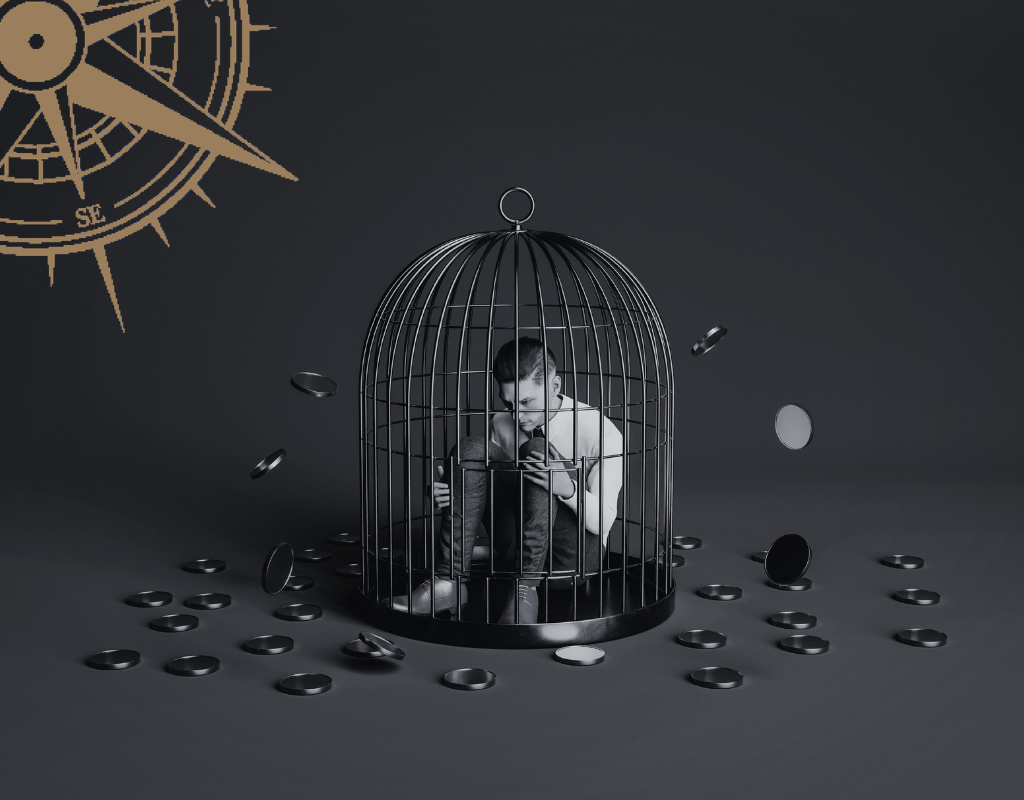
The Success Trap: When “Better” Becomes a Cage

Most high-capacity leaders will encounter the success trap at some point. This is what it actually looks like.


let’s level up:

Grow Yourself To Grow Your Business

Smash through growth ceilings,
again and again to new heights
in business, leadership and life.


You are doing everything “right” and still feel less free.


That is the success trap.


The Hidden Cost of the Success Trap

The obvious trap is burnout.

The real one is quieter: you are objectively winning, yet you feel more constrained, more vigilant, more suffocated by obligation and less able to move on instinct.

When your wins start dictating your permissions, success becomes a cage.


The Mechanics of the Success Trap

So here is the diagnosis.

Success creates proof. Proof creates expectation. Expectation creates a role. And roles, when they are rewarded, become almost impossible to interrogate.

You stop asking “What do I actually want now?” because you are too busy answering “What do I have to do to maintain this?”

This is why the trap is so sticky: it is built on who you had to be to build the success, not on who you have grown into since.


How the Success Trap Shows Up

You develop a way of operating that gets results. You repeat it. It keeps working. People start relying on it. You start relying on it too.

Soon, the business is no longer simply a vehicle for value. It is a beast you cannot afford to disappoint.

So you narrow. This is the success trap taking shape in your daily behaviour.

  • Behavioural: You keep shipping what you know you can win with, even when your curiosity has moved on. Your calendar becomes a defensive wall, not a design.
  •  Relational: You become the “reliable one” in every room. You stop having honest conversations because the role you have been rewarded for is “unshakeable.”
  • Internal: You are not just doing the work. You are surveilling yourself while you do it. Every decision is filtered through reputation maintenance, not mandate.

And because it still works, you do not call it a problem. You call it discipline. You call it standards. You call it strategy.

But your internal experience tells the truth.

Your energy is flat. Your attention is fragmented. You are moving from fear, not inspiration.


Why More Wins Do Not Help

In fact, more wins intensify the role. They raise the stakes of staying the same. That is the mechanics of the success trap at its most advanced stage.

However, the trap is not that you are successful.

The trap is that you have started treating your success as evidence of who you must continue to be.

Once success becomes identity, the business becomes a defence mechanism. You keep producing the version of yourself that has been rewarded, even when it is no longer the most honest one.


If any of this is landing, take it as information, not a call to action.

This is not about fixing anything. It is about naming the mechanics clearly enough that you can see them operating in real time.

The moment you can spot the trap, it stops being invisible. And that is where everything can begin to shift.

If you want to explore this in a private conversation, you can start here:

Book a 15-minute Strategy Call.


To your brilliance,

Tanya Cross

Industry Leader Coach & The Coaches’ Coach

BAppSoSc (Counselling) 

Tanya Cross Consulting

LinkedIn

Psychological Dead Zone: The Quiet Leak Behind Your Success

The psychological dead zone does not announce itself. It arrives in the gap between winning and feeling like you are winning.


let’s level up:

Grow Yourself To Grow Your Business

Smash through growth ceilings,
again and again to new heights
in business, leadership and life.


You can be producing strong results and still feel flat. Not the dramatic kind. Not the headline kind. The kind where the numbers are up, the team is performing, the calendar is full of the right things, and yet the internal register reads nothing. That flatness is the psychological dead zone. And most leaders mislabel it.


What the Psychological Dead Zone Is

Most leaders call this burnout. Or motivation problems. Or losing their edge.


But the dead zone is something more precise. It is identity lag. A lag between who you used to be, what used to matter, and who you are now.


In fact, your system keeps running the old operating instructions. Work harder to get results. More is better. And the result is a mismatch. You are producing outcomes that your nervous system cannot register as safety. So it stays on watch.


The Hidden Cost of the Dead Zone

The psychological dead zone is not neutral. It taxes the areas you value most.


You become less available at home, even when you are there. You keep adding complexity because more feels like movement. You delegate tasks but do not release responsibility, so you do not regain energy. And you start chasing stimulation because stillness feels like a threat.


This is the Humanity Trade in its clearest form. You are paying with presence.


Why Internal Noise Keeps the Dead Zone Running

When a leader has built identity around being needed, problem-solving, and holding the structure together, the mind creates internal noise on purpose. The noise keeps the persona employed.


Because if the system went quiet, a more confronting question would surface: if I am not the one holding it together, who am I now?


So the mind manufactures urgency. Not because you are broken. But because the identity is protecting itself. And as a result, the psychological dead zone deepens.


The Correction: Order Over Force

You do not fix a dead zone by pushing through. That is adding more force to the same leak.


Instead, you fix it by installing order. Truth. A clean recalibration.


It starts with naming the identity lag without drama. This is not a failure. It is a transition signal.
Then you audit where you are still using the old operating system. Where are you still doing work that your current level makes irrational? Where are you still acting like the climber who needed to prove capability?


And then you reassign the nervous system a new job. You replace the instruction to watch for threat with the instruction to watch for truth. You replace performance with governance.


In turn, when this shift lands, you do not become less driven. You become less noisy. And the psychological dead zone begins to dissolve.


The Diagnostic Question

If you feel flat, sit with this: what part of you is still trying to earn safety through achievement?


That answer is your exit point.

So if you can feel the dead zone, you are close. This is the moment to remove complexity, not add it.


Book a 15-minute Strategy Call and let’s look at what the psychological dead zone is telling you about what needs to shift.


To your brilliance,

Tanya Cross

Industry Leader Coach & The Coaches’ Coach

BAppSoSc (Counselling) 

Tanya Cross Consulting

Maximum Growth

Niche Down Your Business: Why Saying No Is a Leadership Act

The decision to niche down your business is one of the most resisted moves in high-capacity leadership. And it has less to do with revenue risk than most leaders think.


let’s level up:

Grow Yourself To Grow Your Business

Smash through growth ceilings,
again and again to new heights
in business, leadership and life.


You can know the logic. After all, you can see that a handful of clients generate most of your revenue with almost none of the friction. You can understand that narrowing your focus would make your business more profitable, more sustainable, and far less exhausting. And still you do not make the move. The reason most industry leaders cannot niche down your business has less to do with strategy and more to do with self.


The Identity That Keeps You From Niching Down

In the early years of building, most leaders develop a core self-concept that serves them well. I am resourceful. I figure things out. I say yes. I make it work for whoever needs me. And that identity is what got you through the hard seasons. It is also what is keeping you stuck now.


When being available to the market becomes part of who you are, saying no to a category of client stops feeling like a business decision. Instead, it feels like a loss of self. A shrinking. A betrayal of the leader you worked so hard to become.


So instead of making the strategic focus shift, you keep expanding. So you take the clients that are not quite right. You stretch your offer to accommodate edge cases. You tell yourself it is temporary, just until things stabilise. And the business continues to reflect your ambiguity back at you, in the form of inconsistent results, a team that cannot find its footing, and a version of success that looks right from the outside and feels hollow from the inside.


What the Vitality Equation Reveals

The Vitality Equation asks a direct question: where is your energy going, and is it in service of the life and business you said you wanted?


For most high-capacity leaders at this juncture, the honest answer is confronting. In fact, significant energy, mental, emotional and operational, is being spent on clients, commitments, and offers that exist because of who you used to be. Not who you are becoming. Not who you need to be to lead at the level you are reaching for.


In fact, that energy leak is not visible on a profit and loss statement. But you feel it. In the low-grade exhaustion that does not go away after a holiday. In the resentment toward work you used to love. In the sense that you are building something that looks successful from the outside and feels hollow from the inside.


As a result, this is what diffuse identity produces. A diffuse business. And a leader who is too depleted to show up with presence or power.


Why the Decision to Niche Down Your Business Is a Second Evolution Move

The Second Evolution is not about tactics. It is about becoming the leader your next level of business requires. And one of the clearest expressions of that evolution is the ability to declare, without apology: this is who I am for. This is the problem I solve. This is the work I am committed to doing at the highest level.


Yet that declaration asks something of you that goes beyond market research. It asks you to trust your own clarity over your fear of missing out. It asks you to value depth over breadth. It asks you to lead from identity rather than obligation.


Leaders who make this strategic focus shift do not just build better businesses. In turn, they become better leaders. More present. More decisive. More energised by the work because the work is aligned with who they are.


The Question Before the Strategy

Before you look at your client data, sit with this: who are you most afraid to say no to, and what does that fear tell you about where your sense of worth is still tied to being needed?


The answer to that question will do more for your business than any repositioning exercise could.


So when you niche down your business, it is not a marketing decision. It is a leadership act. And it begins not with a spreadsheet but with the courage to know yourself well enough to choose.

Book a 15-minute strategy call and let’s look at what niching down could open up for you.


To your brilliance,

Tanya Cross

Industry Leader Coach & The Coaches’ Coach

BAppSoSc (Counselling) 

Tanya Cross Consulting

Maximum Growth

Integrated Leadership: The Strength That Comes From Integration

Integrated leadership begins with a confronting realisation: the persona that built your credibility may now be the thing limiting your growth.


let’s level up:

Grow Yourself To Grow Your Business

Smash through growth ceilings,
again and again to new heights
in business, leadership and life.


If you are carrying the pressure of needing to appear certain, capable, and in control, this is for you. In high-capacity leadership, identity often becomes linked to external metrics: performance reviews, quarterly results, and market expectations. Over time, you shape your leadership persona around what others praised and distance yourself from what others judged. And that fragmentation becomes a barrier to integrated leadership.


The Persona That Earned Your Position

Most industry leaders build their identity around the specific qualities that earned them trust and credibility: strength, decisiveness, and vision. But sustainable leadership requires more than a polished persona.


Beneath the roles sits a broader range of human traits. Yet when leaders identify with the traits the market rewards, they stop leading and start managing an image.


In fact, this is where the exhaustion begins. Not from the workload. From the cost of maintaining a version of yourself that is incomplete.


Why Integrated Leadership Changes How You Show Up

This internal shift is the engine behind integrated leadership.
When you recognise that the qualities you once resisted also serve a strategic purpose, your leadership becomes more grounded. Judgment loses its grip, and the exhaustion of proving softens.


Instead of reacting to the expectations of stakeholders, you begin to lead from a place of clarity and authentic alignment. You gain the operational space to choose how you show up today, rather than letting past success define you.


So this is where true steadiness comes from. It is not found in holding a perfect image. It is found in knowing that you are more than any single version of yourself.


From Image Management to Leadership Integration

When leadership integration takes hold, your presence carries weight without effort.
You stop filtering decisions through the need for others to perceive you a certain way. And you start making them from a centre that does not shift with external pressure.


In turn, your team responds to the shift before you make a single operational change. Your decisions get cleaner. Your capacity expands. And the energy you were spending on image management returns to the work that matters.


But this shift does not happen through strategy alone. It happens through the internal work of dissolving the fragmented identity and building the integrated version of yourself that your next level of business requires.


The Question Worth Sitting With

Before you optimise your next quarter, sit with this: which version of yourself are you performing, and what would it cost to let that performance go?


The answer to that question will do more for your leadership than any external metric could.
Integrated leadership is not about becoming someone new. It is about letting the full version of yourself lead.


So if you recognised yourself in any of this, that recognition is worth paying attention to.


Book a 15-minute Strategy Call and let’s look at what integrated leadership could open up for you.


To your brilliance,

Tanya Cross

Industry Leader Coach & The Coaches’ Coach

BAppSoSc (Counselling) 

Tanya Cross Consulting

Maximum Growth

Strategic Influence: Recognising the Reach You Already Have

Your strategic influence is already operating in rooms you have not entered. And most industry leaders underestimate how far it reaches.


let’s level up:

Grow Yourself To Grow Your Business

Smash through growth ceilings,
again and again to new heights
in business, leadership and life.


The Strategic Influence You Are Not Tracking

Exposure does not announce itself with a public accolade. Sometimes it arrives as a private message from a high-value peer who has been observing your trajectory for months. Or as referrals from sources you did not realise were paying attention.


In fact, most industry leaders are taught to chase the next wave of reach. But true power sits in recognising the strategic influence you already carry.


Instead of asking how to get more reach, sit with these questions:


Where is your influence already showing up in boardrooms or private networks?


What feedback or client impact have you dismissed as ordinary when it was something far more significant?


Who is still carrying a perspective you shared months ago, and how is that shaping decisions you cannot see?


Why Leaders Overlook Their Own Presence

There is a pattern that runs beneath this. When your identity was built on proving capability, you develop a filter that discounts what has already been earned. The focus stays on what is next rather than what is here.


But this is not about settling for current results. Instead, it is about strategic presence. And strategic influence grows when you stop chasing validation and start leading from the weight you already carry.


Yet most leaders do not pause long enough to see it. Because pausing feels like losing momentum. And for a nervous system wired to equate output with value, recognising what is already working feels like standing still.


Leading From What You Have Already Built

When you validate what is already in motion, something shifts. Your leadership presence stabilises. Your decisions come from clarity rather than urgency. And your authority stops depending on the next result to feel real.


Recognising your strategic influence is not a soft exercise. In turn, it is the foundation that makes expansion grounded rather than reactive.


So the question is not whether your influence is reaching people. It is whether you are willing to see it, trust it, and lead from it.


Book a 15-minute Strategy Call and let’s look at the strategic influence you are already carrying and what it makes possible next.


To your brilliance,

Tanya Cross

Industry Leader Coach & The Coaches’ Coach

BAppSoSc (Counselling) 

Tanya Cross Consulting

Maximum Growth

Leadership Equilibrium: The Balance Strong Leaders Learn to See

Leadership equilibrium is not something you find by making sense of the hard seasons. It is something you find by seeing the whole picture without needing to spin it.


let’s level up:

Grow Yourself To Grow Your Business

Smash through growth ceilings,
again and again to new heights
in business, leadership and life.


If you are a leader who values clarity but often finds yourself chasing meaning in extremes, this is worth sitting with. There is a moment in the journey where you realise how much effort you have put into making things make sense. And that effort itself becomes a barrier to leadership equilibrium.


The Pressure to Frame Pain as Purpose


The phrase “it all serves a purpose” shows up often in leadership circles. And while it comes from a meaningful place, it can also become a subtle pressure to label what is happening as useful. Especially when things feel anything but.


But business, like life, does not operate in single layers. When you are trying to justify something as meaningful, you may be overlooking the reality that disservice walks right alongside service.


In fact, this is not about being cynical. It is about being honest. And grounded leadership requires that honesty.


What Leaders Are Holding on Both Sides

Industry leaders are often the ones carrying both. The growth and the grind. The praise and the pushback. The breakthroughs and the burnout.


Yet when you frame things as service, you create a lopsided view. Your mind senses it too. That restlessness. That edge of trying to make something fit when it does not land.


Leadership balance does not come from reframing the difficulty as good. Instead, it comes from seeing both sides without needing one to justify the other.


What Shifts When Leadership Equilibrium Takes Hold

When you allow both sides to be seen without the need to spin it, something shifts. You start to feel more grounded. More in charge.


There is less effort in your leadership. More presence in your thinking. And the pressure to extract meaning from pain softens into a deeper appreciation of what is unfolding.


In turn, leadership equilibrium is not something you chase. It is something you recognise when you stop forcing alignment and let the full picture come into view.


So if you recognised yourself in any of this, that recognition is worth paying attention to.


Book a 15-minute Strategy Call and let’s look at what leadership equilibrium could open up for how you lead.


To your brilliance,

Tanya Cross

Industry Leader Coach & The Coaches’ Coach

BAppSoSc (Counselling)

Tanya Cross Consulting

Maximum Growth

Leading Your Legacy: The Shift From Proving to Presence

Leading your legacy does not begin with a new strategy. It begins when you stop building from proof and start leading from who you already are.


let’s level up:

Grow Yourself To Grow Your Business

Smash through growth ceilings,
again and again to new heights
in business, leadership and life.


If you are feeling drained by the pursuit of a version of yourself that fits a mould you did not design, this is worth sitting with. Most industry leaders spend years trying to minimise the traits they have judged and amplify the ones that earned approval. But that divide creates a cost. And leading your legacy requires closing it.


The Cost of Leading From a Divided Identity

When you operate from a filtered version of yourself, the leadership looks right from the outside but feels hollow from the inside. You perform the role instead of inhabiting it.


In fact, the traits you have judged in yourself are not obstacles to your leadership. They are part of the architecture. The directness you softened because it made people uncomfortable. The intensity you dialled back because it did not match the expected tone. Those are not flaws to manage. They are capacities you have not yet integrated.


And until they are integrated, your leadership runs on a partial engine. More effort. Less presence. More proving. Less power.


What Legacy Leadership Asks of You

Legacy leadership is not about becoming someone new. It is about letting the full version of yourself lead.


That means recognising that the setbacks you navigated and the characteristics you questioned have been building something specific. Not despite who you are. Because of who you are.


Yet most leaders resist this. Because accepting the whole version of yourself means releasing the story that certain parts of you are liabilities. And that story has been running the operating system for decades.


So the shift is not about adding more. Instead, it is about stopping the subtraction. Stopping the filtering. Letting integrated certainty replace the performance of confidence.


From Proving to Presence

When this shift takes hold, the change is tangible. Decisions come from clarity rather than compensation. Your team responds to a quality of presence that no strategy document could produce. And the energy you were spending on managing your image returns to the work that matters.


In turn, leading your legacy stops being aspirational and starts being operational. You are no longer building toward a future version of yourself. You are leading from the version that is already here.


But this does not happen through motivation. It happens through the internal work of dissolving the identity split and building the self-concept that matches what you have already achieved.


The question is not whether you are ready for the next level. That evidence is there.


The question is whether you are willing to let the full version of yourself take the lead.


So if you recognised yourself in any of this, that recognition is worth paying attention to.


Book a 15-minute Strategy Call and let’s look at what leading your legacy could open up for you.


To your brilliance,

Tanya Cross

Industry Leader Coach & The Coaches’ Coach

BAppSoSc (Counselling)

Tanya Cross Consulting

Maximum Growth

Business Alignment: Built on Your Values or Theirs?

True business alignment is not about optimising what you have built. It is about questioning whether what you built was yours to begin with.


let’s level up:

Grow Yourself To Grow Your Business

Smash through growth ceilings,
again and again to new heights
in business, leadership and life.


If you have built a business that looks successful on the outside but feels disconnected from your core vision, this is worth sitting with. For industry leaders, business alignment is not a luxury. It is a requirement for sustainable high performance. And when it is absent, the cost shows up in ways most leaders do not expect.


The Comparison Trap

It is easy to fall into strategic comparison. You monitor how competitors scale. You watch how they project authority. And a thought slips in: if I followed their operational framework, my business would land.


But what you are observing is their external order, shaped by their specific values. When you adopt those frameworks without verifying leadership alignment with your own mission, you stop building your legacy and start building someone else’s.


In fact, this is where the comparison trap deepens. The belief that identical steps yield identical satisfaction. But success built on borrowed values feels heavy. It creates a friction that drains your decision-making capacity and pulls you further from business alignment.


What Business Alignment Makes Possible

Business alignment creates operational flow. When your enterprise is built around your specific priorities, you show up with more certainty and more authority.


Yet most industry leaders resist this. Because returning to your own values means releasing the frameworks that felt safer. And for a leader whose identity was built on competence, admitting that a borrowed strategy is not working feels like admitting a gap.


But the gap is not in your capability. It is in the alignment between what you are building and who you are building it for.


So the moment you return to what is yours, your leadership begins to stabilise. Decisions get cleaner. Presence sharpens. And the energy you were spending on forcing a framework that was not designed for you returns to the work that matters.


The Question Before the Strategy

Before you optimise your next quarter, sit with this: is your business a reflection of your identity, or is it a monument to borrowed values?


In turn, the answer to that question will do more for your leadership alignment than any repositioning exercise could.


Business alignment is not a branding decision. It is a leadership act. And it begins with the courage to stop building from comparison and start building from clarity.


So if you recognised yourself in any of this, that recognition is worth paying attention to.


If this landed deeper than strategy, that is worth exploring Book a 15-minute Strategy Call.


To your brilliance,

Tanya Cross

Industry Leader Coach & The Coaches’ Coach

BAppSoSc (Counselling) 

Tanya Cross Consulting

Maximum Growth

Productive Procrastination: Why Leaders Need to Stop Learning

Productive procrastination is one of the most overlooked traps in high-capacity leadership. And it disguises itself as growth.


let’s level up:

Grow Yourself To Grow Your Business

Smash through growth ceilings,
again and again to new heights
in business, leadership and life.


If you find yourself stacking podcasts, collecting strategies, and researching the next framework while your execution lags behind, this is worth sitting with. Because the habit you believe is helping you scale may be the thing keeping you stuck.


The Consumption Trap That Looks Like Growth

Most industry leaders place a high value on learning. The strategy podcasts. The business biographies. The masterminds. The constant research into what comes next. It feels productive. It feels like preparation.


But at a certain level, learning without application becomes productive procrastination. It becomes a way to stay in motion without committing to a direction. And it becomes a subtle form of avoidance dressed as ambition.


In fact, the more you consume without integrating, the wider the gap between what you know and what you do. That gap is not a knowledge problem. It is a leadership problem.


Why the Habit Persists

The consumption trap persists because it feels safer than execution. When you are learning, you are not exposed. You are not putting a position into the market. You are not making the decision that could be judged.


But execution is where authority is built. Not in the research. Not in the preparation. In the doing.


It happens when you handle a crisis without a textbook. When you see team dynamics play out in real time. When you make the call before you feel ready.


Yet most leaders keep reaching for more information because productive procrastination offers the comfort of progress without the risk of visibility.


The Shift From Consumption to Integration

The shift is not about learning less. Instead, it is about integrating what you already know and applying it to the market.


That is how you move from student to authority in your field. Not by accumulating more frameworks. By living the principles you already value and pushing them into the world. That is where productive procrastination ends and leadership begins.


So the question is not whether you need to learn more. It is whether the consumption trap has become a substitute for the leadership.


If you recognised yourself in any of this, that recognition is worth paying attention to. The next move is not more information. It is a conversation.


Book a 45-minute Strategy Call


To your brilliance,

Tanya Cross

Industry Leader Coach & The Coaches’ Coach

BAppSoSc (Counselling)

Tanya Cross Consulting

Maximum Growth


Own Your Expertise: When You Get Paid to Be You

When you own your expertise, business stops being a performance and starts being an extension of who you are. That shift changes how you lead, how your team responds, and how your clients experience your authority.


let’s level up:

Grow Yourself To Grow Your Business

Smash through growth ceilings,
again and again to new heights
in business, leadership and life.


If you have been building a business that looks right on the outside but feels misaligned on the inside, this is worth sitting with. There comes a point where the striving starts to feel hollow. You have followed the strategies. You have studied the blueprints. You have ticked the boxes. But something does not fit.


The Moment the Striving Stops Working

That misalignment is not a failure of effort. It is feedback that you have been shaping yourself around a version of success that does not reflect who you are.


And the shift begins when you stop asking “am I doing this the way others do it” and start leading from a deeper place of leadership clarity.


In fact, you know what you bring. You know what matters. And the moment you start building from there instead of from comparison, the business begins to respond differently.


What Changes When You Own Your Expertise

When you own your expertise, you stop performing authority and start inhabiting it. Decisions become cleaner because they are no longer filtered through what the market expects. They come from what you know to be true.


But this is not about getting to a destination. It is about integration. Letting the full version of yourself lead rather than the curated version you built for credibility.


And from that place, business becomes more grounded. More natural. More effective. Your team responds to the shift in presence before a single operational change is made. Your clients experience a quality of integrated authority that no positioning strategy could manufacture.


From Proving to Presence

You are no longer chasing authority. You are operating from it. Not because you earned a new credential or found the right framework. Because you stopped layering strategies on top of who you are and started leading from the centre of it.


In turn, that is when you get to say: I get paid to be me. Not just in revenue. But in the way you lead. The way your business reflects your values back to you. And the way your presence carries weight without effort.


So the question is not whether you have the expertise. That evidence is there. The question is whether you are willing to stop proving it and start leading from it.


This is the kind of shift that does not happen in isolation.


Book a 45-minute Strategy Call and let’s map what is next.


To your brilliance,

Tanya Cross

Industry Leader Coach & The Coaches’ Coach

BAppSoSc (Counselling)

Tanya Cross Consulting

Maximum Growth

Natural Authority: Returning to the Core of Who You Are

Natural authority does not come from what you do. It comes from who you are being while you do it. And most industry leaders have spent years moving further from that centre, not closer to it.


let’s level up:

Grow Yourself To Grow Your Business

Smash through growth ceilings,
again and again to new heights
in business, leadership and life.


If you have felt the pressure to perform, to prove, or to push to be seen, this is worth sitting with. There comes a point where you start second-guessing your voice. You lean into strategies, frameworks, and formulas, hoping they will bring back the clarity that once made your leadership magnetic. But more information does not create natural authority. Only inner alignment restores it.


How Leaders Lose Their Centre

It happens over time. You study what worked for others. You adopt frameworks that earned results in a different context. You shape your leadership around external models until the version of you that leads bears little resemblance to the version of you that started.

In fact, the strategies become a layer between you and your own instincts. And the more layers you add, the harder it is to hear your own signal through the noise.

This is not a knowledge gap. It is an alignment gap. And no amount of additional learning closes it.


What Natural Authority Feels Like in Practice

When you are aligned with your values, grounded in your mission, and integrated in your leadership, your authority shifts. It stops being a performance and becomes a presence.

Your team responds to it before you say a word. Your clients experience a quality of leadership resonance that no positioning strategy could produce. And your decisions get cleaner because they are coming from the centre of who you are, not from what the market expects.

But this shift does not come from adding more. Instead, it comes from stripping back to what was there before the strategies were layered on top.


The Return to Core

This is where leadership shifts from control to clarity. From proving your worth to operating from it.

In turn, natural authority is not something you build. It is something you return to when you stop performing and start leading from inner alignment.

So the question is not whether you have authority. It is whether you are willing to stop layering strategies on top of it and let it lead.


If you recognised yourself in any of this, that recognition is worth paying attention to. Book a 45-minute Strategy Call and let’s look at what is underneath the performance.


To your brilliance,


Tanya Cross

Industry Leader Coach & The Coaches’ Coach

BAppSoSc (Counselling)

Tanya Cross Consulting

Maximum Growth

Leadership Realignment: Getting Back to Flow

Leadership realignment is what most industry leaders need when growth stalls. Not another funnel. Not another strategy. A return to clarity.


let’s level up:

Grow Yourself To Grow Your Business

Smash through growth ceilings,
again and again to new heights
in business, leadership and life.


If you have been showing up, delivering, and doing the work but the results have gone quiet, this is worth sitting with. You can feel it. Less engagement. Fewer leads. Something is not flowing. And the thought creeps in: what changed? But the answer is not what most leaders expect. It is a leadership realignment problem, not a volume problem.


Why More Strategy Does Not Fix the Stall

Most leaders try to fix a stall by doing more. A new funnel. A new positioning exercise. A tweak to the offer. But the stall is not a strategy problem. It is an alignment problem.

In fact, when your message, offer, and mindset are out of sync, growth slows regardless of how hard you push. The market responds to coherence. And when the coherence breaks, the results break with it.

Yet more output on top of a misaligned foundation does not create leadership flow. It creates noise.


What Leadership Realignment Looks Like

Leadership realignment is not about adding more. Instead, it is about stripping back to the core of who you are, how you serve, and what your next chapter requires.

It starts with clarity on your message. Not what you think the market wants to hear, but what you know to be true about the problem you solve and who you solve it for.

Then it moves to your offer. Is what you are delivering a reflection of your current expertise, or a relic of a previous chapter? Leadership flow returns when the offer matches the leader you have become, not the leader you used to be.

And then your mindset. Are you leading from certainty, or from the anxiety of stalled results?

When those three come back into sync, the shift is tangible. Business clarity returns. Clients begin to reach out. And you move forward with a quality of presence that force could not produce.


The Question Behind the Stall

So the question is not what changed. The question is where the alignment broke. Because when leadership realignment is clear, momentum follows.


If you recognised yourself in any of this, that recognition is worth paying attention to. Book a 45-minute Strategy Call and let’s look at where the alignment needs recalibrating.


To your brilliance,

Tanya Cross

Industry Leader Coach & The Coaches’ Coach

BAppSoSc (Counselling)

Tanya Cross Consulting

Maximum Growth

Pause After Success: The Space Between Celebration and Growth

The pause after success is the most misread signal in high-capacity leadership. Most leaders interpret it as a warning. It is not. It is a signal of readiness.


let’s level up:

Grow Yourself To Grow Your Business

Smash through growth ceilings,
again and again to new heights
in business, leadership and life.


If you have held back from celebrating a win because you feared the fall after it, this is worth sitting with. You make progress. You feel the shift. You look around and notice how far you have come. But just as you begin to celebrate, there is a hesitation. A voice that says: if I get too uplifted, life will balance me out.


Why Leaders Hold Back From the Pause After Success

That hesitation is a pattern most industry leaders carry without naming it. You have been conditioned to hold back. To avoid appreciating what has been built in case it disappears. To stay measured, reserved, cautious.

And yes, life brings balance. But not in the way fear would have you believe.

In fact, celebration is not indulgence. It is integration. It is the moment where the internal and external journey meet. It is where you acknowledge your growth, your effort, your lived experience. And that moment of post-success integration opens the next chapter, not because something needs to change, but because you are ready for more.


What Happens When You Skip It

When you bypass the pause after success and move too fast into what is next, you miss the depth of what has shifted. You overlook what has unfolded. And the flatness that follows the high is not the consequence you feared.

Instead, it is the space that signals readiness. Your next level calling you forward.

But most leaders do not pause long enough to recognise it. Because pausing feels like losing momentum. And for a nervous system wired to equate output with value, leadership celebration feels like a risk rather than a recalibration.


The Shift From Fear to Integration

So take the pause. Let yourself register what is here. Not from a place of scarcity. From a place of completion.

In turn, the pause after success is not a setup for a fall. It is the foundation for what is rising. And the leaders who learn to integrate their wins rather than rush past them do not lose momentum. They build a quality of leadership that acceleration alone cannot produce.


If you recognised yourself in any of this, that recognition is worth paying attention to. Book a 45-minute Strategy Call and let’s look at what the pause is telling you.


To your brilliance,

Tanya Cross

Industry Leader Coach & The Coaches’ Coach

BAppSoSc (Counselling)

Tanya Cross Consulting

Maximum Growth

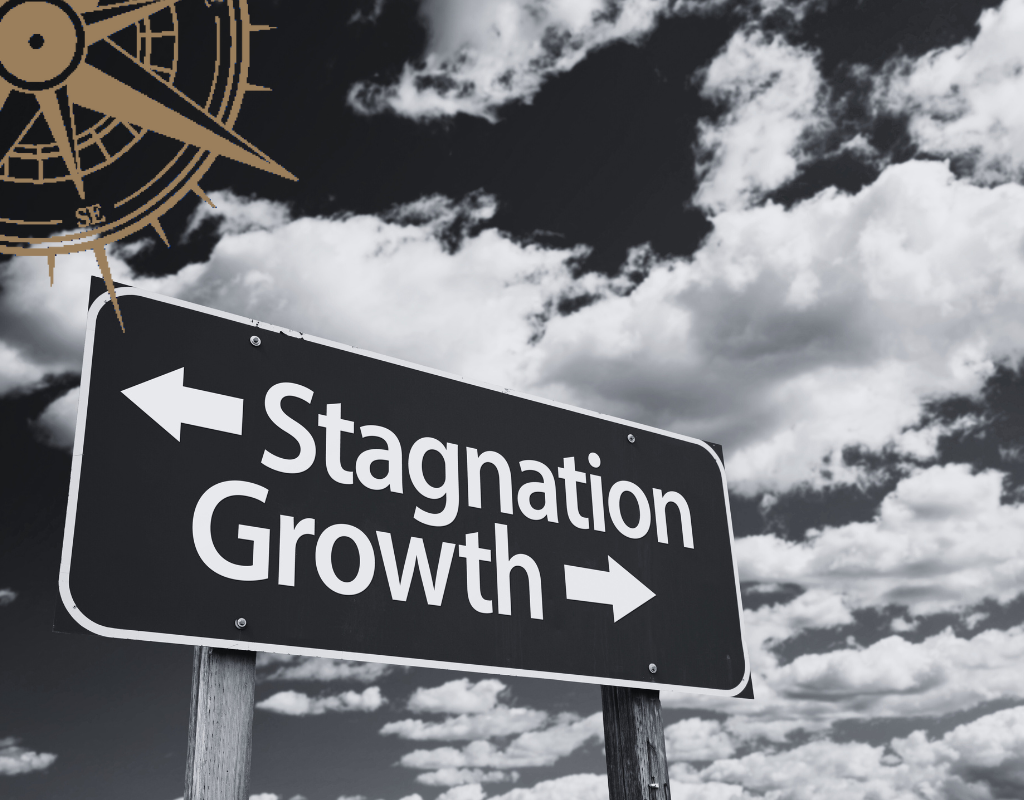
Stagnant Growth: Why the Plateau Is Part of the Process

Stagnant growth is one of the most misunderstood phases in high-capacity leadership. Most leaders interpret it as failure. It is not. It is recalibration.


let’s level up:

Grow Yourself To Grow Your Business

Smash through growth ceilings,
again and again to new heights
in business, leadership and life.


If you are building, leading, and stretching but something inside feels flat, this is worth sitting with. Not broken. Not failing. But stalled. And the gap between external momentum and internal experience can be confronting when you do not have a framework for what is happening.


What Stagnant Growth Looks Like From the Inside

The leadership plateau does not arrive with a crisis. It arrives with a quiet flatness. You are doing the work. And the results are still coming. But the internal signal has shifted.

In fact, stagnant growth shows up when you stop asking the deeper questions. When the curiosity that once drove you forward goes quiet. When the energy of building gives way to the routine of maintaining.

And the instinct is to push harder. Add more. Accelerate through the discomfort. But the plateau is not a speed problem. It is a signal.


Why the Growth Stall Is Not What You Think

Most industry leaders try to fix a plateau by adding force. A new strategy. A new initiative. More output. But a growth stall does not respond to force. It responds to clarity.

Because the flat phase is not a breakdown in your leadership. Instead, it is feedback that the operating system you have been running has reached its current ceiling. And the next level requires a different configuration, not more of the same one.

Yet most leaders do not pause long enough to read the signal. Because pausing feels like confirmation that something has gone wrong. And for a leader whose identity is tied to forward motion, stillness during stagnant growth feels like a threat.


How to Read the Plateau

So the question is not how to push through the plateau. The question is what the plateau is telling you.

In turn, stagnant growth is not a sign you are off track. It is the space between who you have been and who you are becoming. And the leaders who learn to read that space rather than fight it do not lose momentum. They gain the clarity that makes the next chapter possible.


You do not need more momentum. You need more clarity. Book a 15-minute Strategy Call and let’s find it.


To your brilliance,

Tanya Cross

Industry Leader Coach & The Coaches’ Coach

BAppSoSc (Counselling)

Tanya Cross Consulting

LinkedIn

Success Attachment: When the High of Success Becomes a Trap

Success attachment is the trap that few industry leaders name out loud. It is not the fear of failure that keeps you stuck. It is the fear of losing the high.


let’s level up:

Grow Yourself To Grow Your Business

Smash through growth ceilings,
again and again to new heights
in business, leadership and life.


If you have been fearing the next dip, not because you cannot handle a setback but because you have tasted success and now feel trapped by it, this is worth sitting with. You hit the goal. You landed the client. The team expanded. The result felt good. And now something in you is asking whether you can sustain it.


The Loop That Success Attachment Creates

That fear of not repeating the win does not sit still. It sneaks in between the cracks. You tell yourself it is about failure, but if you go deeper, it is not failure itself that drives it.

In fact, it is the infatuation with being on. With the performance. With the feeling of things going well. And that success infatuation tightens around your decision-making without you realising it.

Then add in the memories of what did not work. The offer that did not land. The strategy that missed. The season that burned through your capacity.

And now you are caught in a loop. Wanting the high. Fearing the low. This is where success attachment distorts how you see your business and how you see yourself.


Why the Fear of Falling Keeps You Stuck

The loop is not about the external results. Instead, it is about the identity that has become fused with the feeling of success. When your sense of self is tied to being on an upward trajectory, any pause feels like a threat.

But leadership does not operate in straight lines. There are seasons of expansion and seasons of consolidation. And the leaders who resist the consolidation because they are attached to the high end up making decisions from fear rather than clarity.

Yet the fear of falling is not a signal that something has gone wrong. It is a signal that your identity has become dependent on the result rather than grounded in who you are independent of it.


From Attachment to Equilibrium

So the question is not whether you can sustain the high. The question is whether your leadership can hold steady when the high is not there.

In turn, success attachment dissolves when you stop measuring your value by the last result and start leading from a centre that does not shift with the outcome.


If you are ready to stop running the loop and start leading from a steadier place, Book a 45-minute Strategy Call and let’s look at what is driving the attachment.


To your brilliance,

Tanya Cross

Industry Leader Coach & The Coaches’ Coach

BAppSoSc (Counselling)

Tanya Cross Consulting

Maximum Growth

Leading Through Uncertainty: Why Growth Is Not Linear

Leading through uncertainty is one of the least discussed and most essential capabilities in high-capacity leadership. Because the moments that shape your next chapter do not arrive on a schedule.


let’s level up:

Grow Yourself To Grow Your Business

Smash through growth ceilings,
again and again to new heights
in business, leadership and life.


If you have invested time, energy, and resources into your leadership and the return has not landed yet, this is worth sitting with. Most industry leaders expect the investment to produce clarity on demand. A session. A strategy. A framework. And when the shift does not arrive in the room, the instinct is to question whether the investment was worth it.


Why the Shift Does Not Arrive on Demand

Growth is not linear. And leading through uncertainty means accepting that the work you do now may not produce visible results for weeks or months.

In fact, the insights that change the trajectory of a business often land in the least expected moments. Not in the boardroom. Not in the strategy session. In the space between, when the mind has room to process what was planted.

But most leaders do not create that space. Because space feels like inaction. And for a nervous system wired to equate output with progress, non-linear growth feels like stagnation.


What Leading Through Uncertainty Requires

The leaders who navigate this well do not become less driven. Instead, they develop a different relationship with timing.

They stop demanding that the investment pay off in the moment it is made. And they start trusting that the work is landing, even when the evidence has not surfaced yet.

Yet this is not passive. It is a form of leadership patience that requires more discipline than force. Because the instinct to push harder when clarity has not arrived is strong. And acting on that instinct often delays the very shift you are waiting for.


When the Shift Lands

When you create space and the pressure to force clarity drops, something shifts. Decisions that felt heavy become clean. Perspectives that were tangled begin to separate. And the direction that felt uncertain starts to resolve.

In turn, leading through uncertainty is not about tolerating ambiguity. It is about recognising that the work you have done is still in motion, even when you cannot see it yet.

So the question is not whether the investment is working. It is whether you are creating the conditions for it to land.


If something in this resonated, book a 15-minute Strategy Call and let’s look at what is in motion that you have not yet seen.


To your brilliance,

Tanya Cross

Industry Leader Coach & The Coaches’ Coach

BAppSoSc (Counselling)

Tanya Cross Consulting

LinkedIn

Identity Evolution: Do You Still Recognise Yourself?

Identity evolution is what happens when your business outgrows the version of you that built it. And most industry leaders sense it before they can name it.


let’s level up:

Grow Yourself To Grow Your Business

Smash through growth ceilings,
again and again to new heights
in business, leadership and life.


There comes a point where the milestones and external markers of success no longer feel like the full picture. The revenue, the team, the reputation are there. Yet something inside you knows there is another shift waiting. You can feel it forming. And that feeling is the beginning of a leadership crossroads.


The Questions That Signal Identity Evolution

This is the moment where leaders begin to re-examine who they are beyond what they built. Who am I now that the business has grown? Who am I beyond the role I created? What do I want in this next season?

In fact, these questions are not a sign of uncertainty. They are a sign of readiness. The identity that built the first chapter has done its job. And the discomfort you feel is not confusion. It is the gap between who you were when you started and who you are now. And that gap is the clearest sign that identity evolution is underway.


Why More Does Not Close the Gap

Most leaders respond to this crossroads by adding more. More clients. More output. More goals. But the growth that shifts the trajectory at this stage is not about volume.

Instead, it is about alignment. Asking what is authentic for you now. Not who you were when you started. Not what others expect. The version of you that exists today. This is the leadership crossroads that most leaders try to think their way through instead of sit with.

Yet this can feel disorienting. Because the vision changes. And sometimes you do. And the challenge of identity evolution is allowing yourself to meet this new version without holding on to an old map that no longer fits.


What Identity Evolution Makes Possible

When you stop building from who you were and start building from who you are, something shifts. As a result, your business does not just expand. It evolves alongside you.

In turn, self-actualisation is not about chasing more. It is about aligning who you are with what you create. And the leaders who make this shift do not lose momentum. They gain a quality of clarity that the previous chapter could not produce.

So the question is not whether the crossroads has arrived. It is whether you are willing to meet it.


If something in this is sitting with you, book a 45-minute Strategy Call and let’s look at what the identity evolution is asking of you.


To your brilliance,

Tanya Cross

Industry Leader Coach & The Coaches’ Coach

BAppSoSc (Counselling)

Tanya Cross Consulting

Maximum Growth

Identity Drift: Reclaiming Your Centre When Business Grows

Identity drift is what happens when your business grows faster than your sense of self can keep up with. And most industry leaders will not name it out loud until the disconnection is impossible to ignore.


let’s level up:

Grow Yourself To Grow Your Business

Smash through growth ceilings,
again and again to new heights
in business, leadership and life.


Somewhere along the way, your business became something. Clients came. Revenue came. Growth came. And with it, so did the noise. You kept showing up. Saying yes. Holding the structure together. But behind the offers, the momentum, and the growth, there is something most leaders carry without naming it: a growing distance between who they are and what they built.


What Identity Drift Looks Like From the Inside

This is not burnout. And it is not a motivation problem. It is leadership disconnection. The result of growing fast, pivoting often, or building in response to demand rather than desire.

In fact, identity drift shows up in specific ways. Your calendar is full but your sense of self feels scattered. You are doing the work but it feels off. You keep building but the thing you are building no longer feels like yours.

And the fog that follows is not confusion. It is the gap between the version of you running the business and the version of you that started it.


Why More Output Does Not Clear the Leadership Fog

Most leaders respond to this fog by doing more. More offers. More structure. More momentum. But the leadership fog does not respond to volume. It responds to clarity.

Because purpose is not just about what you create. It is about who you are while creating it. And when identity is unclear, purpose feels distant regardless of how productive you are.

Yet most leaders do not pause long enough to recognise this. Because pausing feels like losing ground. And for a leader whose value has been tied to output, reflection can feel like a risk.


How to Reclaim Your Centre

The way back from identity drift is not a rebrand or a pivot. Instead, it is an internal recalibration.

It starts with noticing where you are performing rather than choosing. Where you are saying yes out of obligation rather than clarity. Where you are building from what the market expects rather than what is yours.

In turn, when you stop building from autopilot and start building from centre, something shifts. The noise clears. The fog lifts. And what remains is a quality of leadership that force could not produce.

So the question is not whether identity drift has happened. It is whether you are willing to stop long enough to reclaim what is yours.


If something in this resonated, book a 45-minute Strategy Call and let’s look at what is underneath the fog.


To your brilliance,

Tanya Cross

Industry Leader Coach & The Coaches’ Coach

BAppSoSc (Counselling)

Tanya Cross Consulting

Maximum Growth

Leadership Self-Deprivation: The Pattern Draining Your Authority

Leadership self-deprivation is one of the most overlooked patterns in high-capacity industry leaders, and it does not show up on any dashboard or spreadsheet.


let’s level up:

Grow Yourself To Grow Your Business

Smash through growth ceilings,
again and again to new heights
in business, leadership and life.


It does not look like a crisis. It looks like undercharging. Holding back on a new offer. Showing up for everyone else while sidelining your own capacity.


The cost is more than financial. It is energetic. When you deprive yourself of rest, recognition, support, or even a basic sense of sufficiency, you dim the signal that draws in the work and the clients who are looking for your leadership.


That signal is your presence. Your authority. The thing that makes aligned clients lean in and say yes before you have finished speaking.


Self-deprivation erodes all of it.


How Leadership Self-Deprivation Shows Up

This pattern tends to surface in four distinct ways.

Disappointment

You set standards that no human could sustain, then internalise the gap between where you are and where you believe you should be. That gap becomes the lens through which you evaluate your capacity, your offers, and your worth. As a result, it leaks into how you price, how you pitch, and how you show up in rooms that need your clarity.


Devaluing

You downplay your skill set and question whether you have earned your seat. Even when the evidence is clear, you hesitate. That hesitation is a self-deprivation pattern in motion, and it repels the people who need your leadership the most.


Deflection

You push away praise, support, or financial reward. You minimise wins. You attribute results to timing or luck. Because you cannot let success land, it keeps bouncing off. On the inside, you stay in contraction, even when growth is visible on every metric.


Disowning

You avoid stepping into your voice or your authority. You say it is not the right time. You tell yourself you are still preparing. Underneath that narrative, however, you are leading from lack and avoiding the visibility that comes with full ownership of your leadership.


Why This Pattern Persists

Leadership self-deprivation persists because it is familiar. For many leaders, it was the water they grew up in. You tolerate it. You normalise it. Over time, you even prefer it, because it feels contained.

But contained is not the same as aligned.

There is a tipping point. A moment where something inside says, enough. You no longer want to lead on half-energy. You no longer want to prove your value by withholding what you want most.


What Shifts When You Stop Leading From Lack

The shift begins with attention.

If your focus stays on what is not working, you will keep reinforcing that cycle. But when you become aware of the self-deprivation patterns at play, clear the emotional charge behind them, and redirect your attention toward what you are building, the dynamic changes.

Presence returns. Authority sharpens. Flow re-engages.

You stop dimming your signal. And you start leading from it.


If you recognised yourself in any of this, that awareness is the starting point. Book a 45-minute Strategy Call and explore what shifts when you stop leading from deprivation.


To your brilliance,

Tanya Cross

Industry Leader Coach & The Coaches’ Coach

BAppSoSc (Counselling)

Tanya Cross Consulting

Maximum Growth

What Inner Work Can Shift in 10 Sessions

The inner work is what shifts when strategy alone cannot carry the weight, and most industry leaders know the difference even when they cannot name it.


let’s level up:

Grow Yourself To Grow Your Business

Smash through growth ceilings,
again and again to new heights
in business, leadership and life.


For the founder who feels like the weight does not lift.

There are moments in business when it is not about strategy or scaling. It is about feeling like you cannot breathe. Like you are carrying too much and have nowhere to put it down.

You are trying to show up, lead, build, make good decisions. But underneath that, you feel stuck in emotions you cannot shift. Grief, anxiety, frustration. And the quiet question underneath it all… will this feeling end?


When the Inner Work Begins

Back in 2016, I worked with a woman who felt this way.

She was not a founder yet. Not officially. But the seeds were there. She had lived through domestic violence. She was parenting a newborn on her own. Her self-worth was crumbling. The future felt uncertain. What she needed was not more strategy. It was deeper work.

She reached out because she wanted the pain to stop. She wanted to feel strong again. And more than that, she wanted to be clear on her purpose. She knew she was here for something more, but the weight of what she was carrying was blocking her from accessing it.

We worked together over ten sessions.

No hype. No band-aids. Just consistent, grounded, deeper work.

Layer by layer, she started to feel herself return. That is what the inner work looks like when it is given space. The emotions did not disappear, but they transformed. She started to feel grounded in her own worth again. She stood stronger. She no longer needed her ex or her fear to shape her next step.


From Healing to Building

And then she came back.

This time, not to heal. But to build.

She wanted to create a business. One that gave her flexibility. One that allowed her to support others who had walked a similar path. But the fears came too. Fear of not earning enough. Fear of not being valuable enough.

That is where the next chapter began.

She committed. She listened. She stayed close to the deeper work.

She started with mindset. She was parenting full-time. She still managed to match her pre-baby income. Then we layered in the business structure. She doubled that income. She built something lasting. The inner work had become the foundation.

Today, she runs a six-figure business. She chooses her hours. She works with aligned clients. She leads a Facebook group supporting over 300 local women navigating domestic violence recovery.

She has not built a business. She has built impact.


What Happens When You Choose the Inner Work

This is what happens when founders choose to do the inner work while building the outer structure.

It is not about ignoring the emotional weight. It is about transforming it so that you can lead with clarity.

You do not have to build from burnout or push through emotional blocks on your own.

When you are supported by the right tools, the right people, and the right space, you rise. Not with noise, but with quiet strength. That is what the inner work makes possible.

And when you rise, your business rises with you.


If you are carrying more than strategy can solve, this is the work that shifts it. Book a 45-minute Strategy Call and explore what ten sessions could open up for you.


To your brilliance,

Tanya Cross

Industry Leader Coach & The Coaches’ Coach

BAppSoSc (Counselling)

Tanya Cross Consulting

LinkedIn

The Power Of Being Held

The power of being held is not something most founders talk about, yet it is one of the most profound shifts available to anyone willing to stop bracing.


let’s level up:

Grow Yourself To Grow Your Business

Smash through growth ceilings,
again and again to new heights
in business, leadership and life.


As founders, we are often in our heads.

Solving problems. Running teams. Planning launches. Holding space for everyone else.

In fact, even our own healing becomes something to manage. Another item to analyse, understand, or fix.

However, what if healing is not something to work on?

What if it is something to allow?


A Lesson on the Camino

Back in 2016, I walked the Camino. I planned it as a reset, a break from the thinking mind.

Then one afternoon, I was walking alongside a man named Philippe, listening to an audiobook about healing the mother wound.

It described how insight or awareness does not resolve some wounds.

Words or recognition do not heal them either.

Instead, they heal when you feel them.

No fixing, no processing, simply feeling.

So I turned to Philippe and said something unusual.

There is an exercise in this book. It is not romantic. It is about letting someone hold you.

Would you hold me?

And he said, “I’ll ask my wife.”

Then the next day, he came back and said, ‘She said yes.’

And so, each evening, after our walks, he would hold me.

No fixing. No talking. No advice.

Just a quiet presence.

And as a result, something shifted in me. That is the power of being held.

A weight I did not even know I was carrying.


The Power of Being Held as a Founder

As founders, we carry so much.

In turn, we get used to bracing. To being the strong one. The capable one.

Yet under the surface, our nervous systems are often asking for softness.

Not solutions. Instead, presence.

In fact, that moment on the Camino reminded me of this.

And years later, when I was pregnant with my daughter, we were choosing names.

I said to Aaron, “What about Bonnie?”

And he said, “I love it.”

Bonnie was Philippe’s wife. The one who said yes. The one who gave permission for a simple act of kindness that I still carry with me.


What Happens When You Stop Bracing

Healing is not a breakthrough or a breakthrough strategy.

Rather, it is in the moment you let yourself soften.

To be held by something. Or someone.

To stop bracing.

To let your system catch up to your soul.

So if you are building something big right now, I invite you to ask:

What part of me is asking me to feel today?

Feel it. Do not fix it.


If part of you is asking you to feel rather than fix, that is a conversation worth having. Book a 45-minute Strategy Call and explore what the power of being held could shift for you.


To your brilliance,

Tanya Cross

Industry Leader Coach & The Coaches’ Coach

BAppSoSc (Counselling)

Tanya Cross Consulting

LinkedIn

The Slow Disconnection From Your Own Light

The slow disconnection from your own light does not announce itself. It arrives quietly, in the gap between what you have built and how you feel about it.

You built it all. So why do you still feel like a fraud?


let’s level up:

Grow Yourself To Grow Your Business

Smash through growth ceilings,
again and again to new heights
in business, leadership and life.


You have created a business. You have a reputation, results, and reach.

But instead of feeling settled, you are quietly second-guessing yourself.

There is a part of you that wonders when someone will figure it out.

Not because you are not qualified, but because a gap has opened between your growth and your self-perception.

In fact, this is impostor syndrome in founders. And it often shows up not at the beginning, but when things are already working.


Where the Slow Disconnection Shows Up

You might be shifting offers, redefining your role, or preparing to lead in a new way.

On the outside, the business is progressing. However, on the inside, you feel the pull of uncertainty.

It sounds like:

“I built this, but I do not feel like I deserve it.”

“What if it was just timing or luck?”

“Everyone else seems more confident than I do.”

If this is resonating, you are not alone. And there is nothing off about where you are.

You are simply at a moment where the next version of you is asking for your attention.

Let us look at a few of the most common narratives I hear from founders and how to shift them.


The Stories That Hold Founders in Place

“I am not the expert anymore.”

You used to feel sharp in your delivery. Now you are expanding or shifting your message and feel unsure about how you show up. Instead of owning your evolution, you keep measuring yourself against who you used to be. That self-doubt is not a signal to retreat.

Try this: let your voice reflect where you are now. After all, the work has changed. So has your lens. That does not make you less of an expert. Rather, it makes you a more embodied one.

“Everyone else has it more figured out than me.”

You see other founders scaling, building out teams, launching new things. And even if you are proud of your own work, you find yourself wondering if you are falling behind. As a result, the comparison kicks in, and so does the contraction. This is impostor syndrome wearing a different face.

Try this: when you notice the comparison, pause. Then look at what you admire. If you are drawn to it, it likely reflects something already alive in you, even if it is still emerging. Use it as insight, not as a reason to shrink.

“I do not deserve to be here.”

Furthermore, this one is more than surface doubt. It is a deeper sense that what you built may not last. You wonder if people will want what you offer when you stop pushing. Yet you are not sure if your presence alone is enough. This is where the slow disconnection runs deepest.

Try this: ask yourself, “What am I tying my worth to?” Often, it is old definitions of success. Numbers. External validation. Output. These stories served you when you were starting out. However, they need to evolve now.


What the Slow Disconnection Is Telling You

Impostor syndrome in founders is not about a lack of capability.

It is a misalignment between your inner identity and your outer leadership.

Because it tends to appear when you are entering a new phase that requires more of your presence, not just your performance.

You do not need to prove yourself. Instead, you need to meet yourself where you are.

You are already doing the work. Therefore, it is time to let it reflect who you are.


If the gap between what you have built and how you feel about it is widening, that is worth a conversation. Book a 45-minute Strategy Call and explore what the slow disconnection is asking you to see.


To your brilliance,

Tanya Cross

Industry Leader Coach & The Coaches’ Coach

BAppSoSc (Counselling)

Tanya Cross Consulting

LinkedIn

Last Year, I Hit a Wall

When you hit a wall in the middle of the work you love, the signal is not about effort. It is about alignment.


let’s level up:

Grow Yourself To Grow Your Business

Smash through growth ceilings,
again and again to new heights
in business, leadership and life.


When I Hit a Wall

Last year, I hit a wall.

After hours of back-to-back coaching sessions on Zoom, I felt it.

Eyes dry, body locked, creativity flat.

The work still mattered.

But something in me had shifted. My nervous system was sending a signal I had been overriding.

What once felt like flow now felt like fatigue.

Coaching has been a kind of current for me. Alive, energising, clear.

But suddenly, I could not feel it anymore.

The current had dried up. I had hit a wall I could not push through.


My Body Woke Up. So Did My Business.

I felt movement in my body and momentum in my thinking.

Ideas landed. Conversations deepened.

In fact, everything felt lighter.

I felt like myself again.

Not because I was doing less. But because I was doing it differently.

Aligned with what my body and brain needed. That is what happens when you stop pushing past the wall and start listening to it.


A Sustainable Business Looks Different for Everyone

For me, it was a walking phone call.

For you, it might be a shorter workweek, longer breaks, more space in between meetings, or creative time blocked into your calendar.

It does not need to be a dramatic overhaul.

It only needs to be intentional.

Because your business should not cost you your body.

Your nervous system is not a resource to burn through.

And the way you feel in your work matters as much as the work you are doing.


Build Around Your Life, Not Over It

As founders, we are taught to structure the business first and figure life out around the edges.

However, what if we flipped that?

What if your business were built around how you want to feel, live, move, and show up?

What if your systems served your wellbeing instead of your survival?

What if your calendar supported your nervous system instead of pushing it to the edge?


Small Shifts Create Big Alignment

Sometimes the most powerful changes are not loud.

They do not come with a launch. Rather, they come with a walk, a pause, a boundary, or a question.

What do I need to stay connected to myself while I build this? That is the foundation of a sustainable business.

If you are holding space for others, make sure you are also holding space for you.

Because this is not about how you work. It is about how you live.


If you have hit a wall and the work you love has started to cost your body, that is not a time problem. It is a design problem. Book a 45-minute Strategy Call and explore what shifts when you stop building over your life and start building around it.


To your brilliance,

Tanya Cross

Industry Leader Coach & The Coaches’ Coach

BAppSoSc (Counselling)

Tanya Cross Consulting

LinkedIn

Can You Really Have It All?

The question of whether you can have it all as a founder is not about capacity. It is about alignment, and most leaders answer it too early with someone else’s definition.

Can you have it all?


let’s level up:

Grow Yourself To Grow Your Business

Smash through growth ceilings,
again and again to new heights
in business, leadership and life.


Bonnie is six now.

Six years of cheeky smiles, tangled hair, little hands reaching for mine.

And five years since I began coaching at scale.

I remember wondering how I could possibly hold all of it.

Running a business. Consulting privately. Being a Mum. Being in a relationship. Showing up for my friendships. Looking after myself.

It was not about how I would do it. Rather, it was, “Can I hold all of this without something falling apart?”


Secretly, I Wanted It All

Not in the polished, airbrushed way.

But in the grounded, present way.

I did not want to sacrifice motherhood to lead. Or silence my ambition to be present at bedtime.

I wanted to live fully inside my values, not rank them.

To be a mother. A founder. A student of life. A woman building something lasting and meaningful.


Here Is What I Have Learned

Wanting it all does not mean doing it all.

It means letting go of rigid timelines. Of what should be done by now. Of what success has to look like.

If a launch takes six months longer because I prioritised my daughter, my health, or a friend in crisis, that is not a delay. That is alignment.

It is choosing to grow at a pace that honours the whole human I am, not the part that performs.


Structure Creates Space

I do not do “balance.”

But I do structure.

Because without it, everything blurs and I disappear into the noise.

So I block out space. For work. For movement. For stillness. For the people I love.

Because having it all is not about pushing harder or squeezing more in. Instead, it is about doing it with intention.


To the Founder Who Wants More Than a Business

Maybe you are holding multiple identities too. Builder. Leader. Partner. Parent. Friend. Caregiver.

And maybe there is a voice inside that says, you have to choose.

That if you slow down for family, your business will suffer. That if you rest, you will lose your edge. That if you show up fully in one space, another will slip.

However, what if the question is not, can I have it all?

What if the deeper question is: what does “all” even mean to me now?

And am I willing to shape my business and life around that, even if it looks different from the norm?


So, Founder… Do You Still Believe You Can Have It All?

Not the hustle version.

Not the version that costs your peace.

But the version where you are present in the life you have built.

The one where you stop splitting yourself in two to keep the plates spinning

If the answer is yes, then I am walking this with you. One aligned step at a time.


If you are holding all of the identities and wondering whether you can hold all of the life too, that is worth exploring. Book a 45-minute Strategy Call and let us look at what having it all means for you.


To your brilliance,

Tanya Cross

Industry Leader Coach & The Coaches’ Coach

BAppSoSc (Counselling)

Tanya Cross Consulting

LinkedIn


The Universe in Me, Sees the Universe in You

The universe in you is not separate from the one you are building. When founders remember that, the way they lead changes.


let’s level up:

Grow Yourself To Grow Your Business

Smash through growth ceilings,
again and again to new heights
in business, leadership and life.


As a founder, it is easy to get caught in the rhythm of doing: building, leading, scaling, solving.

But there comes a moment, usually in a quieter season, where something deeper calls.

What am I here for?

Furthermore, what story am I shaping, not for my business alone, but for my life?

In the intricate dance of creation, you are not a leader alone.

In fact, you are a living thread in the greater fabric of existence.

In fact, the same atoms that make up your body (hydrogen, oxygen, carbon, and nitrogen) are the very same that once formed stars.

We do not live in the universe. The universe lives in us.


You Are Not Separate from the Work. You Are the Work.

Your growth is not strategic alone. It is spiritual.

Your legacy is not built through results alone. Rather, it is written in energy, presence, and alignment.

The concept of the YOUniverse reminds us that the work we do in the world is a mirror of who we are becoming.

And when we understand that, we stop chasing more and start creating from wholeness.

We move from proving to presence. From hustling to honouring. From separation to connection. That is alignment in motion.


5 Principles of the YOUniverse for Founders

1. The Atomic Symphony

You are made of stardust. The story of the cosmos lives in your cells. You are more than a builder. You are a co-creator.

2. Reflections of Unity

Similarly, the impact you make on others is not separate from who you are. Your leadership echoes the rhythms of how you live, love, and lead. That alignment is how the universe moves through your work.

3. The Cosmic Connection

You do not create in isolation. Instead, every decision, every pivot, every expansion is part of a larger ripple, within your team, your clients, and the world.

4. Expanding Perspective

Consequently, the more you see how connected it is, the more intentional you become. Because small choices shape entire trajectories, internally and externally.

5. Embracing Oneness
You are not running a business alone. You are the universe expressing itself through form, through function, through your unique frequency. And that presence is what your leadership has been building toward.


This Season Is Asking for Your Presence, Not Your Performance

As you step into this next chapter, ask yourself:

What if your presence was the strategy?

What if your expansion was energetic first?

What if your deepest work was remembering who you are?

The YOUniverse is moving through you. Therefore, you do not need to force it. Tune into it.

So lead from that place. Create from that place. Be that place.

Because the most magnetic, impactful version of you is the one that is fully aligned with what is true.

The universe in me sees the universe in you. Because it is ready for what you are here to create next.


If you are ready to lead from who you are rather than what you do, that shift starts with one conversation. Book a 15-minute Strategy Call and explore what opens up when you stop performing your leadership and start living it.


To your brilliance,

Tanya Cross

Industry Leader Coach & The Coaches’ Coach

BAppSoSc (Counselling)

Tanya Cross Consulting

LinkedIn


Your Energy Is Not Missing

Your energy is not a resource problem. It is an alignment signal, and most leaders do not recognise that until the flatness has already settled in.

We would all like boundless energy, right?


let’s level up:

Grow Yourself To Grow Your Business

Smash through growth ceilings,
again and again to new heights
in business, leadership and life.


But lately, you are not feeling it.

You have exited the business. You thought this would feel better.

But instead of relief, there is a strange flatness. You are free, yet you are tired. Disillusioned. Low on energy, and unsure why.

Where did your drive go?

There was no change in your diet, no long sleepless nights. There is no physical explanation for why you are so drained.

But then, something sparks. You have an idea. A meaningful insight. A moment of clarity.

And as a result, the energy returns.

You feel alive again. Awake.

People even tell you, “You look lighter.”

Where did that come from?


The Truth About Your Energy

You have a deep well of energy inside you. It does not come from caffeine, from sleep, or from ticking off to-dos.

It comes from alignment.

From being open. From staying connected to what is meaningful.

When you are open, your energy flows freely.

However, when you close down (emotionally guarded, mentally stuck) it blocks

And that is what post-exit burnout often is: an energetic block.

Not because you are broken.

But because something deep inside has not yet resolved, still protecting, still holding on.


You Do Not Need to Push Through

Instead, you need to open back up: gently, safely, wisely.

There is a principle worth remembering: you are not bound to succeed. You are bound to live up to the light that is within you.

That light is still there.

Your energy. Your joy. Your enthusiasm for life.

It is not gone. It is waiting for you to let it flow again.


What Opens When You Stop Blocking

The invitation is not to do more. Rather, it is to open to what you have been holding too tightly. To clear what you have not yet resolved, release the emotional charge, and restore your vitality from the inside out.

Because this is not about doing more. It is about being more open: to joy, to energy, to what is next.

Because you did not exit your business to feel stuck in your own life.


If the energy has flattened and you cannot explain why, the block is not physical. It is structural. Book a 45-minute Strategy Call and explore what opens when you stop pushing and start listening.


To your brilliance,

Tanya Cross

Industry Leader Coach & The Coaches’ Coach

BAppSoSc (Counselling)

Tanya Cross Consulting

LinkedIn


Discovering Your Purpose After the Exit

Discovering your purpose after an exit is not about replacing what you built. It is about reconnecting with the part of you that got buried underneath it.

Purpose is one of those tricky and sticky things that people struggle with for most of their lives.


let’s level up:

Grow Yourself To Grow Your Business

Smash through growth ceilings,
again and again to new heights
in business, leadership and life.


You have exited the business.

You have space, freedom, maybe even financial security.

But inside, there is a strange restlessness. A low hum of melancholy.

You are no longer driven by pressure, but you are also not pulled by purpose.

You might find yourself thinking: “I have time and money, but no fire inside.”

This is more common than you think. Finding purpose after the exit is a quieter process than building was.

You are not broken. You are not ungrateful.

In fact, you are in between identities, waiting to reconnect with meaning.


Where Did Your Fire Go?

That fire that once drove you, the sense of building something bigger than yourself, did not disappear.

Instead, it got paused. Or buried beneath the weight of the last chapter.

After all, you were driven by a mission. However, without it, you are floating.

And the question becomes: what is worth committing to now?

That is the beginning of discovering your purpose again.


Ancient Clues from Timeless Thinkers

You are not the first to ask this question.

Let us take wisdom from those who walked this path long before us.

The Stoics believed purpose was aligning with nature and reason, trusting what is, and flowing with life’s natural rhythm.

Plato believed purpose was about seeking eternal truth, moving beyond appearances to something deeper, lasting, and grounded.

Aristotle believed purpose was found in eudaimonia, a flourishing life built on virtue, courage, and contribution.

And at the heart of all three? Living in alignment with something greater than yourself. That is what finding purpose has looked like across every era.


Discovering Your Purpose Is Not a Rush Job

Rediscovering purpose after an exit is a process, not a performance.

It does not come from filling time. Rather, it comes from reconnecting to what makes you feel alive again.

Here are a few places to start:

1. Reconnect with what energises you.

What lights you up, even in small moments?

2. Rediscover your natural gifts.

What comes to you with ease and still matters, even now?

3. Test and try with intention.

Purpose often reveals itself through doing, not through thinking. So start small. See what lands. Discovering your purpose is not one moment. It is a series of small ones.

You did not exit your business to lose your sense of self.

You exited so you could find a new version of it. This time, built from the inside out.


If the fire has gone quiet and you are unsure what comes next, that is not a crisis. It is an invitation. Book a 45-minute Strategy Call and explore what discovering your purpose looks like from here.


To your brilliance,

Tanya Cross

Industry Leader Coach & The Coaches’ Coach

BAppSoSc (Counselling)

Tanya Cross Consulting

LinkedIn


Letting Go as a Path to Alignment

Letting go is one of the most misunderstood acts of leadership, and it is often the one that brings you closest to alignment.

Life is a series of transformations.


let’s level up:

Grow Yourself To Grow Your Business

Smash through growth ceilings,
again and again to new heights
in business, leadership and life.


It calls us to honour what is true, evolve with integrity, and embrace the changes that come with living in alignment.

Recently, my business partner Justin and I made the decision to part ways. Not through conflict, but through clarity. This decision comes from a deep respect for each other’s path and a commitment to what is most authentic for us both.

Justin’s journey is leading him toward more time with family, and I fully honour that. Sometimes, growth means letting go. Not because something ended in defeat, but because it fulfilled what it came to do.

Not all partnerships are meant to last a lifetime. Some are meant to teach us, shape us, and then release us. And that is part of the process.


What Letting Go Taught Me

This shift has reminded me that deep growth often asks us to surrender what once fit, but no longer feels aligned. If we cling too tightly to the familiar, we risk stagnation.

Some people walk beside us for a season. Others for a lifetime. The wisdom is knowing when to hold on, and when to let go.

For me, this has been a deeply personal process. A shedding. A returning.

It has taken me inward, past the expectations, the structure, the shared plans, and back into myself. It has asked me to let go of what I thought it had to be, and trust the unfolding of what is meant to come next.

There have been tears. Long walks. Quiet moments. Sadness for the dream we once shared.

But also stillness.

Because when something falls away and it still feels aligned, you know it is truth calling you forward.


What Remains When Something Falls Away

Through this, one thing has become clearer than ever. The alignment I was seeking was already inside the letting go.

I love mindset work. I love coaching. I love the depth of it.

That fire still burns.

My focus has been on business, but my love is the mind behind it. The personal insights. The deep shifts. The moments that ripple into everything else.

That is what lights me up. Letting go of the old structure made space for that clarity.

So, while the form of the business may shift, the mission remains clear: to serve, to coach, to walk with others as they rediscover their fire and realign with who they are.


Honouring the Chapter That Was

We honour bold decisions. Justin’s choice to step away is a decision that aligns with him, one I deeply respect.

Justin, thank you for being part of this chapter. For challenging, creating, and dreaming alongside me. For the impact you have made on this business and this journey. That is what alignment asks of us.


If you are in a season of letting go, whether it is a partnership, a role, or an identity that no longer fits, that is not something to push through. It is something to honour. Book a 45-minute Strategy Call and explore what alignment looks like on the other side.


To your brilliance,

Tanya Cross

Industry Leader Coach & The Coaches’ Coach

BAppSoSc (Counselling)

Tanya Cross Consulting

LinkedIn


Your Voids Are Driving You

Your voids are one of the most revealing signals in leadership, and most founders have not yet learned to read them.


let’s level up:

Grow Yourself To Grow Your Business

Smash through growth ceilings,
again and again to new heights
in business, leadership and life.


In the pursuit of building, scaling, and eventually exiting a business, many founders overlook one of the most powerful forces shaping their life and leadership: their voids.

A void is a perceived lack, something that feels as though it is absent. Not in theory, but in your lived, felt experience.

And while most people try to hide or ignore these gaps, your voids are pointing you toward what you value most.


 Why This Matters During Exit

When you are leading a company, your purpose is often clear. You are creating. You are solving. You are serving.

But in the silence that follows an exit, or even in the lead-up, you may feel something stirring. A subtle emptiness. A restlessness. A question like: “What now?”

That feeling is often a void rising to the surface, asking to be acknowledged.


 Your Voids Shape Your Values

Voids are not weaknesses. They are the birthplace of your highest values and most meaningful vision.

A void of stability might lead you to value financial independence.

A void of support might lead you to value leadership and mentorship.

A void of belonging might fuel your desire to build community.

A void of meaning might lead you to seek purpose beyond success.

This is why two founders can exit the same type of business, and go in completely different directions.

Because their voids, and therefore their values, are unique.


What Is Your Void Whispering Now?

As you prepare to exit or reflect on what is next, you may notice a rising desire for:

Freedom (perhaps driven by a past sense of restriction)

Recognition (from a past lack of being seen)

Rest (from years of pressure and chaos)

Legacy (from a fear of being forgotten)

The key is not to judge it. Rather, the key is to listen.

Because your voids are not pointing to what you lack. They are pointing to what you are here to fulfil.


Vision, Values and the Next Chapter

Your vision post-exit is not about building the next thing for the sake of it.

It is about honouring who you have become and what you are still being called toward.

When you know the voids that drive your values, you do not create for productivity’s sake. Instead, you create from alignment, clarity, and inner authority.

That is where grounded purpose lives.


What Your Voids Are Asking of You

If you have made the decision to exit but feel an internal tension you cannot quite name, or if you are wondering what you are supposed to do next, or why you are not feeling how you thought you would, it might be time to get curious about your voids.

Because the very thing you feel is absent might be exactly where your next chapter begins.


If that tension is familiar and you are ready to explore what is underneath it, book a 15-minute Strategy Call and let your voids show you the direction.


To your brilliance,

Tanya Cross

Industry Leader Coach & The Coaches’ Coach

BAppSoSc (Counselling)

Tanya Cross Consulting

LinkedIn


Holding the Vision, Trusting the Process

Holding the vision for what comes next is one of the most demanding transitions a founder faces, and it rarely looks the way they expected.

Lately in my one-on-one sessions, a quiet theme has been surfacing. Founders seeking alignment with their next vision.


let’s level up:

Grow Yourself To Grow Your Business

Smash through growth ceilings,
again and again to new heights
in business, leadership and life.


They are asking important questions:

Am I building forward in a way that still feels like me?

Am I acting from clarity, or clinging to what used to feel like success?

It got me reflecting.

There is a rare kind of leader, a founder with vision. Not a strategic vision for the business alone, but a deeper one. One that comes from a place of alignment, not ego. One that reflects who they are becoming, not only what they are building.

This kind of vision is not a checklist. It is not about chasing one more win. It is about congruence.

But even the clearest vision can stall when the founder gets stuck on when it needs to happen, and what it must look like.


The Identity Behind the Vision

Seneca once wrote: “We suffer more in imagination than in reality.”

Many founders I work with are not struggling because their vision is too large. They are struggling because they are still trying to shape it from their old identity.

Instead, they want certainty. A fixed timeline. Proof that it is working.

But this season is not about control. It is about trust.

It is about letting the new vision reflect back to you who you are now, not who you were when you first started this business.


What If Vision Is a Mirror?

The most powerful visions do not come from pressure. They come from presence.

They ask us to get clear about what is within our control: our values, our clarity, our actions.

Not the timeline. Not the outcome.

What trips up many visionary founders is the belief that things should happen faster. That they should already be “there.”

However, letting go of the timeline often creates space for something more aligned to unfold.


The Paradox of Holding the Vision

To lead through transition, you have to live in the paradox.

Hold the vision with conviction, but release the need to control it. Care deeply, but do not grip it out of fear.

The most grounded founders I know are the ones who trust the work that is unseen as much as what is visible.

Like a tree with deep roots, they know the season may shift, but growth still happens underneath.


Holding the Vision Through Trust

Force burns out even the most brilliant leaders. Power sustains.

Founders who trust the process move with intention, not urgency. They understand that time compounds. That clarity deepens. That purpose unfolds.

In other words, they do not need to prove their vision. They need to keep walking toward it with integrity.


Legacy Comes From Trusting the Process

If you are in a season of redefining success, questioning your role, or wondering what is next, you are not behind. You are on the edge of something new.

Your work is not to force the outcome. Rather, it is to keep aligning with who you are becoming, and let that lead what you create next.

Hold the vision. Let go of the timeline. And know that you are building something that will last, because it started with who you are.


If you are holding the vision but the clarity has not yet landed, that is not a problem to solve. It is a process to trust. Book a 15-minute Strategy Call and explore what your next chapter is asking of you.


To your brilliance,

Tanya Cross

Industry Leader Coach & The Coaches’ Coach

BAppSoSc (Counselling)

Tanya Cross Consulting

LinkedIn


Nothing Is Missing, What Are You Searching For?