Why Your Leadership Patterns Are Taxing You Now


Your most entrenched leadership patterns were once your greatest assets. Here is how to identify which ones have quietly become your ceiling.

Your most entrenched leadership patterns were once your greatest assets. Here is how to identify which ones have quietly become your ceiling.
Rest comes with guilt. An ordinary day feels like failure. For high-capacity leaders, this is what happens when success fuses with identity.
|
The transition nobody prepares you for is not the one that shows up on a spreadsheet. It is the one that shows up in the mirror. There is a transition that happens in the career of almost every high-capacity leader, at the point where they have built something significant and reached a level of external recognition that few people reach.
And almost nobody prepares them for it. From the outside, everything looks like it should feel good. After all, the track record is established. The income is solid. The influence is undeniable. The next decade could, by any objective measure, be a continuation and expansion of everything you have built. And yet from the inside, something quietly stops working. In particular, the motivation that used to be automatic requires more and more effort to access. The satisfaction that used to follow achievement now barely lands before the next target is already in view. The identity of the high-performer, the one who learned specifically to climb and prove and deliver, starts to feel like a costume rather than a skin.
What This Is and What It Is NotThis is not burnout, though it can be mistaken for it. It is not ingratitude, though it can produce guilt. It is the natural consequence of reaching the ceiling of one identity and finding that the next chapter requires a different one. In fact, the climber identity is extraordinary for what it does. It is almost perfectly designed for the ascent. However, at a certain altitude, the qualities that made the climb possible, the relentless drive, the need to prove, the external orientation, the tolerance for sacrifice in service of the goal, stop being assets and start being constraints. You will know when you are there as your body and mind will be giving you feedback. As a result, your vitality starts to dwindle, your internal go-getter dissipates.
The Transition That Strategy Cannot SolveThe transition required is not strategic. It is not a new market or a new offer or a pivot. Instead, it is an internal one: from the person who built the first chapter to the person who is qualified to lead the next. But that shift is quiet, uncomfortable, and among the most important work available to a leader at this stage. And it almost always begins with naming it.
If this transition has been stirring and you have not yet named it, that is where it starts. Book a 15-minute Strategy Call and explore what the next chapter is asking of you.
To your brilliance, Tanya Cross Industry Leader Coach & The Coaches’ Coach BAppSoSc (Counselling) |
|
The success trap is what happens when your greatest wins become the very thing that holds you in place, and most leaders do not see it until the energy has flattened.
You built something undeniable. The track record speaks for itself. The people around you point to it as proof that you know exactly what you are doing. And that is precisely the problem.
How Winning Locks You InWhen your wins become your brand, they start to function as obligations. You cannot pivot without appearing inconsistent. You cannot doubt without appearing unstable. You cannot explore without it looking like you do not have a plan. As a result, you keep doing what worked, even when it no longer feels aligned. Because the cost of breaking from the pattern feels higher than the cost of staying on the treadmill. Yet this is not weakness. The part of you that built this will fight the part of you that wants to leave. In fact, every big win narrows the permission structure around who you are allowed to be next. The more you are known for something, the more staying in it feels like loyalty and leaving it feels like betrayal: of others, of the work, of yourself.
What the Success Trap CostsBut here is what happens when leaders stay too long inside an identity that no longer fits: the results hold but the energy flattens. The decisions get more conservative. The vision gets smaller, not because you have run out of ambition, but because the frame has run out of room. In other words, that is the success trap in motion. The numbers look fine. The leader does not.
Breaking the Pattern Without Starting OverHowever, breaking the success trap is not about starting over. Rather, it is about being willing to dissolve the part of you that built this, so the part of you that comes next has somewhere to live.
If the wins are holding you in place rather than moving you forward, that is the pattern worth examining. Book a 15-minute Strategy Call and explore what is on the other side of the success trap.
To your brilliance, Tanya Cross Industry Leader Coach & The Coaches’ Coach BAppSoSc (Counselling) |
|
Busyness at a senior level is rarely a workload problem. It is an identity decision, and most leaders do not recognise it until the cost starts compounding.
At a certain level of seniority, being busy is a choice. Not a conscious one in most cases, and that is precisely the point. In fact, when a senior leader is chronically over scheduled, what is rarely true is that the workload is non negotiable. What is more often true is that you have been making a set of identity level decisions implicitly, habitually, without examination. Decisions that protect the Success Persona from the one thing it cannot survive. Stillness. Because of this, staying busy becomes a shield.
What the Busyness Is ProtectingSome of those decisions are about worth. For example, a belief that you have to earn rest, that the full calendar is evidence of value, that being needed is the same as being significant. Some are about control. If I am in the important conversations, I stay across what matters. If I hold the threads, the quality stays where it needs to be. But some are about avoidance. As long as the days are full, there is no space for the question that keeps appearing at the edges. Is this still what I want, and is this still who I am. Staying busy keeps that question at a distance.
The Compounding CostYet this is not a flaw. Rather, it is a human response to the pressures of operating at a high level for a long time. However, the busyness has a compounding cost that shows up over time. In decision quality, in relationships, and in the kind of flatness that sleep does not touch.
The Question Worth Sitting WithSo the question worth sitting with is not how to manage the time better. Because time management treats the calendar as the problem. The calendar is the evidence. Instead, the decisions underneath it are what need attention. The question is: what am I not allowing myself to face by staying this busy? And is the busyness serving me, or protecting me from something I would be better off meeting directly? In other words, that is a different conversation. And yet, it is the one that frees up the calendar.
If the busyness is protecting something you have not yet faced, that is where the shift begins. Book a 45-minute Strategy Call and explore what is underneath the full calendar.
To your brilliance, Tanya Cross Industry Leader Coach & The Coaches’ Coach BAppSoSc (Counselling) |
|
Exhaustion that sleep does not fix often has nothing to do with the body, and most industry leaders have felt it without being able to name it.
There is a kind of exhaustion that sleep does not touch. You know the one. You get enough hours. You take the break. You come back from the holiday. And within a day or two, you are right back where you started. That underlying flatness that sits below the level of what you would call a problem. Most leaders medicalise it or optimise it. Better sleep protocols. Earlier mornings. Different supplements. Another productivity system. But if the exhaustion does not resolve with rest, the cause is almost certainly not physical. It is more likely a form of exhaustion rooted in identity.
What Sits Underneath the PatternMost leaders still label it “burnout.” What I consistently see underneath this pattern is the energy cost of identity maintenance. When you keep showing up as an older identity, the one that built your current results, even though something in you has already evolved past it, you end up living in a split. A split between your public self and your private self. You are speaking in clean strategy and certainty, while internally you feel numb, or quietly done. That is leadership fatigue at its most invisible. That gap does not break you overnight. It creates a leak. A quiet, constant tax that drains your vitality over time.
The Source of Identity ExhaustionYou are not exhausted by what you are doing. You are exhausted by who you have to be in order to keep doing it. The leaders who resolve this are not the ones who take better holidays. They are the ones willing to do the harder, quieter work of asking whether the identity they are performing still belongs to them, and what it would take to update it. That is the work of resolving leadership fatigue.
What Shifts When the Gap ClosesThe update is not a reinvention. It is a more honest alignment between who you have been, and who matters now. When that gap closes, the exhaustion lifts. And the energy that returns is different in quality. The work stops feeling like maintenance and starts feeling like expression. That is what Maximum Simplicity feels like. It is available to you through a clearer sense of self, and the willingness to align your business and life to that truth.
If that pattern of exhaustion is familiar, it is worth a closer look. Book a 15-minute Strategy Call and explore what shifts when you stop performing an identity that no longer fits.
To your brilliance, Tanya Cross Industry Leader Coach & The Coaches’ Coach BAppSoSc (Counselling) |
|
The relationship between high-capacity leaders and rest is more complex than most people realise.
Most high-capacity leaders do not struggle with rest because they lack discipline. They struggle with it because their identity is fused with output. And that is what makes the relationship between high-capacity leaders and rest so difficult to shift. The Treadmill You Cannot SeeWhen your sense of self lives in what you produce, stopping is not neutral. It becomes something that feels impossible. There is an unease that surfaces the moment the calendar clears.
Why High-Capacity Leaders and Rest CollideRest is not the opposite of performance.
|
|
There is a version of success that few leaders are prepared for. The version where you arrive at peak authority and realise the summit feels hollow.
What Peak Authority Costs YouYou spent years climbing a specific peak, driven by the need to prove your capability and establish security. And that fuel was useful. It built the business, the reputation, the name that opens doors.
The High-Performance LoopThis is where the psychological dead zone takes hold. You are working harder to stay on a mountain that feels more like a cage.
What the Dead Zone Is Telling YouThe psychological dead zone is not burnout. And it is not a crisis of confidence.
The dead zone is what waits when you arrive without updating the identity that got you there.
From the Climber to the Integrated SelfThe transition out of the dead zone is not about working harder. It is not a rebrand or a repositioning strategy.
Peak authority was earned. But the identity that earned it is now the limitation.
Book a 15-minute Strategy Call and let’s look at what dissolving the loop could open up for you.
To your brilliance, Tanya Cross Industry Leader Coach & The Coaches’ Coach BAppSoSc (Counselling) LinkedIn |
|
If you are stuck in an identity lock, delegation will feel difficult. Not because your team is incapable, but because you have wrapped your self-worth in being needed.
You stay in hyper-control, so your mind does not stand down. Your team waits for you, because you have become the final decision-maker for most things. Your growth turns into complexity, because you are needed to answer the questions, to keep it all moving.
What the Identity Lock Looks Like in PracticeYou are feeling stuck, working harder to stay on a mountain that feels more like a cage.
Why the Identity Lock PersistsThe identity lock is not a discipline problem. It is not a delegation skills problem.
The Shift From Control to PresenceThe leaders who move through the identity lock do not become less driven. In turn, they become fuelled from a different place.
The identity lock loosens when awareness replaces autopilot.
From the Climber to the Integrated SelfWhen this shift happens, delegation stops feeling like abandonment.
Not because you worked less. Because the identity lock released its grip and your identity stopped demanding control as the price of safety.
Book a 15-minute Strategy Call and let’s look at what dissolving the identity lock could open up for you.
To your brilliance, Tanya Cross Industry Leader Coach & The Coaches’ Coach BAppSoSc (Counselling) |
|
Most high-capacity leaders will encounter the success trap at some point. This is what it actually looks like.
You are doing everything “right” and still feel less free.
The Hidden Cost of the Success TrapThe obvious trap is burnout. The real one is quieter: you are objectively winning, yet you feel more constrained, more vigilant, more suffocated by obligation and less able to move on instinct. When your wins start dictating your permissions, success becomes a cage.
The Mechanics of the Success TrapSo here is the diagnosis. Success creates proof. Proof creates expectation. Expectation creates a role. And roles, when they are rewarded, become almost impossible to interrogate. You stop asking “What do I actually want now?” because you are too busy answering “What do I have to do to maintain this?” This is why the trap is so sticky: it is built on who you had to be to build the success, not on who you have grown into since.
How the Success Trap Shows UpYou develop a way of operating that gets results. You repeat it. It keeps working. People start relying on it. You start relying on it too. Soon, the business is no longer simply a vehicle for value. It is a beast you cannot afford to disappoint. So you narrow. This is the success trap taking shape in your daily behaviour.
And because it still works, you do not call it a problem. You call it discipline. You call it standards. You call it strategy. But your internal experience tells the truth. Your energy is flat. Your attention is fragmented. You are moving from fear, not inspiration.
Why More Wins Do Not HelpIn fact, more wins intensify the role. They raise the stakes of staying the same. That is the mechanics of the success trap at its most advanced stage. However, the trap is not that you are successful. The trap is that you have started treating your success as evidence of who you must continue to be. Once success becomes identity, the business becomes a defence mechanism. You keep producing the version of yourself that has been rewarded, even when it is no longer the most honest one.
If any of this is landing, take it as information, not a call to action. This is not about fixing anything. It is about naming the mechanics clearly enough that you can see them operating in real time. The moment you can spot the trap, it stops being invisible. And that is where everything can begin to shift. If you want to explore this in a private conversation, you can start here: Book a 15-minute Strategy Call.
To your brilliance, Tanya Cross Industry Leader Coach & The Coaches’ Coach BAppSoSc (Counselling) |
|
Productive procrastination is one of the most overlooked traps in high-capacity leadership. And it disguises itself as growth.
If you find yourself stacking podcasts, collecting strategies, and researching the next framework while your execution lags behind, this is worth sitting with. Because the habit you believe is helping you scale may be the thing keeping you stuck.
The Consumption Trap That Looks Like GrowthMost industry leaders place a high value on learning. The strategy podcasts. The business biographies. The masterminds. The constant research into what comes next. It feels productive. It feels like preparation.
Why the Habit PersistsThe consumption trap persists because it feels safer than execution. When you are learning, you are not exposed. You are not putting a position into the market. You are not making the decision that could be judged.
The Shift From Consumption to IntegrationThe shift is not about learning less. Instead, it is about integrating what you already know and applying it to the market.
Book a 45-minute Strategy Call
To your brilliance, Tanya Cross Industry Leader Coach & The Coaches’ Coach BAppSoSc (Counselling) |
|
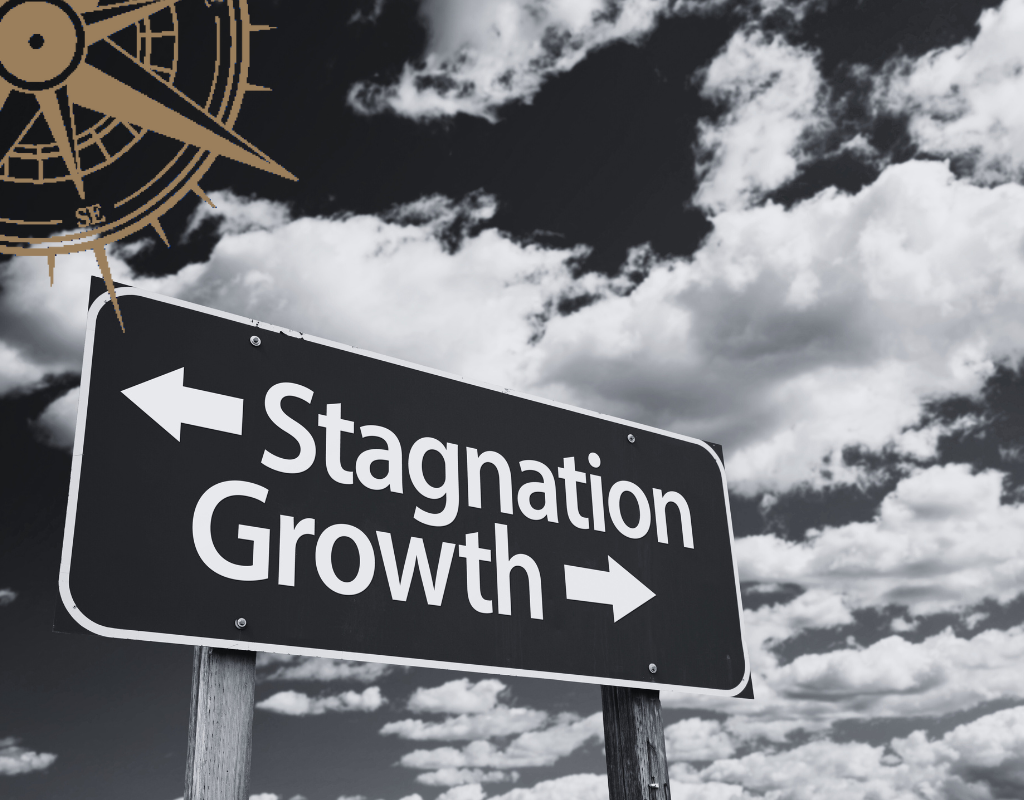
Stagnant growth is one of the most misunderstood phases in high-capacity leadership. Most leaders interpret it as failure. It is not. It is recalibration.
If you are building, leading, and stretching but something inside feels flat, this is worth sitting with. Not broken. Not failing. But stalled. And the gap between external momentum and internal experience can be confronting when you do not have a framework for what is happening.
What Stagnant Growth Looks Like From the InsideThe leadership plateau does not arrive with a crisis. It arrives with a quiet flatness. You are doing the work. And the results are still coming. But the internal signal has shifted. In fact, stagnant growth shows up when you stop asking the deeper questions. When the curiosity that once drove you forward goes quiet. When the energy of building gives way to the routine of maintaining. And the instinct is to push harder. Add more. Accelerate through the discomfort. But the plateau is not a speed problem. It is a signal.
Why the Growth Stall Is Not What You ThinkMost industry leaders try to fix a plateau by adding force. A new strategy. A new initiative. More output. But a growth stall does not respond to force. It responds to clarity. Because the flat phase is not a breakdown in your leadership. Instead, it is feedback that the operating system you have been running has reached its current ceiling. And the next level requires a different configuration, not more of the same one. Yet most leaders do not pause long enough to read the signal. Because pausing feels like confirmation that something has gone wrong. And for a leader whose identity is tied to forward motion, stillness during stagnant growth feels like a threat.
How to Read the PlateauSo the question is not how to push through the plateau. The question is what the plateau is telling you. In turn, stagnant growth is not a sign you are off track. It is the space between who you have been and who you are becoming. And the leaders who learn to read that space rather than fight it do not lose momentum. They gain the clarity that makes the next chapter possible.
You do not need more momentum. You need more clarity. Book a 15-minute Strategy Call and let’s find it.
To your brilliance, Tanya Cross Industry Leader Coach & The Coaches’ Coach BAppSoSc (Counselling) |
|
The inner work is what shifts when strategy alone cannot carry the weight, and most industry leaders know the difference even when they cannot name it.
For the founder who feels like the weight does not lift. There are moments in business when it is not about strategy or scaling. It is about feeling like you cannot breathe. Like you are carrying too much and have nowhere to put it down. You are trying to show up, lead, build, make good decisions. But underneath that, you feel stuck in emotions you cannot shift. Grief, anxiety, frustration. And the quiet question underneath it all… will this feeling end?
When the Inner Work BeginsBack in 2016, I worked with a woman who felt this way. She was not a founder yet. Not officially. But the seeds were there. She had lived through domestic violence. She was parenting a newborn on her own. Her self-worth was crumbling. The future felt uncertain. What she needed was not more strategy. It was deeper work. She reached out because she wanted the pain to stop. She wanted to feel strong again. And more than that, she wanted to be clear on her purpose. She knew she was here for something more, but the weight of what she was carrying was blocking her from accessing it. We worked together over ten sessions. No hype. No band-aids. Just consistent, grounded, deeper work. Layer by layer, she started to feel herself return. That is what the inner work looks like when it is given space. The emotions did not disappear, but they transformed. She started to feel grounded in her own worth again. She stood stronger. She no longer needed her ex or her fear to shape her next step.
From Healing to BuildingAnd then she came back. This time, not to heal. But to build. She wanted to create a business. One that gave her flexibility. One that allowed her to support others who had walked a similar path. But the fears came too. Fear of not earning enough. Fear of not being valuable enough. That is where the next chapter began. She committed. She listened. She stayed close to the deeper work. She started with mindset. She was parenting full-time. She still managed to match her pre-baby income. Then we layered in the business structure. She doubled that income. She built something lasting. The inner work had become the foundation. Today, she runs a six-figure business. She chooses her hours. She works with aligned clients. She leads a Facebook group supporting over 300 local women navigating domestic violence recovery. She has not built a business. She has built impact.
What Happens When You Choose the Inner WorkThis is what happens when founders choose to do the inner work while building the outer structure. It is not about ignoring the emotional weight. It is about transforming it so that you can lead with clarity. You do not have to build from burnout or push through emotional blocks on your own. When you are supported by the right tools, the right people, and the right space, you rise. Not with noise, but with quiet strength. That is what the inner work makes possible. And when you rise, your business rises with you.
If you are carrying more than strategy can solve, this is the work that shifts it. Book a 45-minute Strategy Call and explore what ten sessions could open up for you.
Tanya Cross Industry Leader Coach & The Coaches’ Coach BAppSoSc (Counselling) |
|
When you hit a wall in the middle of the work you love, the signal is not about effort. It is about alignment.
When I Hit a WallLast year, I hit a wall. After hours of back-to-back coaching sessions on Zoom, I felt it. Eyes dry, body locked, creativity flat. The work still mattered. But something in me had shifted. My nervous system was sending a signal I had been overriding. What once felt like flow now felt like fatigue. Coaching has been a kind of current for me. Alive, energising, clear. But suddenly, I could not feel it anymore. The current had dried up. I had hit a wall I could not push through.
My Body Woke Up. So Did My Business.I felt movement in my body and momentum in my thinking. Ideas landed. Conversations deepened. In fact, everything felt lighter. I felt like myself again. Not because I was doing less. But because I was doing it differently. Aligned with what my body and brain needed. That is what happens when you stop pushing past the wall and start listening to it.
A Sustainable Business Looks Different for EveryoneFor me, it was a walking phone call. For you, it might be a shorter workweek, longer breaks, more space in between meetings, or creative time blocked into your calendar. It does not need to be a dramatic overhaul. It only needs to be intentional. Because your business should not cost you your body. Your nervous system is not a resource to burn through. And the way you feel in your work matters as much as the work you are doing.
Build Around Your Life, Not Over ItAs founders, we are taught to structure the business first and figure life out around the edges. However, what if we flipped that? What if your business were built around how you want to feel, live, move, and show up? What if your systems served your wellbeing instead of your survival? What if your calendar supported your nervous system instead of pushing it to the edge?
Small Shifts Create Big AlignmentSometimes the most powerful changes are not loud. They do not come with a launch. Rather, they come with a walk, a pause, a boundary, or a question. What do I need to stay connected to myself while I build this? That is the foundation of a sustainable business. If you are holding space for others, make sure you are also holding space for you. Because this is not about how you work. It is about how you live.
If you have hit a wall and the work you love has started to cost your body, that is not a time problem. It is a design problem. Book a 45-minute Strategy Call and explore what shifts when you stop building over your life and start building around it.
Tanya Cross Industry Leader Coach & The Coaches’ Coach BAppSoSc (Counselling) |
|
The question of whether you can have it all as a founder is not about capacity. It is about alignment, and most leaders answer it too early with someone else’s definition. Can you have it all?
Bonnie is six now. Six years of cheeky smiles, tangled hair, little hands reaching for mine. And five years since I began coaching at scale. I remember wondering how I could possibly hold all of it. Running a business. Consulting privately. Being a Mum. Being in a relationship. Showing up for my friendships. Looking after myself. It was not about how I would do it. Rather, it was, “Can I hold all of this without something falling apart?”
Secretly, I Wanted It AllNot in the polished, airbrushed way. But in the grounded, present way. I did not want to sacrifice motherhood to lead. Or silence my ambition to be present at bedtime. I wanted to live fully inside my values, not rank them. To be a mother. A founder. A student of life. A woman building something lasting and meaningful.
Here Is What I Have LearnedWanting it all does not mean doing it all. It means letting go of rigid timelines. Of what should be done by now. Of what success has to look like. If a launch takes six months longer because I prioritised my daughter, my health, or a friend in crisis, that is not a delay. That is alignment. It is choosing to grow at a pace that honours the whole human I am, not the part that performs.
Structure Creates SpaceI do not do “balance.” But I do structure. Because without it, everything blurs and I disappear into the noise. So I block out space. For work. For movement. For stillness. For the people I love. Because having it all is not about pushing harder or squeezing more in. Instead, it is about doing it with intention.
To the Founder Who Wants More Than a BusinessMaybe you are holding multiple identities too. Builder. Leader. Partner. Parent. Friend. Caregiver. And maybe there is a voice inside that says, you have to choose. That if you slow down for family, your business will suffer. That if you rest, you will lose your edge. That if you show up fully in one space, another will slip. However, what if the question is not, can I have it all? What if the deeper question is: what does “all” even mean to me now? And am I willing to shape my business and life around that, even if it looks different from the norm?
So, Founder… Do You Still Believe You Can Have It All?Not the hustle version. Not the version that costs your peace. But the version where you are present in the life you have built. The one where you stop splitting yourself in two to keep the plates spinning If the answer is yes, then I am walking this with you. One aligned step at a time.
If you are holding all of the identities and wondering whether you can hold all of the life too, that is worth exploring. Book a 45-minute Strategy Call and let us look at what having it all means for you.
To your brilliance, Tanya Cross Industry Leader Coach & The Coaches’ Coach BAppSoSc (Counselling) |
|
Holding back as a founder rarely looks like inaction. It looks like over-editing, second-guessing, and waiting for conditions that will never feel ready enough.
Let me ask you something, and I would love your clear answer: On a scale of 1 to 10, how satisfied are you with your business at this moment? It is a deceptively simple question. But the response often holds more than a number. It holds a story. A story of growth, and sometimes of hesitation. And if you are a founder reading this, I want you to know: I see the weight that comes with building something meaningful. I also see how easy it is to stall. Not because you do not care, but because you care so much that everything has to feel aligned before you move.
Why You Might Be Holding BackThere was a time when I found myself doing exactly that. Delaying launches because they were not “perfect.” Staying quiet out of fear of being misunderstood. Hiding behind over-editing, tweaking, and second-guessing. Waiting to invest until I felt more “ready.” And holding myself to impossible standards because success had to look a certain way. The business was there. But my belief in it, and in myself, had not caught up. And that is often where founders stall. Not in lack of skill or vision. But in the quiet tension between wanting more and fearing what it will ask of you. Feeling stuck at this level is not about competence. It is about identity.
When Perfectionism Becomes the PatternFounders are natural visionaries. We see what is possible. But that same gift can turn into pressure. Pressure to execute flawlessly, to scale quickly, to lead without fault. And so we delay. We overwork. We stay in motion but do not move forward. However, clarity comes from action, not the other way around. You do not need to feel confident before you show up. You build confidence by showing up. What Shifted When I Stopped Holding BackIt was not a funnel. Or a big launch. Or a rebrand. It was the decision to treat my work like it mattered. To act as though I believed in myself, even before I fully did. To choose movement over perfection. And it changed everything. Because when you lead from belief, you become magnetic. You stop performing and start building something sustainable, something grounded, something aligned. The holding back dissolves when belief takes its place.
Your Business Is Not a Hobby. It Is a Reflection of You.
And not financially alone. But in how it gives you back your time, your energy, your freedom. Making your own schedule. Saying yes to rest, to presence, to joy. Creating from a place of integrity, not pressure. Spending time with people you love because you have built the space to. That is the reward of alignment. It is what becomes possible when you stop holding back. Not the income alone. But the inner space to live the way you have always wanted to.
What Is Your Number?Where are you feeling stretched? Where are you still waiting for things to be “ready”? What would happen if you took the next step before everything was lined up? This is not about pushing. It is about choosing. The life and business you want are not built all at once. They are shaped moment by moment, choice by choice.
If you have been holding back and you know the next step is waiting for you to take it, book a 15-minute Strategy Call and explore what shifts when you stop waiting and start leading from belief.
To your brilliance, Tanya Cross Industry Leader Coach & The Coaches’ Coach BAppSoSc (Counselling) |
|
Boundaries are one of the most undervalued tools in a founder’s leadership, and one of the most urgently needed when the pace has outrun the person.
We are coming up to the end of the year. And perhaps you are feeling it. The pull to pause. The longing to exhale. The need to step back from the weight of decisions, expectations, and everyone else’s urgency. But here is what tends to happen. A client wants something last minute. A team member needs you. There is one more deal to close. One more fire to put out. And because you care deeply, you say yes. Again. But because you can carry it does not mean you should.
Your Leadership Does Not Have to Come at the Cost of YourselfAs founders, we often confuse being available with being effective. We equate service with self-sacrifice. We think boundaries are for when things are calmer, when we have earned the space to rest. However, if you do not define your boundaries, your business will define them for you. And the more successful you become, the more people will need from you. Being needed is not the issue. But if you do not set the edges, it becomes too easy to overextend, and too hard to find yourself inside your own life.
Where Do Your Boundaries Need to Be?Boundaries are not walls. They are the agreements you make with yourself about what protects your energy, your values, and your vision. They look like being clear about when you are on and when you are not. Saying no to requests that do not honour your capacity. Protecting your calendar without guilt. Letting your team or clients know in advance when you are offline. And trusting that the business can breathe without your constant presence. Boundaries are not a sign of stepping back. They are a mark of leadership.
Boundaries Are Not About Checking OutThis is not about withdrawing. It is about checking in with yourself. It is asking: what do I need to recover, reflect, and return clear? What agreements do I want to make with my time and energy this season? Where am I saying yes to keep the peace, even when I am quietly running on empty? When you honour your needs, you show others how to do the same. When you rest, you lead from fullness, not fumes. And when that “urgent” call comes on December 28th, you will know what to say.
Clarity Creates ConfidenceSo here is what I want you to know. It is okay to take a break. It is okay to set limits. It is okay to let people know ahead of time. And it is more than okay to not explain yourself when the time comes. Your business does not thrive because you are constantly available. It thrives because you are aligned. Boundaries make that possible. Not someday. Now.
If your boundaries have been slipping and the cost is starting to show, book a 15-minute Strategy Call and explore what shifts when you start protecting your energy with the same commitment you give to everything else.
To your brilliance, Tanya Cross Industry Leader Coach & The Coaches’ Coach BAppSoSc (Counselling) |
|
Pain is a powerful motivator, but building a leadership practice around it comes at a cost most founders do not see until they are already paying it.
Let me ask you something: are you tired of needing a problem to finally get moving? It is a pattern I know well. And if you are a founder who has built your business by pushing through crisis, chances are, you know it too. The moment something breaks down, the money dips, the relationship strains, the system falters, that is when you take action. You rise. You rebuild. You solve. And sure, it works. Until it does not.
Pain Is Not the Only Way to GrowThere was a time I believed I had to be in the thick of the fire to lead. As though my story would not be valid unless it came with scars. Financial pressure. Family breakdowns. Health crises. I used to think these were necessary parts of the journey, the fuel I needed to show up. And in some ways, they did shape me. But at some point, I had to ask: am I growing because I want to, or only when I have to? Do I know how to expand from vision, not from survival? Because waiting for pain to push you is a high-cost strategy.
From Reactive Growth to Vision-Driven LeadershipMost founders are conditioned to move through stress. It is why we are effective in a crisis. But staying in that reactive mode, constantly solving, fixing, pushing, eventually wears you out. It creates an internal culture where nothing shifts unless it breaks. Where you associate progress with pressure. And growth becomes a response to discomfort, not a commitment to purpose. However, there is another way. A quieter, more powerful way. One that does not wait for pain to call the shots.
What If Growth Did Not Come From Suffering?Expansion does not need a disaster to justify it. You can launch because you desire to, not because you are desperate. Delegate because you value your energy, not because you are drowning. Evolve because it is time, not because something fell apart. This is not about bypassing pain. It is about not needing it to be your only driver. Growth through purpose lasts longer. It feels aligned. And it keeps you in the seat of your own leadership.
The Shift From Pain to PurposePain will move you, no question. It is the wake-up call that forces us to act. But if you only grow through crisis, life will keep serving you one. What if instead, you learned to create from alignment? That is what self-concordant growth looks like. Where your goals reflect who you are. Where action comes from clarity, not chaos. Where the reason behind your work is larger than solving a problem.
You Do Not Have to Earn the Next Level Through StruggleThe founder you are becoming does not need breakdowns to break through. They need a clear relationship with what they value. A vision larger than whatever fire is burning. And the courage to grow without a push from pain. You can evolve without falling apart first. You can create without crisis. You can lead without burning out.
What Are You Acting From?At this moment, am I acting from vision or reacting to pain? And if it is the latter, what would it look like to shift? You do not have to throw out the past. You have built strength through fire. But your next level may not require flames. It may require presence, clarity, and the willingness to choose growth without needing permission from pain. You are allowed to move forward even when everything is fine. That is what visionaries do.
If pain has been the pattern and you are ready to lead from something deeper, book a 15-minute Strategy Call and explore what growth looks like when it starts from vision instead of crisis.
To your brilliance, Tanya Cross Industry Leader Coach & The Coaches’ Coach BAppSoSc (Counselling) |
|
If you keep learning but nothing shifts, the issue is not what you are consuming. It is why. Is your learning leading you somewhere or keeping you busy?
Let us talk about something I see often with founders. A full folder of programs. Courses still sitting in inboxes. Tabs open with masterclasses, eBooks, worksheets. You love to learn. But deep down, there is a quiet question: “Is all of this moving me forward?” You are not alone in that.
Why Are You Still Accumulating?Learning is powerful. But only when it is intentional. Some founders study because they are deeply curious. Some develop to stay ahead. Some learn because they are building something of substance and need tools. But others learn because it feels productive, even when it is a delay tactic. Or because it soothes the discomfort of not feeling ready. Or because it is safer to stay in prep mode than to risk being seen. None of this is off track. But it is worth noticing.
Your Growth Is Not in the Course. It Is in the Application.You do not get results from consuming. You get results from integrating. It is not about how many trainings you have completed. It is about how often you stop, reflect, and ask: Why am I learning this? What am I going to do with it? What outcome do I want it to create? When you know your reason, you give your learning direction. You start measuring success not in certificates but in clarity, confidence, and traction.
The Cycle That Creates MomentumHere is the pattern I teach my clients: Learn, Apply, Earn, Reinvest. It is not linear. It is a cycle. And when you use it intentionally, it becomes one of your most powerful tools. You take in something new. Apply it, even messily. Refine it through lived experience. Earn from it, whether financially or energetically. Then reinvest in what will elevate you next. That is the loop that sustains momentum, not motion.
What Is Fueling Your Learning Right Now?Let us get clear for a second. Some of us learn to prove our worth. Some to avoid stillness. Some because the discomfort of not knowing feels like falling short. However, when you name what is underneath, you reclaim your power. If your growth is driven by fear or pressure, it will wear you out. If it is rooted in alignment and clarity, it will expand you. And that is where the deeper return lives.
You Do Not Need Another Course. You Need to Know Why You Keep Learning.Before you open another module or buy another download, ask: Am I learning to move forward or to avoid discomfort? Do I know what I will do with this knowledge? Am I measuring my progress based on what matters to me? You do not need to learn more. You need to learn with purpose.
Less Consumption. More Application. Move Forward.This season, let your learning be lean. Let it be aligned. Let it be something that fuels your expansion, not your content library. Because as a founder, your greatest power is not in what you know. It is in what you do with what you know.
If the learning has been constant but the movement has not matched it, that pattern is worth a closer look. Book a 15-minute Strategy Call and explore what shifts when you stop accumulating and start applying.
To your brilliance, Tanya Cross Industry Leader Coach & The Coaches’ Coach BAppSoSc (Counselling) |
|
When a leader’s growth has stalled, the instinct is to reach for more strategy. But the stall is rarely about strategy. It is about who is leading. You have demonstrated your expertise and delivered exceptional results.
After all, you have taken the leap to build your own business. You have earned trust, built a reputation, and created something of substance. But the momentum has shifted. Growth has stalled, or the traction that once came naturally now requires more effort than it used to. Even though your clients value your work, the business is not expanding the way you expected. And the instinct, for most leaders in this position, is to look outward. More visibility. More offers. More effort. However, the stall is often telling you something different.
When the Strategy Is Not the ProblemThere is a pattern that shows up at this stage. In fact, the leader has the skills, the experience, and the track record. None of that has changed. What has changed is the relationship between who they are and what they are building. The version of leadership that built the first chapter was designed for that chapter. It was responsive, driven, and willing to carry whatever was needed. But that same version of leadership has a ceiling. And the stall is often where that ceiling becomes visible.
What the Stall Is Asking of YouWhen growth has stalled, the question is not what do I need to do differently. It is who do I need to be differently. Because at this level, the external strategies tend to work only when the internal alignment is in place. Without that, even the most focused plan feels flat. The stall is not a sign of decline. It is a signal that the next phase of leadership is asking for something the current version of you has not yet made space for.
The Pattern Underneath the PlateauMost leaders at this point have tried everything tactical. They have refined the offer. Adjusted the positioning. Invested in new tools and approaches. And yet the needle has not moved. In the end, that is because the plateau is not a business problem. It is an identity one. The leader who built this business is being asked to evolve into the leader who can take it further. And that evolution does not happen through more doing. It happens through deeper seeing.
The Next Chapter Does Not Require More of the SameWhat got you here was drive, capacity, and commitment. Those qualities are not going anywhere. But the next chapter is asking for something alongside them: clarity on what kind of leader this phase requires. Willingness to examine what has been running on autopilot. And the space to rebuild the foundation before adding more weight to it. This is not about starting over. It is about growing into what the business is now asking for.
If growth has stalled and the tactics have not shifted it, the signal is worth a closer look. Book a 15-minute Strategy Call and explore what the stall is asking of the leader underneath the strategy.
To your brilliance, Tanya Cross Industry Leader Coach & The Coaches’ Coach BAppSoSc (Counselling) |