The Hidden Cost of Being Admired


Being admired feels like the reward. It becomes a cage when you start protecting the version of yourself others need to believe in.


Being admired feels like the reward. It becomes a cage when you start protecting the version of yourself others need to believe in.
Rest comes with guilt. An ordinary day feels like failure. For high-capacity leaders, this is what happens when success fuses with identity.
A sharp reflection on how excellence can become armour, hiding the unfinished self behind flawless precision.
A health scare is rarely only about health. For high-capacity leaders, it exposes the identity that has been running on borrowed time.
Presence at home is not about hours. It is about who is available once you get there. Your family gets what is left.
|
You are not calm. You are composed. And the cost of that performance has been running longer than you think.
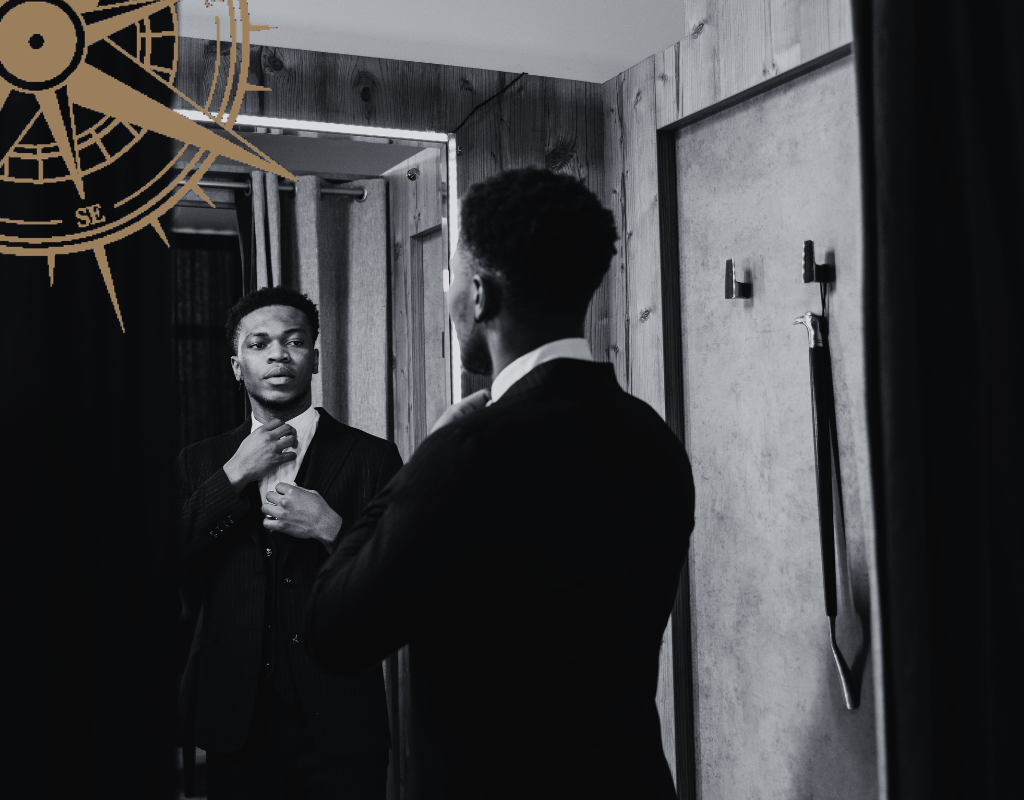
You Are Not Calm. You Are Composed.You are not calm. You are composed. But those are not the same thing, and the difference has been running you for years. The room has a position on you. You are the one who does not get rattled. The steady hand. Unshakeable. Unbreakable. And you have held that position for a decade and you have never once broken it in front of them. That is the achievement. Of course, it is also the trap. And somewhere along the way, composure stopped being a state you were in and became a performance you run. And here is the problem with that. Real composure and performed composure look identical from the outside. From the inside they are nothing alike. One is rest. The other is work. And you have been calling the work rest for so long you have stopped noticing the difference.
The Gap You Are ManagingThere is being unshaken. And there is looking unshaken. You are exceptional at the second. But the first has become rarer than you would say out loud. Watch where it shows up. The number lands wrong in the meeting and your face does not move. Good. Because that is the job. Then, three seconds later, something in you does move, and you file it before it reaches your expression. You did not decide to. In fact, the edit is automatic now. The composed response runs before you choose it. Then it shows up on the stage, in the boardroom, in the hard conversation. All the places it should. And then it shows up in the car with your kid. At the dinner table. Lying awake next to your partner. Places it never needed to be. But the reflex does not know how to switch off, because you never built an off switch. You built a permanent one.
This Was Never VanityAfter all, you did not do this to look good. You built real authority on being the steady one, and it worked, because the steadiness was real. You do have a tolerance for pressure and heat that most people fold under. And that part is not a costume. The trap is more subtle than vanity. Because the position you built has no category for a version of you that is affected, uncertain, or visibly inside your own experience. So the moment your inner life runs past what you have shown the room, you have exactly one move. Contain it. And every time you make that move, the gap between what you feel and what you let yourself show gets a little wider. And yet you have been making it for decades. And the composed version of you has become the only version the world gets to see. And this is the Composed Authority. One of the personas that carried you here. You built it through intelligence, not weakness.
What Quiet Authority IsPicture the composure you do not have to hold. Because you walk in as the steadiest presence in the room and it costs you nothing, because it is no longer a performance. It is simply true. And when something moves you, you allow it to show, and your authority does not crack, because it was never the containment holding it up. This is Quiet Authority. Composure that does not need managing. Instead, you stop being the unshakeable one and become something rarer, the one who is not afraid of being shaken, because being shaken no longer threatens who you are. And the face you show the room and the face you wear alone become the same face. So when was the last time you were not composed. Not in private, where you have permission. In front of a group whose respect you were sure it required. And if you cannot find the moment, that is the answer. Because the composure is not something you have. It is something that has you.
If the composure you hold has started costing you more than it gives you, this is the work. Book a 15-minute Strategy Call and begin with Strategic Dissolution.
To your brilliance, Tanya Cross Industry Leader Coach & The Coaches’ Coach BAppSoSc (Counselling) |
|
The success trap is what happens when your greatest wins become the very thing that holds you in place, and most leaders do not see it until the energy has flattened.
You built something undeniable. The track record speaks for itself. The people around you point to it as proof that you know exactly what you are doing. And that is precisely the problem.
How Winning Locks You InWhen your wins become your brand, they start to function as obligations. You cannot pivot without appearing inconsistent. You cannot doubt without appearing unstable. You cannot explore without it looking like you do not have a plan. As a result, you keep doing what worked, even when it no longer feels aligned. Because the cost of breaking from the pattern feels higher than the cost of staying on the treadmill. Yet this is not weakness. The part of you that built this will fight the part of you that wants to leave. In fact, every big win narrows the permission structure around who you are allowed to be next. The more you are known for something, the more staying in it feels like loyalty and leaving it feels like betrayal: of others, of the work, of yourself.
What the Success Trap CostsBut here is what happens when leaders stay too long inside an identity that no longer fits: the results hold but the energy flattens. The decisions get more conservative. The vision gets smaller, not because you have run out of ambition, but because the frame has run out of room. In other words, that is the success trap in motion. The numbers look fine. The leader does not.
Breaking the Pattern Without Starting OverHowever, breaking the success trap is not about starting over. Rather, it is about being willing to dissolve the part of you that built this, so the part of you that comes next has somewhere to live.
If the wins are holding you in place rather than moving you forward, that is the pattern worth examining. Book a 15-minute Strategy Call and explore what is on the other side of the success trap.
To your brilliance, Tanya Cross Industry Leader Coach & The Coaches’ Coach BAppSoSc (Counselling) |
|
The success persona is the most expensive operating system a leader can run. And most do not realise they are running it.
You are not tired from the work. You are tired from the person you are pretending to be while you do it. And most industry leaders arrive at this realisation convinced their exhaustion is a workload problem. They clear the calendar. Hire the second EA. Take the holiday. Reduce the meeting load. And the exhaustion is still there on Monday morning. Because the success persona is still running.
Two Operating Systems Running at OnceWhat most leaders are carrying is two operating systems. The first is the one they appear to be. The Climber. The Closer. The Composed Authority. The version the market rewarded, the team relies on, and the boardroom expects. The second is the one they know is true. In fact, the distance between those two systems is not a mindset issue. It is a metabolic cost. Each suppressed instinct. Each yes that meant no. Each decision made for optics rather than truth. That is energy spent maintaining a mask. And over a decade of compounding choices, the success persona becomes the operating system. And the bill comes due at the summit, not the climb.
How the Success Persona Was BuiltHere is the part most performance frameworks do not address. Weakness did not build the persona. Intelligence did. Competence did. Sheer willpower and work ethic did. The Climber was a precise adaptation to the environment that shaped you. It read the rewards and punishments of the early years and optimised hard. You reinforced the traits that earned approval. And you buried the traits that drew judgment. But the environment has changed. The scale you have created, the relationships you are responsible for, none of it requires the same configuration that got you here. Yet the success persona is still consuming the resources required to lead the new chapter.
Why Working Harder Stops WorkingThere is a threshold where your current operating system can no longer process the scale you have created. More effort yields more friction, not more results. So you add more discipline, more systems, more accountability. But the Climber cannot solve the problem the Climber created. Because the Climber is the problem. Your second evolution does not ask you to build a better version of the success persona. Instead, it asks you to dissolve it. And meet what was underneath the whole time.
What Remains When the Identity Lock DissolvesWhen the success persona stops running the system, what remains is clarity. Decisions get faster because there are fewer competing identities voting on them. In turn, the calendar simplifies because the obligations that were performances of identity drop away. Relationships clarify because you are no longer performing the version of yourself you thought others wanted. As a result, composure is no longer a performance. It is the natural state of a leader who has stopped running two operating systems at once. The question is not whether the second evolution is coming. It is whether you are going to choose it, or wait for it to choose you.
If this landed deeper than strategy, that is worth exploring. Book a 45-minute Strategy Call
To your brilliance, Tanya Cross Industry Leader Coach & The Coaches’ Coach BAppSoSc (Counselling) |
|
Most high-capacity leaders will encounter the success trap at some point. This is what it actually looks like.
You are doing everything “right” and still feel less free.
The Hidden Cost of the Success TrapThe obvious trap is burnout. The real one is quieter: you are objectively winning, yet you feel more constrained, more vigilant, more suffocated by obligation and less able to move on instinct. When your wins start dictating your permissions, success becomes a cage.
The Mechanics of the Success TrapSo here is the diagnosis. Success creates proof. Proof creates expectation. Expectation creates a role. And roles, when they are rewarded, become almost impossible to interrogate. You stop asking “What do I actually want now?” because you are too busy answering “What do I have to do to maintain this?” This is why the trap is so sticky: it is built on who you had to be to build the success, not on who you have grown into since.
How the Success Trap Shows UpYou develop a way of operating that gets results. You repeat it. It keeps working. People start relying on it. You start relying on it too. Soon, the business is no longer simply a vehicle for value. It is a beast you cannot afford to disappoint. So you narrow. This is the success trap taking shape in your daily behaviour.
And because it still works, you do not call it a problem. You call it discipline. You call it standards. You call it strategy. But your internal experience tells the truth. Your energy is flat. Your attention is fragmented. You are moving from fear, not inspiration.
Why More Wins Do Not HelpIn fact, more wins intensify the role. They raise the stakes of staying the same. That is the mechanics of the success trap at its most advanced stage. However, the trap is not that you are successful. The trap is that you have started treating your success as evidence of who you must continue to be. Once success becomes identity, the business becomes a defence mechanism. You keep producing the version of yourself that has been rewarded, even when it is no longer the most honest one.
If any of this is landing, take it as information, not a call to action. This is not about fixing anything. It is about naming the mechanics clearly enough that you can see them operating in real time. The moment you can spot the trap, it stops being invisible. And that is where everything can begin to shift. If you want to explore this in a private conversation, you can start here: Book a 15-minute Strategy Call.
To your brilliance, Tanya Cross Industry Leader Coach & The Coaches’ Coach BAppSoSc (Counselling) |
|
The slow disconnection from your own light does not announce itself. It arrives quietly, in the gap between what you have built and how you feel about it. You built it all. So why do you still feel like a fraud?
You have created a business. You have a reputation, results, and reach. But instead of feeling settled, you are quietly second-guessing yourself. There is a part of you that wonders when someone will figure it out. Not because you are not qualified, but because a gap has opened between your growth and your self-perception. In fact, this is impostor syndrome in founders. And it often shows up not at the beginning, but when things are already working.
Where the Slow Disconnection Shows UpYou might be shifting offers, redefining your role, or preparing to lead in a new way. On the outside, the business is progressing. However, on the inside, you feel the pull of uncertainty. It sounds like: “I built this, but I do not feel like I deserve it.” “What if it was just timing or luck?” “Everyone else seems more confident than I do.” If this is resonating, you are not alone. And there is nothing off about where you are. You are simply at a moment where the next version of you is asking for your attention. Let us look at a few of the most common narratives I hear from founders and how to shift them.
The Stories That Hold Founders in Place“I am not the expert anymore.” You used to feel sharp in your delivery. Now you are expanding or shifting your message and feel unsure about how you show up. Instead of owning your evolution, you keep measuring yourself against who you used to be. That self-doubt is not a signal to retreat. Try this: let your voice reflect where you are now. After all, the work has changed. So has your lens. That does not make you less of an expert. Rather, it makes you a more embodied one. “Everyone else has it more figured out than me.” You see other founders scaling, building out teams, launching new things. And even if you are proud of your own work, you find yourself wondering if you are falling behind. As a result, the comparison kicks in, and so does the contraction. This is impostor syndrome wearing a different face. Try this: when you notice the comparison, pause. Then look at what you admire. If you are drawn to it, it likely reflects something already alive in you, even if it is still emerging. Use it as insight, not as a reason to shrink. “I do not deserve to be here.” Furthermore, this one is more than surface doubt. It is a deeper sense that what you built may not last. You wonder if people will want what you offer when you stop pushing. Yet you are not sure if your presence alone is enough. This is where the slow disconnection runs deepest. Try this: ask yourself, “What am I tying my worth to?” Often, it is old definitions of success. Numbers. External validation. Output. These stories served you when you were starting out. However, they need to evolve now.
What the Slow Disconnection Is Telling YouImpostor syndrome in founders is not about a lack of capability. It is a misalignment between your inner identity and your outer leadership. Because it tends to appear when you are entering a new phase that requires more of your presence, not just your performance. You do not need to prove yourself. Instead, you need to meet yourself where you are. You are already doing the work. Therefore, it is time to let it reflect who you are.
If the gap between what you have built and how you feel about it is widening, that is worth a conversation. Book a 45-minute Strategy Call and explore what the slow disconnection is asking you to see.
To your brilliance, Tanya Cross Industry Leader Coach & The Coaches’ Coach BAppSoSc (Counselling) |
|
A warped perception does not announce itself. It installs early, reinforces quietly, and becomes the standard the leader measures everything against.
This Warped My PerceptionI was at the shops with Bonnie over the weekend when she picked up a Barbie doll. She was engrossed, putting its shoes back on and playing with it in the store. And as I watched her, something landed. Because she was absorbing a picture of what a woman is supposed to look like. Not from a conversation. Not from a lesson. From the shape of a toy in her hands. In fact, it made me think about how the same process runs underneath leadership. Not with dolls. With models.
Where the Warped Perception Comes FromAfter all, leaders carry an image of what leadership is supposed to look like. Confident. Certain. Composed under pressure. Available at all hours. Carrying the weight without showing the cost. No one chose that image. The leader absorbed it. Rather, from the leaders who came before. From the culture of the industry. From the quiet expectations of boards, clients, and teams who needed someone to look like they had it handled. Over time, the absorbed image becomes the standard. And the standard becomes the filter through which the leader measures themselves. Not against what is true. Against what was modelled. And so this is the warped perception most leaders do not see. The image they are trying to match was not accurate. Others projected it based on what they needed to see, not on what leadership requires.
The Cost of Performing a Version That Was Not YoursWhen the standard is warped, the performance follows. The leader who believes leadership means certainty stops asking questions. The leader who believes leadership means composure stops expressing what is happening underneath. The leader who believes leadership means availability stops protecting the space they need to think clearly. In fact, this is the Success Persona. The version of the leader the environment shaped to match what it required, not what the leader needed to lead well. And the body holds the cost of the performance. The calendar holds the evidence. And the leader keeps measuring themselves against an image that would not survive contact with the reality of what they carry.
How the Warped Perception ShiftsHowever, the shift does not start with doing more. It starts with seeing the model clearly. So where did the image come from. Whose version of leadership is it. And what would change if the leader stopped trying to match it and started leading from what is true for them. The warped perception is not a failure of character. It is a pattern the leader absorbed early, reinforced often, and left unexamined because they were too busy performing to question the standard. Once the leader sees the perception for what it is, the leader stops trying to match an image that was not theirs. As a result, the version of leadership that emerges is more grounded, more sustainable, and more effective than the performance it replaces.
The Standard Changes When the Leader DoesThe history of beauty standards shows how quickly the ideal shifts. After all, what was aspirational in one decade becomes outdated in the next. And the same is true of leadership. The stoic, always-on model of leadership belonged to a context that no longer exists. But the leaders still performing it are paying a price that compounds quietly. But the leaders who see the warped perception for what it is get to put it down. Not because the old model served no purpose. Because the leader borrowed it. Because borrowed models stop fitting once the leader outgrows the context they came from. Ultimately, the question is whether the leader is willing to see the image they have been matching and decide if it is still theirs to carry.
If you are leading from a model you did not choose and the cost is starting to show, book a 15-minute Strategy Call and explore what shifts when the performance stops and the leader underneath it steps forward.
To your brilliance, Tanya Cross Industry Leader Coach & The Coaches’ Coach BAppSoSc (Counselling) |