The Fear of Being Misunderstood


At a certain level, leaders do not fear criticism. They fear being misunderstood, reduced to a version that leaves out what matters most.

At a certain level, leaders do not fear criticism. They fear being misunderstood, reduced to a version that leaves out what matters most.
Control grips. Clean power governs. The difference is whether your leadership is coming from fear of collapse or internal order.
A health scare is rarely only about health. For high-capacity leaders, it exposes the identity that has been running on borrowed time.
|
You are not calm. You are composed. And the cost of that performance has been running longer than you think.
You Are Not Calm. You Are Composed.You are not calm. You are composed. But those are not the same thing, and the difference has been running you for years. The room has a position on you. You are the one who does not get rattled. The steady hand. Unshakeable. Unbreakable. And you have held that position for a decade and you have never once broken it in front of them. That is the achievement. Of course, it is also the trap. And somewhere along the way, composure stopped being a state you were in and became a performance you run. And here is the problem with that. Real composure and performed composure look identical from the outside. From the inside they are nothing alike. One is rest. The other is work. And you have been calling the work rest for so long you have stopped noticing the difference.
The Gap You Are ManagingThere is being unshaken. And there is looking unshaken. You are exceptional at the second. But the first has become rarer than you would say out loud. Watch where it shows up. The number lands wrong in the meeting and your face does not move. Good. Because that is the job. Then, three seconds later, something in you does move, and you file it before it reaches your expression. You did not decide to. In fact, the edit is automatic now. The composed response runs before you choose it. Then it shows up on the stage, in the boardroom, in the hard conversation. All the places it should. And then it shows up in the car with your kid. At the dinner table. Lying awake next to your partner. Places it never needed to be. But the reflex does not know how to switch off, because you never built an off switch. You built a permanent one.
This Was Never VanityAfter all, you did not do this to look good. You built real authority on being the steady one, and it worked, because the steadiness was real. You do have a tolerance for pressure and heat that most people fold under. And that part is not a costume. The trap is more subtle than vanity. Because the position you built has no category for a version of you that is affected, uncertain, or visibly inside your own experience. So the moment your inner life runs past what you have shown the room, you have exactly one move. Contain it. And every time you make that move, the gap between what you feel and what you let yourself show gets a little wider. And yet you have been making it for decades. And the composed version of you has become the only version the world gets to see. And this is the Composed Authority. One of the personas that carried you here. You built it through intelligence, not weakness.
What Quiet Authority IsPicture the composure you do not have to hold. Because you walk in as the steadiest presence in the room and it costs you nothing, because it is no longer a performance. It is simply true. And when something moves you, you allow it to show, and your authority does not crack, because it was never the containment holding it up. This is Quiet Authority. Composure that does not need managing. Instead, you stop being the unshakeable one and become something rarer, the one who is not afraid of being shaken, because being shaken no longer threatens who you are. And the face you show the room and the face you wear alone become the same face. So when was the last time you were not composed. Not in private, where you have permission. In front of a group whose respect you were sure it required. And if you cannot find the moment, that is the answer. Because the composure is not something you have. It is something that has you.
If the composure you hold has started costing you more than it gives you, this is the work. Book a 15-minute Strategy Call and begin with Strategic Dissolution.
To your brilliance, Tanya Cross Industry Leader Coach & The Coaches’ Coach BAppSoSc (Counselling) |
|
Delegation ownership is the part most leaders get wrong. The task moves. The weight does not. And that gap is where the capacity disappears.
You Delegated the Work. You Kept the Weight.You did the responsible thing. You handed the project to a capable team three months ago. Your calendar has the gap it was supposed to have. And you are still thinking about that project as much as when you were running it. You lie awake on it. You run the scenarios. The doing left your desk. The weight never left your body. And you call this delegation. Your nervous system says otherwise.
Delegation Moved the Task. It Did Not Move the Ownership.Because there are two things you can hand over. The doing, and the responsibility for how it lands. But most leaders at your level are excellent at the first and struggle with the second. You give away the operating and keep the outcome. So the workload looks lighter, and you are tired in a way a lighter workload should have fixed and has not. And this is why delegation keeps disappointing you. Someone told you that handing work over would give you your capacity back. You handed it over. But the capacity did not return, because it does not live in the task. It lives in the ownership. And you kept that. The tell is simple. You handed the project over, and you are still the one who cannot sleep about it. The person carrying the outcome is you. The person doing the work is someone else. And that gap is the most expensive arrangement in your business, because you are paying the full cognitive cost of the work without doing any of the work.
Where the Contract Was SignedThis is not a discipline problem, and it will not yield to a better delegation framework. The ownership is older than the business. Somewhere early, you became responsible for outcomes that were never yours to control. An early role where you took on parental responsibilities and they became your problem. A household where someone held you accountable for things you could not change. A pattern, from young, of being the one who carried how things landed for everyone else. You created a contract with a context that required you to be the responsible one, and the contract is still executing decades after the context has gone. So every outcome inside your world reads to you as yours to personally guarantee. That is not a character trait. It is you adapting to a world that no longer exists, still running as though the original environment were here.
The Responsible OneYou do not release this by caring less. Owning outcomes is bound up with things you value. Responsibility. Care. Quality. After all, strip those out and you would not respect the person left standing. So the work is not to stop caring about results. It is to stop carrying the weight of results and responsibilities that were never yours. Instead, it is untangling the identity underneath it. The responsible one. The person things do not fall apart around. It was built early, it has held for decades, and you have never once questioned it, because it has never occurred to you that it was a role you took on rather than the truth of who you are.
What It Looks Like When the Weight Goes With the WorkPicture handing over the next project. The work leaves your desk and the responsibility for the result leaves with it. And the team carries the outcome, and they carry it well, because ownership tends to rise to meet the person holding it. You carry oversight, not anxiety. You check in at the right cadence, and not once more than that. You sleep through the night without running other people’s scenarios. And the capacity you were promised finally arrives, because this time you let go of having to be the one responsible for the outcome. That is the difference between a lighter workload and a lighter life. One is logistics. The other is the return of the thing delegation was supposed to buy you and never did. Of everything you have handed over this year, how much did you actually let go of, and how much are you still carrying in the one place no reshuffle of the calendar can reach.
If the work has moved but the weight has not, that is where the work begins. Book a 15-minute Strategy Call and find where the delegation ownership is still being held.
To your brilliance, Tanya Cross Industry Leader Coach & The Coaches’ Coach BAppSoSc (Counselling) |
|
You do not have a time problem. You have an off switch problem. And for high-capacity leaders, that distinction changes how you look at what follows.
You Do Not Have a Time Problem. You Have an Off Switch Problem.You do not have a time problem. You have an off switch problem. And for high capacity leaders, that distinction is the whole thing. In fact, most leaders are not tired because they are doing too much. They are tired because some part of them is still on duty when the work is meant to be over. At dinner. In bed. On holiday. After the keynote, after the launch, after the decision has already been made. The body is somewhere else, but the attention is still at the business. That is the real cost. Not the hours. The continuous allocation of self.
Still on DutyIt arrives at 3am. The body is exhausted and the mind is already back in the business, running a decision from yesterday or a scenario that may never happen. The leader calls it stress. The body is refusing to release a role it believes it still needs. Sleep should be an off state. It has turned into another context where the business keeps running. And it shows up at dinner. A leader can be physically home and entirely absent. Body at the table, mind in the inbox. The family does not experience your intention. They experience your attention, and eventually they adapt. They stop expecting full presence and learn to live with the version of you that is only half there. You may not notice the cost until someone says it plainly. You are here, but you are not here. And it shows up as watching. The inbox check. The dashboard check. The team check. They call it responsibility. Sometimes responsibility is only the acceptable name for vigilance. It is not a time problem. It is an identity that does not know how to stand down.
The Business Is Not Fragile. The Identity Is.But the leader is not attached to the checking. They are attached to what the checking proves. I am still the one holding this together. And that identity is difficult to put down, because if the business continues without constant attention, the leader has to meet a confronting question. Who am I when I am no longer the one keeping everything upright? This is the Humanity Trade. Because the leader gets the external result. Revenue grows, status grows, the reputation grows, and internally the leader becomes less available, less rested, less able to enjoy the thing they spent years building. That is not success maturing. That is entropy.
The Solution Is Not to Care LessThis is where most advice fails. Set better boundaries. Switch off. Put the phone away. But directionally correct and mechanically shallow, because the leader already knows what they should do. But the real question is why the body refuses to do it. Why sleep feels unsafe. Why not watching feels irresponsible. That is where the work begins. Not at the behaviour. At the identity contract underneath it. And somewhere, switching off became unsafe. Somewhere, watching became the way things stayed intact. After all, those adaptations served a purpose once. But a survival adaptation that never gets updated becomes a ceiling. The next evolution is not learning to carry more. It is learning what no longer needs to be carried. This is Strategic Dissolution. Dissolving a persona built on proving and pushing, so what remains is the truth of who you are underneath it. And as you step into that identity, you do not become less ambitious. Instead, you stop paying for ambition with the parts of your life you built it to protect.
If your business only works when your attention is permanently inside it, you have not built freedom. You have built a more sophisticated form of captivity. The next level is not more effort. It is the return of the off switch. Book a 15-minute Strategy Call and explore what shifts when it comes back.
To your brilliance, Tanya Cross Industry Leader Coach & The Coaches’ Coach BAppSoSc (Counselling) |
|
A leadership ceiling that keeps moving looks like ambition from the outside. Underneath, it is carrying something the leader has not turned to look at.
The Ceiling That Moves Every Time You Get CloseYou set a target. You work toward it. You get close, and something shifts. The goal loses its weight. A new direction appears. The original plan no longer fits, so you move the target. Again. From the outside, this looks like drive. From the inside, there is a different experience running underneath it. A restlessness that does not resolve when the next milestone arrives. A flatness after a win that should have mattered more than it did. The impulse to set the next target before the last one has had time to land. That is not ambition. That is the ceiling operating.
When the Leadership Ceiling Keeps ShiftingA glass ceiling is a barrier you can push against. Challenge it, break it, and you are through to the other side. The Ceiling of Complexity does not work that way. It does not hold a leader back through any shortage of capacity. It holds them back because what waits on the other side requires a version of them they have not met yet. So the ceiling moves. Not as strategy. As protection. Staying in pursuit feels safer than standing inside the outcome and asking the two questions that carry weight. Was this what I was after. Does it feel the way I expected it to. Pursuit still reads as progress. And there is no other world you have lived in outside of it, so moving becomes the path of least resistance, and most leaders take it long before they have to meet those questions. The ambition is not the problem. It is real, and it is doing exactly what it was built to do. The problem is what it is carrying underneath. A leader built for the chase does not know how to be still inside a result. The holiday never quite lands. They are on, all the time, and cannot find the switch to be off.
The Leader Built for the ChaseSo the win lands, and within a week the target has already moved. A bigger number. The next acquisition. The thing after this thing. They call it drive. What it is, is a refusal to stand still and be present, because standing still would mean meeting the two questions the chase lets them outrun. Why am I pushing this hard. Who am I trying to prove it to. After all, the identity was built for the pursuit. It has no idea what to do with the result. So it keeps the ceiling moving, because a moving ceiling means there is always somewhere else to run, and the leader does not have to find out what they are running from.
What the Ambition Is CarryingThe protection is doing something for you. It keeps you in familiar territory. It postpones the meeting with a version of yourself you have not yet been willing to face. And it has been doing that for as long as you have needed it to. Because the pursuit built you. It got you here. It taught you what you are capable of under pressure. And the pattern underneath it has been keeping you in motion long enough to postpone something you were not ready for. Neither side of that equation is the problem on its own. The pursuit and the pattern have worked together for a long time, and together they built your success. What is worth seeing is the pattern running underneath the ambition, because that is the part making the choice for you. The work is not to stop being ambitious. It is to look at what is driving the ambition, and to ask how you keep achieving without the force and the chase. How you do it from flow rather than pressure. From power rather than push. That is where the leadership ceiling starts to shift on its own terms.
The Feeling That Keeps Getting Called Something ElseThe restlessness between milestones. The impulse to recalibrate before the current chapter has had time to close. The way a win lands and then evaporates before it registers. Leaders keep giving these experiences different labels. They call them standards. They call them growth. They call them “I am just wired this way.” The labelling keeps the pattern invisible. As long as the movement sounds like ambition, there is no reason to question it.
The Leadership Ceiling From the Other SideLeaders who have looked at this pattern describe something they did not expect on the other side. Not less ambition. Often more, with bigger goals. But it runs on different fuel. It comes from fullness rather than from emptiness and the need to prove. Goals get reached from inspiration and then held, rather than reached from desperation and immediately replaced. The leadership that follows is more grounded. In flow, and standing in their own power. Not because the leader has slowed down, but because the movement is no longer being driven by what is being avoided. It starts with seeing the ceiling for what it is. Not calling it ambition. Not moving the target again. Seeing it.
If the target keeps moving and you are starting to notice the pattern, that noticing is the beginning of the work. Book a 15-minute Strategy Call and explore what is on the other side of the ceiling you have been circling.
To your brilliance, Tanya Cross Industry Leader Coach & The Coaches’ Coach BAppSoSc (Counselling) |
|
Filtered feedback is one of the least visible shifts that comes with authority. The higher you go, the wider the gap between what you hear and what is unfolding around you.
The Feedback You Stop Getting When You Get SuccessfulThere was a time when people told you what they thought. Not what they thought you wanted to hear. What they thought. Your mentors were direct. Your peers pushed back without thinking twice. Your clients gave it to you straight. The information was uncomfortable at times, but you could trust it. And because you could trust it, you grew. That changes once you hold the authority. The people around you start to manage up. Not with intent. Authority tends to shift what people are willing to bring to you. They begin editing what they bring to you. Adjusting the weight of it. Choosing which version of a problem to present. And the picture you start receiving of yourself and your organisation becomes more curated, more affirming, and further from what is happening. You may not have noticed when it started. Most leaders do not. Because it does not feel like something has shifted. It feels like things are going well.
The Filtered Feedback You Do Not Feel BuildingIt is gradual. You hear what people think you want to hear. Challenges lose their edges before they reach you. Difficult discussions happen about you rather than with you. And the business you think you are running is not the one people inside it are living. The information that would have added dimension, the blind spots, the friction, the things that have gone unsaid, stops surfacing. Not because people are withholding. Because the environment has learned to prioritise stability over transparency. And the way you are leading starts to drift without you feeling it move. The filtering serves a function too. It protects your focus. It reduces noise. It allows you to operate without being pulled in every direction. It is not accidental. It is the system doing what systems do around authority. And it has a cost. Both are true at the same time.
The Filtered Feedback That Looks Like SuccessYou are surrounded by people. But the information you need to lead with full clarity is reaching you less and less. And the loneliness of that is hard to put words to, because from the outside it looks like you have a full organisation, a strong culture, and a business that is working. The way people experience you and the way you see yourself start to pull apart. And because it is not being pointed out, you have no way of seeing it from where you are. This is where the Success Persona takes over. You keep being the version of yourself that the environment rewards. And it continues without anything to interrupt it. Not because you are unwilling to look at it. Because the filtered feedback that would have shown you a fuller picture of yourself is no longer reaching you. If that resonates, stay with it for a moment.
The Leaders Who Choose What Reaches ThemThe leaders I work with who navigate this well did not push through it. They did something that required more from them, not less. They started choosing what reaches them rather than letting the environment choose for them. A trusted peer who is not invested in agreeing with them. A coach who is outside the business and sees what the people inside it cannot. And underneath that, they shifted the question they ask. Not what is going well. But what has gone unsaid around them. That question shifts things. It brings forward what the leader already felt but could not get anyone to say back to them. The filtered feedback did not disappear because you stopped being worth telling the truth to. It disappeared because the system stopped delivering it.
The Full PictureWhen you start choosing what reaches you, the full picture starts to form. The parts that affirm and the parts that stretch you. The parts that stabilise and the parts that disrupt. Decisions get clearer because they are based on a fuller picture. Relationships shift because the performance becomes less necessary. And the leadership that emerges is not more exposed. It carries more depth. The question is not whether filtered feedback exists at your level. It does. And it serves a purpose. The question is whether you are choosing what reaches you, or whether the environment has been making that choice on your behalf.
If the feedback reaching you is not what it used to be, that is worth sitting with. Book a 15-minute Strategy Call and explore what shifts when you start choosing what reaches you rather than having the environment choose for you.
To your brilliance, Tanya Cross Industry Leader Coach & The Coaches’ Coach BAppSoSc (Counselling) |
|
The path you have been avoiding is rarely the one that lacks value. It is usually the one that carries the most. What I have noticed in my own life, and in the leaders I work with, is that the things we move away from and try to avoid have been the very things that hold the most significant growth.
That is a pattern worth examining. Not because avoidance is a flaw, but because what sits on the other side of the discomfort is often what the next phase of leadership requires.
Why the Path Feels UncomfortableDiscomfort is not a signal to stop. It is a signal that something unfamiliar is being asked of you. After all, for most leaders, the instinct to avoid discomfort was built early. It kept you safe. It kept the structure intact. And it became so reliable that it started running decisions you did not consciously make. However, at a certain point in leadership, the avoidance pattern itself becomes the constraint. The conversation you have been putting off. The direction you keep circling but do not commit to. The version of yourself you can see but have not stepped into. These are not signs that you are not ready. They are signs that the path is asking you to grow into the version of you that can walk it.
The Things You Avoid Teach You the MostIn my own experience, the things I ran from and tried to avoid were the very things I learned about myself the most. And so walking toward the discomfort, where it is unfamiliar and where the outcome is uncertain, is where the expansion lives. Not because difficulty is the point, but because the willingness to meet it reveals capacity you did not know was there. Difficulty and discomfort are not invitations to shut down. They are invitations to go deeper, to draw on reserves you have not yet accessed, and to discover more about yourself and your capabilities.
The Pattern That Keeps Leaders CirclingThere is a version of avoidance that looks productive. It shows up as preparation. As research. As waiting for clarity before committing. But underneath it, the pattern is the same. The path that requires the most of you is the one being deferred. And the deferral has a cost that compounds quietly over time. The decision you have been sitting on. The conversation you have been rehearsing. The direction you keep returning to in your thinking but have not acted on. These are signals, not obstacles.
Walking the PathThe path forward does not require you to have the full picture before you take the first step. It requires the willingness to move toward what is uncomfortable with your eyes open. Get clear on what you want. Name the direction, even if the route is not yet visible. And take the first step before the conditions feel ready, because the conditions do not become ready. You do, by walking. Then share the direction with someone who can hold you to it. Find the support that stretches you rather than the input that keeps you comfortable. And recognise that the answer to most of what you have been circling is already available. It has been waiting for you to ask.
To your brilliance, Tanya Cross Industry Leader Coach & The Coaches’ Coach BAppSoSc (Counselling) |
|
The pike effect is one of the most quietly expensive patterns in leadership, and most leaders do not recognise it because it shows up as reasonableness, not fear. Put a pike in a tank divided by a sheet of glass. Minnows on the other side. The pike attacks and hits the glass. Attacks again, hits the glass. It repeats this until the cost teaches it a rule. Hunting equals pain. So it stops. Then the glass is removed. The minnows drift freely past its mouth. The pike does not hunt. The constraint is gone. The behaviour stays. That is the pike effect.
You are the pike. So is most of your leadership team. The glass came out of your tank years ago, and you are still organising your decisions around the space where it used to be. This is not a capability problem. You did not run out of capability. You ran into a constraint that stopped being true and never told you. Most of what leaders diagnose as a strategy problem at the top is learned inhibition wearing the costume of logic.
The Glass That Is No Longer ThereListen to the sentences that run your business and notice how many of them are stated as physics. We cannot raise prices. We cannot hire above a certain level. We cannot ship anything that is not perfect. Said with that much certainty, they sound like laws. Most of them are scar tissue. You could raise the price. You could hire more senior leaders. You could ship the imperfect thing and survive it. The reason you do not is that somewhere back there you attacked, it hurt, and your nervous system filed the lesson under permanent. The constraint was accurate once. Early on, the glass was real, and the discipline it taught you was the correct response to the environment you were standing in. This is the part worth sitting with. The constraint was not stupidity. It was intelligence. It was a precise adaptation to conditions that genuinely existed at the time. However, the problem is not that it worked. The problem is that it is still running now that the conditions which required it have gone. An expired adaptation does not announce its expiry. It keeps issuing instructions in a currency that stopped circulating years ago, and you keep paying. That is the pike effect running underneath your leadership.
How Old Constraints Disguise Themselves as LogicIt rarely shows up as fear. It shows up as reasonableness, which is exactly what makes it expensive. Fear you would notice. Reasonableness you defend. It shows up as treating one failure as a law. A launch underperformed once, so you quietly stopped marketing with consistency. One hire went wrong, so you have delegated too little for three years. The single data point hardened into a rule, and the rule has been charging you rent ever since. I reframe failure as Feedback of the Hidden Order, information about the path, not a verdict on it. The pike read one verdict and closed the case for life. It shows up as constraint mistaken for identity. I am the one who handles it. That sentence feels like leadership. It is often a historical survival role still being performed long after the history that needed it ended. This is Identity Lock at the level of operations. The behaviour that once kept the structure alive has become the thing the structure is built around, and you cannot see it, because by now it feels like you rather than like a choice. And it shows up as the bold move that never reaches the menu. The most expensive moment is not when you evaluate the brave option and decline it. It is when the option is removed before you are conscious of it, deleted by a system protecting you from a tank that drained long ago. You are not deciding against it. You are not seeing it.
What the Pike Effect Costs YouThe bill for all of this reads as rational on the surface. Slow decisions and a standing demand for certainty before any move. Underspending on the things that compound, team and brand and distribution, because spending there means swimming at the glass. Complexity overbuilt to compensate for the absence of clean conviction, which becomes its own Ceiling of Complexity. And underneath all of it, the quiet drain of Manual Override. Working harder to avoid changing the underlying rule, because changing the rule means finding out the glass is gone and the years of caution were spent on nothing.
What Conviction Looks Like Once the Glass Is GonePicture the version of your decision-making that is no longer negotiating with a constraint that does not exist. The bold move arrives on the menu and you actually look at it. You price the offer at what it is worth and watch the market confirm the number. You hire the person who is already more capable than the role demands, because you are building for the scale you can see rather than the one you barely survived. Decisions that used to sit in a holding pattern for weeks get made in a morning, because the question is no longer whether it is safe, it is whether it is right. The complexity you assembled to compensate for missing conviction is no longer load bearing, so it comes off the system and the whole thing gets lighter. This is Maximum Simplicity in the decision layer. Not fewer choices. Cleaner ones. The leader stops grinding and starts moving, because the energy that was going into managing a phantom constraint is now going into the work that actually compounds.
The Clean Test: Is This the Pike Effect or Is This RealYou do not arrive here by deciding to be braver. The glass is not a confidence issue you can affirm your way past. It is a belief holding a position, and beliefs do not move because you have decided to disagree with them. They move when the evidence that contradicts them is finally allowed to count. I call this Strategic Dissolution. You do not suppress the constraint. You dissolve the belief underneath it by running a proof the belief cannot survive. So run the proof. Name one constraint you have been treating as permanent. Trace where you learned it, and what happened the first time you attacked and it hurt. Then ask the only question that changes anything. If the glass were removed today, what would you do this week that you are currently not allowing yourself to do?
Running the ProofMake it small. Not a strategy. A test. Design one move you can run inside the next 72 hours that proves or disproves the rule. A price quoted to one client. An outreach sequence sent. A single piece of the work delegated and then left alone. A senior conversation opened. The test is small on purpose, because the point is not to bet the company on a hunch. The point is to hand your nervous system one piece of evidence it cannot file under permanent. Most leaders do not run it. They would rather keep the rule than discover it was not a rule, because the rule, for all its cost, has been load bearing for the identity built on top of it.
If the pike effect has been running your decisions and you are ready to test which constraints are glass and which are real, book a 15-minute Strategy Call and name the one rule that is costing you the most.
To your brilliance, Tanya Cross Industry Leader Coach & The Coaches’ Coach BAppSoSc (Counselling) |
|
When two decisions disguise themselves as one, the loop does not break until you separate them. Most leaders do not see the second decision until the first one has stalled.
Should I pivot the business? Underneath that. Am I willing to walk away from what made me credible in order to build what I want next. Should I bring in a co-leader? Underneath that. Do I trust myself enough to not need to be the only person who sees the full picture. Should I take the exit? Underneath that. Who am I when I am no longer defined by the thing that made me.
Why the Loop Does Not BreakThe leader does more research. Asks more advisors. Gathers more information. However, the clarity does not come. Not because the data is incomplete. Because they are trying to answer a question that is sitting on top of an unresolved identity question. The decision keeps looping because the person making it has not yet decided who is making it. In other words, two decisions, not one. And the surface decision cannot resolve until the underneath one does. This is why the most accomplished leaders are often the most stuck. Not because they lack capability. Because the question they are circling is not a strategy question at all.
When Two Decisions Become OneWhen the identity question gets answered, the surface decision usually answers itself. The leader who has resolved who they are no longer agonises over what to do. They look at the same set of options that paralysed them for months and the path forward becomes obvious. The pivot, the partnership, the exit. The decision was not the problem. The problem was that two different versions of the leader were trying to make it. When only one is running the system, the loop stops.
What Leaders Are Hunting ForAs a result, the decisions get faster. Not because the leader is reckless. Because the friction is gone. The version of them that was protecting the old identity is no longer pulling against the version that is building the next one. This is what most leaders are hunting for when they think they are hunting for clarity. They do not need a better framework for evaluating the decision. Instead, they need to resolve the person who is making it. Which decision are you looping on right now? And what is the question underneath it that you have not yet let yourself ask?
If a decision has been looping without landing, book a 15-minute Strategy Call and explore what is underneath the decision that will not resolve.
To your brilliance, Tanya Cross Industry Leader Coach & The Coaches’ Coach BAppSoSc (Counselling) |
|
Busyness at a senior level is rarely a workload problem. It is an identity decision, and most leaders do not recognise it until the cost starts compounding.
At a certain level of seniority, being busy is a choice. Not a conscious one in most cases, and that is precisely the point. In fact, when a senior leader is chronically over scheduled, what is rarely true is that the workload is non negotiable. What is more often true is that you have been making a set of identity level decisions implicitly, habitually, without examination. Decisions that protect the Success Persona from the one thing it cannot survive. Stillness. Because of this, staying busy becomes a shield.
What the Busyness Is ProtectingSome of those decisions are about worth. For example, a belief that you have to earn rest, that the full calendar is evidence of value, that being needed is the same as being significant. Some are about control. If I am in the important conversations, I stay across what matters. If I hold the threads, the quality stays where it needs to be. But some are about avoidance. As long as the days are full, there is no space for the question that keeps appearing at the edges. Is this still what I want, and is this still who I am. Staying busy keeps that question at a distance.
The Compounding CostYet this is not a flaw. Rather, it is a human response to the pressures of operating at a high level for a long time. However, the busyness has a compounding cost that shows up over time. In decision quality, in relationships, and in the kind of flatness that sleep does not touch.
The Question Worth Sitting WithSo the question worth sitting with is not how to manage the time better. Because time management treats the calendar as the problem. The calendar is the evidence. Instead, the decisions underneath it are what need attention. The question is: what am I not allowing myself to face by staying this busy? And is the busyness serving me, or protecting me from something I would be better off meeting directly? In other words, that is a different conversation. And yet, it is the one that frees up the calendar.
If the busyness is protecting something you have not yet faced, that is where the shift begins. Book a 45-minute Strategy Call and explore what is underneath the full calendar.
To your brilliance, Tanya Cross Industry Leader Coach & The Coaches’ Coach BAppSoSc (Counselling) |
|
Exhaustion that sleep does not fix often has nothing to do with the body, and most industry leaders have felt it without being able to name it.
There is a kind of exhaustion that sleep does not touch. You know the one. You get enough hours. You take the break. You come back from the holiday. And within a day or two, you are right back where you started. That underlying flatness that sits below the level of what you would call a problem. Most leaders medicalise it or optimise it. Better sleep protocols. Earlier mornings. Different supplements. Another productivity system. But if the exhaustion does not resolve with rest, the cause is almost certainly not physical. It is more likely a form of exhaustion rooted in identity.
What Sits Underneath the PatternMost leaders still label it “burnout.” What I consistently see underneath this pattern is the energy cost of identity maintenance. When you keep showing up as an older identity, the one that built your current results, even though something in you has already evolved past it, you end up living in a split. A split between your public self and your private self. You are speaking in clean strategy and certainty, while internally you feel numb, or quietly done. That is leadership fatigue at its most invisible. That gap does not break you overnight. It creates a leak. A quiet, constant tax that drains your vitality over time.
The Source of Identity ExhaustionYou are not exhausted by what you are doing. You are exhausted by who you have to be in order to keep doing it. The leaders who resolve this are not the ones who take better holidays. They are the ones willing to do the harder, quieter work of asking whether the identity they are performing still belongs to them, and what it would take to update it. That is the work of resolving leadership fatigue.
What Shifts When the Gap ClosesThe update is not a reinvention. It is a more honest alignment between who you have been, and who matters now. When that gap closes, the exhaustion lifts. And the energy that returns is different in quality. The work stops feeling like maintenance and starts feeling like expression. That is what Maximum Simplicity feels like. It is available to you through a clearer sense of self, and the willingness to align your business and life to that truth.
If that pattern of exhaustion is familiar, it is worth a closer look. Book a 15-minute Strategy Call and explore what shifts when you stop performing an identity that no longer fits.
To your brilliance, Tanya Cross Industry Leader Coach & The Coaches’ Coach BAppSoSc (Counselling) |
|
The gift of the difficult year is not comfort. It is clarity, and most industry leaders do not recognise it until the pressure has passed.
If this has been a difficult start to the year for you, and for many leaders at this level it has, I want to offer a reframe I have found consistently useful in the 16 years I have been coaching. A difficult year is not a failed year. It is an assessment. When conditions are supportive, the market is friendly, the work moves, and results keep landing, you get to meet and show a coherent version of yourself. The one you like. The one that feels aligned. The one that is easy to stand behind, because life is cooperating. A difficult year removes that cooperation. It pulls away the scaffolding: momentum, predictable wins, validation, clean routines, surplus time, emotional bandwidth. And without those supports, your identity has to stand on its own.
Why a Difficult Year Tests You in Ways Success CannotThat is why difficulty tests you in ways success cannot. Under constraint, it introduces you to who you become, and what you actually prioritise, when there is no margin. As a result, it reveals whether your stated values, family, health, presence, survive pressure, or whether they are the first things you trade away to keep the machine running.
What a Difficult Year Asks You to ClarifyBut leaders who use a difficult year well do not just survive it. They read it. Instead, they treat it like an assessment and clarify something most people avoid. What do you protect under load, and what do you abandon to keep winning? Because when you keep choosing “whatever it takes,” the cost becomes predictable. You do not usually lose what matters in one dramatic moment. You bleed it out through a thousand “necessary” decisions: missing your kid’s sport because it is “just this week,” skipping lunch again, postponing health again, turning the quiet glass of wine with your spouse into another laptop open debrief.
The Signal Your Body Sends FirstYou will know you are doing it because your body will tell you first. You are living in a constant flight response. Tight chest. Short fuse. Restless urgency. A mind that will not downshift. Even when nothing is actively on fire, you are still braced like it is. That is what a difficult year does to the body. That information is uncomfortable. And yet, it is also priceless. Because it shows you exactly where your life is out of alignment, and what must change so you can keep building without using yourself as the cost.
The gift of the difficult year is not a problem to solve. Book a 45-minute Strategy Call and explore what yours is showing you.
To your brilliance, Tanya Cross Industry Leader Coach & The Coaches’ Coach BAppSoSc (Counselling) |
|
The relationship between high-capacity leaders and rest is more complex than most people realise.
Most high-capacity leaders do not struggle with rest because they lack discipline. They struggle with it because their identity is fused with output. And that is what makes the relationship between high-capacity leaders and rest so difficult to shift. The Treadmill You Cannot SeeWhen your sense of self lives in what you produce, stopping is not neutral. It becomes something that feels impossible. There is an unease that surfaces the moment the calendar clears.
Why High-Capacity Leaders and Rest CollideRest is not the opposite of performance.
|
|
Leading your legacy does not begin with a new strategy. It begins when you stop building from proof and start leading from who you already are.
If you are feeling drained by the pursuit of a version of yourself that fits a mould you did not design, this is worth sitting with. Most industry leaders spend years trying to minimise the traits they have judged and amplify the ones that earned approval. But that divide creates a cost. And leading your legacy requires closing it.
The Cost of Leading From a Divided IdentityWhen you operate from a filtered version of yourself, the leadership looks right from the outside but feels hollow from the inside. You perform the role instead of inhabiting it.
What Legacy Leadership Asks of YouLegacy leadership is not about becoming someone new. It is about letting the full version of yourself lead.
From Proving to PresenceWhen this shift takes hold, the change is tangible. Decisions come from clarity rather than compensation. Your team responds to a quality of presence that no strategy document could produce. And the energy you were spending on managing your image returns to the work that matters.
To your brilliance, Tanya Cross Industry Leader Coach & The Coaches’ Coach BAppSoSc (Counselling) |
|
Productive procrastination is one of the most overlooked traps in high-capacity leadership. And it disguises itself as growth.
If you find yourself stacking podcasts, collecting strategies, and researching the next framework while your execution lags behind, this is worth sitting with. Because the habit you believe is helping you scale may be the thing keeping you stuck.
The Consumption Trap That Looks Like GrowthMost industry leaders place a high value on learning. The strategy podcasts. The business biographies. The masterminds. The constant research into what comes next. It feels productive. It feels like preparation.
Why the Habit PersistsThe consumption trap persists because it feels safer than execution. When you are learning, you are not exposed. You are not putting a position into the market. You are not making the decision that could be judged.
The Shift From Consumption to IntegrationThe shift is not about learning less. Instead, it is about integrating what you already know and applying it to the market.
Book a 45-minute Strategy Call
To your brilliance, Tanya Cross Industry Leader Coach & The Coaches’ Coach BAppSoSc (Counselling) |
|
The pause after success is the most misread signal in high-capacity leadership. Most leaders interpret it as a warning. It is not. It is a signal of readiness.
If you have held back from celebrating a win because you feared the fall after it, this is worth sitting with. You make progress. You feel the shift. You look around and notice how far you have come. But just as you begin to celebrate, there is a hesitation. A voice that says: if I get too uplifted, life will balance me out.
Why Leaders Hold Back From the Pause After SuccessThat hesitation is a pattern most industry leaders carry without naming it. You have been conditioned to hold back. To avoid appreciating what has been built in case it disappears. To stay measured, reserved, cautious. And yes, life brings balance. But not in the way fear would have you believe. In fact, celebration is not indulgence. It is integration. It is the moment where the internal and external journey meet. It is where you acknowledge your growth, your effort, your lived experience. And that moment of post-success integration opens the next chapter, not because something needs to change, but because you are ready for more.
What Happens When You Skip ItWhen you bypass the pause after success and move too fast into what is next, you miss the depth of what has shifted. You overlook what has unfolded. And the flatness that follows the high is not the consequence you feared. Instead, it is the space that signals readiness. Your next level calling you forward. But most leaders do not pause long enough to recognise it. Because pausing feels like losing momentum. And for a nervous system wired to equate output with value, leadership celebration feels like a risk rather than a recalibration.
The Shift From Fear to IntegrationSo take the pause. Let yourself register what is here. Not from a place of scarcity. From a place of completion. In turn, the pause after success is not a setup for a fall. It is the foundation for what is rising. And the leaders who learn to integrate their wins rather than rush past them do not lose momentum. They build a quality of leadership that acceleration alone cannot produce.
If you recognised yourself in any of this, that recognition is worth paying attention to. Book a 45-minute Strategy Call and let’s look at what the pause is telling you.
To your brilliance, Tanya Cross Industry Leader Coach & The Coaches’ Coach BAppSoSc (Counselling) |
|
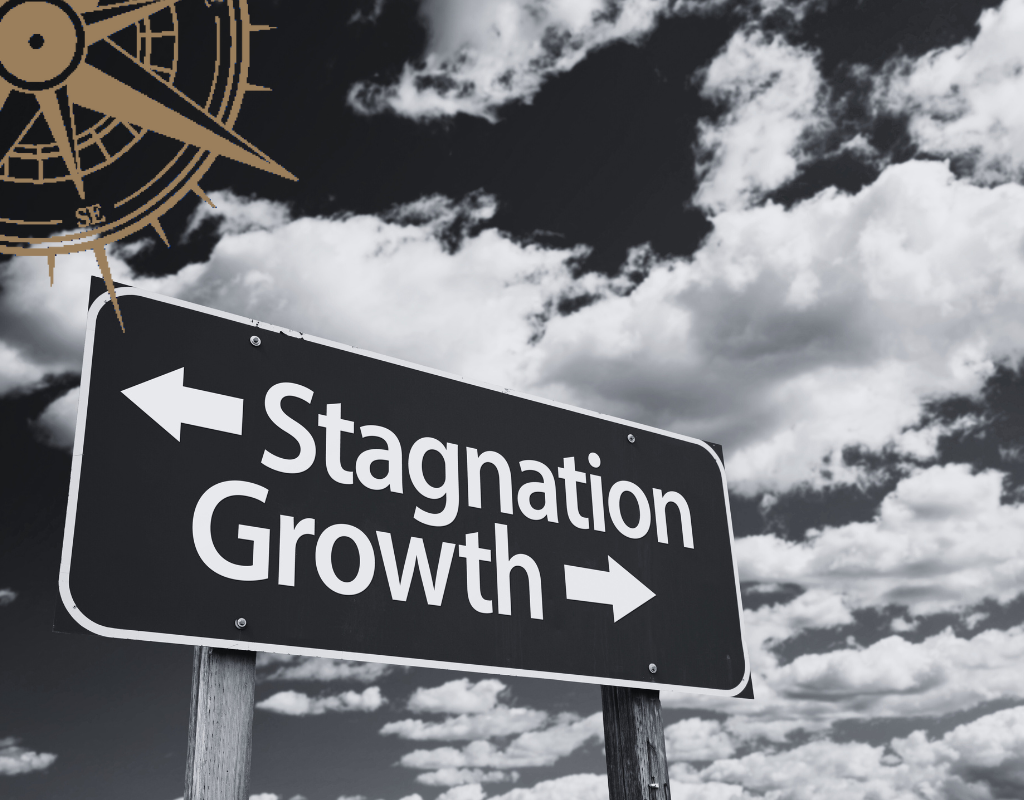
Stagnant growth is one of the most misunderstood phases in high-capacity leadership. Most leaders interpret it as failure. It is not. It is recalibration.
If you are building, leading, and stretching but something inside feels flat, this is worth sitting with. Not broken. Not failing. But stalled. And the gap between external momentum and internal experience can be confronting when you do not have a framework for what is happening.
What Stagnant Growth Looks Like From the InsideThe leadership plateau does not arrive with a crisis. It arrives with a quiet flatness. You are doing the work. And the results are still coming. But the internal signal has shifted. In fact, stagnant growth shows up when you stop asking the deeper questions. When the curiosity that once drove you forward goes quiet. When the energy of building gives way to the routine of maintaining. And the instinct is to push harder. Add more. Accelerate through the discomfort. But the plateau is not a speed problem. It is a signal.
Why the Growth Stall Is Not What You ThinkMost industry leaders try to fix a plateau by adding force. A new strategy. A new initiative. More output. But a growth stall does not respond to force. It responds to clarity. Because the flat phase is not a breakdown in your leadership. Instead, it is feedback that the operating system you have been running has reached its current ceiling. And the next level requires a different configuration, not more of the same one. Yet most leaders do not pause long enough to read the signal. Because pausing feels like confirmation that something has gone wrong. And for a leader whose identity is tied to forward motion, stillness during stagnant growth feels like a threat.
How to Read the PlateauSo the question is not how to push through the plateau. The question is what the plateau is telling you. In turn, stagnant growth is not a sign you are off track. It is the space between who you have been and who you are becoming. And the leaders who learn to read that space rather than fight it do not lose momentum. They gain the clarity that makes the next chapter possible.
You do not need more momentum. You need more clarity. Book a 15-minute Strategy Call and let’s find it.
To your brilliance, Tanya Cross Industry Leader Coach & The Coaches’ Coach BAppSoSc (Counselling) |
|
Success attachment is the trap that few industry leaders name out loud. It is not the fear of failure that keeps you stuck. It is the fear of losing the high.
If you have been fearing the next dip, not because you cannot handle a setback but because you have tasted success and now feel trapped by it, this is worth sitting with. You hit the goal. You landed the client. The team expanded. The result felt good. And now something in you is asking whether you can sustain it.
The Loop That Success Attachment CreatesThat fear of not repeating the win does not sit still. It sneaks in between the cracks. You tell yourself it is about failure, but if you go deeper, it is not failure itself that drives it. In fact, it is the infatuation with being on. With the performance. With the feeling of things going well. And that success infatuation tightens around your decision-making without you realising it. Then add in the memories of what did not work. The offer that did not land. The strategy that missed. The season that burned through your capacity. And now you are caught in a loop. Wanting the high. Fearing the low. This is where success attachment distorts how you see your business and how you see yourself.
Why the Fear of Falling Keeps You StuckThe loop is not about the external results. Instead, it is about the identity that has become fused with the feeling of success. When your sense of self is tied to being on an upward trajectory, any pause feels like a threat. But leadership does not operate in straight lines. There are seasons of expansion and seasons of consolidation. And the leaders who resist the consolidation because they are attached to the high end up making decisions from fear rather than clarity. Yet the fear of falling is not a signal that something has gone wrong. It is a signal that your identity has become dependent on the result rather than grounded in who you are independent of it.
From Attachment to EquilibriumSo the question is not whether you can sustain the high. The question is whether your leadership can hold steady when the high is not there. In turn, success attachment dissolves when you stop measuring your value by the last result and start leading from a centre that does not shift with the outcome.
If you are ready to stop running the loop and start leading from a steadier place, Book a 45-minute Strategy Call and let’s look at what is driving the attachment.
To your brilliance, Tanya Cross Industry Leader Coach & The Coaches’ Coach BAppSoSc (Counselling) |
|
Leading through uncertainty is one of the least discussed and most essential capabilities in high-capacity leadership. Because the moments that shape your next chapter do not arrive on a schedule.
If you have invested time, energy, and resources into your leadership and the return has not landed yet, this is worth sitting with. Most industry leaders expect the investment to produce clarity on demand. A session. A strategy. A framework. And when the shift does not arrive in the room, the instinct is to question whether the investment was worth it.
Why the Shift Does Not Arrive on DemandGrowth is not linear. And leading through uncertainty means accepting that the work you do now may not produce visible results for weeks or months. In fact, the insights that change the trajectory of a business often land in the least expected moments. Not in the boardroom. Not in the strategy session. In the space between, when the mind has room to process what was planted. But most leaders do not create that space. Because space feels like inaction. And for a nervous system wired to equate output with progress, non-linear growth feels like stagnation.
What Leading Through Uncertainty RequiresThe leaders who navigate this well do not become less driven. Instead, they develop a different relationship with timing. They stop demanding that the investment pay off in the moment it is made. And they start trusting that the work is landing, even when the evidence has not surfaced yet. Yet this is not passive. It is a form of leadership patience that requires more discipline than force. Because the instinct to push harder when clarity has not arrived is strong. And acting on that instinct often delays the very shift you are waiting for.
When the Shift LandsWhen you create space and the pressure to force clarity drops, something shifts. Decisions that felt heavy become clean. Perspectives that were tangled begin to separate. And the direction that felt uncertain starts to resolve. In turn, leading through uncertainty is not about tolerating ambiguity. It is about recognising that the work you have done is still in motion, even when you cannot see it yet. So the question is not whether the investment is working. It is whether you are creating the conditions for it to land.
If something in this resonated, book a 15-minute Strategy Call and let’s look at what is in motion that you have not yet seen.
To your brilliance, Tanya Cross Industry Leader Coach & The Coaches’ Coach BAppSoSc (Counselling) LinkedIn |
|
When you hit a wall in the middle of the work you love, the signal is not about effort. It is about alignment.
When I Hit a WallLast year, I hit a wall. After hours of back-to-back coaching sessions on Zoom, I felt it. Eyes dry, body locked, creativity flat. The work still mattered. But something in me had shifted. My nervous system was sending a signal I had been overriding. What once felt like flow now felt like fatigue. Coaching has been a kind of current for me. Alive, energising, clear. But suddenly, I could not feel it anymore. The current had dried up. I had hit a wall I could not push through.
My Body Woke Up. So Did My Business.I felt movement in my body and momentum in my thinking. Ideas landed. Conversations deepened. In fact, everything felt lighter. I felt like myself again. Not because I was doing less. But because I was doing it differently. Aligned with what my body and brain needed. That is what happens when you stop pushing past the wall and start listening to it.
A Sustainable Business Looks Different for EveryoneFor me, it was a walking phone call. For you, it might be a shorter workweek, longer breaks, more space in between meetings, or creative time blocked into your calendar. It does not need to be a dramatic overhaul. It only needs to be intentional. Because your business should not cost you your body. Your nervous system is not a resource to burn through. And the way you feel in your work matters as much as the work you are doing.
Build Around Your Life, Not Over ItAs founders, we are taught to structure the business first and figure life out around the edges. However, what if we flipped that? What if your business were built around how you want to feel, live, move, and show up? What if your systems served your wellbeing instead of your survival? What if your calendar supported your nervous system instead of pushing it to the edge?
Small Shifts Create Big AlignmentSometimes the most powerful changes are not loud. They do not come with a launch. Rather, they come with a walk, a pause, a boundary, or a question. What do I need to stay connected to myself while I build this? That is the foundation of a sustainable business. If you are holding space for others, make sure you are also holding space for you. Because this is not about how you work. It is about how you live.
If you have hit a wall and the work you love has started to cost your body, that is not a time problem. It is a design problem. Book a 45-minute Strategy Call and explore what shifts when you stop building over your life and start building around it.
Tanya Cross Industry Leader Coach & The Coaches’ Coach BAppSoSc (Counselling) |
|
Your energy is not a resource problem. It is an alignment signal, and most leaders do not recognise that until the flatness has already settled in. We would all like boundless energy, right?
But lately, you are not feeling it. You have exited the business. You thought this would feel better. But instead of relief, there is a strange flatness. You are free, yet you are tired. Disillusioned. Low on energy, and unsure why. Where did your drive go? There was no change in your diet, no long sleepless nights. There is no physical explanation for why you are so drained. But then, something sparks. You have an idea. A meaningful insight. A moment of clarity. And as a result, the energy returns. You feel alive again. Awake. People even tell you, “You look lighter.” Where did that come from?
The Truth About Your EnergyYou have a deep well of energy inside you. It does not come from caffeine, from sleep, or from ticking off to-dos. It comes from alignment. From being open. From staying connected to what is meaningful. When you are open, your energy flows freely. However, when you close down (emotionally guarded, mentally stuck) it blocks And that is what post-exit burnout often is: an energetic block. Not because you are broken. But because something deep inside has not yet resolved, still protecting, still holding on.
You Do Not Need to Push ThroughInstead, you need to open back up: gently, safely, wisely. There is a principle worth remembering: you are not bound to succeed. You are bound to live up to the light that is within you. That light is still there. Your energy. Your joy. Your enthusiasm for life. It is not gone. It is waiting for you to let it flow again.
What Opens When You Stop BlockingThe invitation is not to do more. Rather, it is to open to what you have been holding too tightly. To clear what you have not yet resolved, release the emotional charge, and restore your vitality from the inside out. Because this is not about doing more. It is about being more open: to joy, to energy, to what is next. Because you did not exit your business to feel stuck in your own life.
If the energy has flattened and you cannot explain why, the block is not physical. It is structural. Book a 45-minute Strategy Call and explore what opens when you stop pushing and start listening.
To your brilliance, Tanya Cross Industry Leader Coach & The Coaches’ Coach BAppSoSc (Counselling) |
|
People pleasing is one of the most invisible patterns in leadership, and for many founders it has been running the show far longer than they realise. It does not start with a crisis.
It starts with something small. A quiet “yes” when you meant no. A polite nod when your instincts said to push back. And before long, the pattern begins.
People Pleasing in a Founder’s WorldFor many founders, people pleasing is not loud or obvious. It weaves into the way they lead. It looks like being the one who makes things work. Who smooths over tension. Who takes on a little extra because it feels easier than saying no. And in the early days, it may have helped. It built trust. It kept relationships strong. But over time, it becomes something else. A quiet erosion of self. A slow disconnection from what you want, and what your leadership needs.
Where This Pattern BeginsThis tendency to over-give or over-accommodate is often not about weakness. It is about survival. It is a strategy we learned early, reading the room, softening what we meant, keeping others comfortable. And while that kept us safe back then, it keeps us stuck now. You find yourself taking on more than you want to carry, avoiding hard conversations because you do not want to disappoint, being known as the “easy one,” the “reliable one,” even when it is wearing you thin. Others praise it. They tell you that you are a great leader, a team player, someone who is calm and dependable. But underneath? There is often resentment. Frustration. A deep fatigue that no time off seems to solve.
When Your Leadership Needs BoundariesIn fact, your leadership does not need you to say yes to everything. It needs you to be aligned. To be clear. To be full, not depleted. The more you disconnect from what is true for you, the more your decisions and your energy become about managing others instead of leading forward. Reclaiming your voice in leadership starts with one shift: noticing when you are saying yes out of habit, instead of intention.
People Pleasing Is Not a FlawPeople pleasing is not a character flaw. It is a coping strategy. One that likely helped you succeed, until now. However, leadership, especially in the later chapters of building or exiting a business, asks for something deeper. It asks for congruence. It asks you to come back to your own values, your own energy, your own yes. And to say no, clearly and without guilt, when something no longer serves you.
Unlearning Takes PracticeThis next season is not about doing more. Rather, it is about doing what is yours to do. What is aligned. What restores you. What reflects who you are now, not who you had to be in order to succeed. If you have felt like your leadership has drifted away from your centre, this is your moment to return. Not with force. But with clarity. Life, and business, is about unlearning and relearning. And you get to lead in a way that feels like you.
If the pattern of people pleasing has been quietly running your leadership and you are ready to reclaim your centre, book a 15-minute Strategy Call and explore what shifts when you stop accommodating and start leading from alignment.
To your brilliance, Tanya Cross Industry Leader Coach & The Coaches’ Coach BAppSoSc (Counselling) |
|
Over-carrying as a founder often looks like dedication from the outside. From the inside, it is a pattern that slowly disconnects you from the leadership your business needs most.
For many founders, responsibility becomes more than a functional role. It becomes a core identity. And it is essential to recognise when a strong sense of care evolves into a relentless burden of over-carrying. It starts with a commitment to serving your team and community. However, over time, that responsibility can quietly shift from leading with clarity to leading from a place of constant internal pressure.
Where Over-Carrying BeginsI recently worked with a founder whose sense of responsibility stretched across every vertical of their life, from family dynamics to high-stakes business operations. They were the singular point of reliance. Consequently, underneath their capable exterior was a constant hum of psychological pressure. They feared that if they let go, the entire structure would collapse. This kind of over-functioning often stems from early patterns where being “easy to count on” earned stability. Therefore, it is worth identifying where these survival strategies are now holding you back. When responsibility becomes a measure of your worth, it creates a relentless cycle of fixing and managing. You carry more, but you also begin to disappear from your own strategic vision.
Reclaiming Space as a LeaderThis work is not about dropping your professional standards. Instead, it is about asking the questions that bring you back to centre: What is mine to hold, and what belongs to my team? Where am I over-functioning out of habit rather than necessity? Who am I when I lead from presence rather than pressure? Setting boundaries does not make you less capable. It makes you a centred leader who leads with trust instead of tension. By unhooking from what you no longer need to carry, you create the space required for the next phase of your leadership.
If over-carrying has become the pattern and the weight is no longer sustainable, that is not a capacity problem. It is an identity one. Book a 15-minute Strategy Call and explore what shifts when you stop holding everything and start leading from space.
To your brilliance, Tanya Cross Industry Leader Coach & The Coaches’ Coach BAppSoSc (Counselling) |
|
Holding back as a founder rarely looks like inaction. It looks like over-editing, second-guessing, and waiting for conditions that will never feel ready enough.
Let me ask you something, and I would love your clear answer: On a scale of 1 to 10, how satisfied are you with your business at this moment? It is a deceptively simple question. But the response often holds more than a number. It holds a story. A story of growth, and sometimes of hesitation. And if you are a founder reading this, I want you to know: I see the weight that comes with building something meaningful. I also see how easy it is to stall. Not because you do not care, but because you care so much that everything has to feel aligned before you move.
Why You Might Be Holding BackThere was a time when I found myself doing exactly that. Delaying launches because they were not “perfect.” Staying quiet out of fear of being misunderstood. Hiding behind over-editing, tweaking, and second-guessing. Waiting to invest until I felt more “ready.” And holding myself to impossible standards because success had to look a certain way. The business was there. But my belief in it, and in myself, had not caught up. And that is often where founders stall. Not in lack of skill or vision. But in the quiet tension between wanting more and fearing what it will ask of you. Feeling stuck at this level is not about competence. It is about identity.
When Perfectionism Becomes the PatternFounders are natural visionaries. We see what is possible. But that same gift can turn into pressure. Pressure to execute flawlessly, to scale quickly, to lead without fault. And so we delay. We overwork. We stay in motion but do not move forward. However, clarity comes from action, not the other way around. You do not need to feel confident before you show up. You build confidence by showing up. What Shifted When I Stopped Holding BackIt was not a funnel. Or a big launch. Or a rebrand. It was the decision to treat my work like it mattered. To act as though I believed in myself, even before I fully did. To choose movement over perfection. And it changed everything. Because when you lead from belief, you become magnetic. You stop performing and start building something sustainable, something grounded, something aligned. The holding back dissolves when belief takes its place.
Your Business Is Not a Hobby. It Is a Reflection of You.
And not financially alone. But in how it gives you back your time, your energy, your freedom. Making your own schedule. Saying yes to rest, to presence, to joy. Creating from a place of integrity, not pressure. Spending time with people you love because you have built the space to. That is the reward of alignment. It is what becomes possible when you stop holding back. Not the income alone. But the inner space to live the way you have always wanted to.
What Is Your Number?Where are you feeling stretched? Where are you still waiting for things to be “ready”? What would happen if you took the next step before everything was lined up? This is not about pushing. It is about choosing. The life and business you want are not built all at once. They are shaped moment by moment, choice by choice.
If you have been holding back and you know the next step is waiting for you to take it, book a 15-minute Strategy Call and explore what shifts when you stop waiting and start leading from belief.
To your brilliance, Tanya Cross Industry Leader Coach & The Coaches’ Coach BAppSoSc (Counselling) |
|
Boundaries are one of the most undervalued tools in a founder’s leadership, and one of the most urgently needed when the pace has outrun the person.
We are coming up to the end of the year. And perhaps you are feeling it. The pull to pause. The longing to exhale. The need to step back from the weight of decisions, expectations, and everyone else’s urgency. But here is what tends to happen. A client wants something last minute. A team member needs you. There is one more deal to close. One more fire to put out. And because you care deeply, you say yes. Again. But because you can carry it does not mean you should.
Your Leadership Does Not Have to Come at the Cost of YourselfAs founders, we often confuse being available with being effective. We equate service with self-sacrifice. We think boundaries are for when things are calmer, when we have earned the space to rest. However, if you do not define your boundaries, your business will define them for you. And the more successful you become, the more people will need from you. Being needed is not the issue. But if you do not set the edges, it becomes too easy to overextend, and too hard to find yourself inside your own life.
Where Do Your Boundaries Need to Be?Boundaries are not walls. They are the agreements you make with yourself about what protects your energy, your values, and your vision. They look like being clear about when you are on and when you are not. Saying no to requests that do not honour your capacity. Protecting your calendar without guilt. Letting your team or clients know in advance when you are offline. And trusting that the business can breathe without your constant presence. Boundaries are not a sign of stepping back. They are a mark of leadership.
Boundaries Are Not About Checking OutThis is not about withdrawing. It is about checking in with yourself. It is asking: what do I need to recover, reflect, and return clear? What agreements do I want to make with my time and energy this season? Where am I saying yes to keep the peace, even when I am quietly running on empty? When you honour your needs, you show others how to do the same. When you rest, you lead from fullness, not fumes. And when that “urgent” call comes on December 28th, you will know what to say.
Clarity Creates ConfidenceSo here is what I want you to know. It is okay to take a break. It is okay to set limits. It is okay to let people know ahead of time. And it is more than okay to not explain yourself when the time comes. Your business does not thrive because you are constantly available. It thrives because you are aligned. Boundaries make that possible. Not someday. Now.
If your boundaries have been slipping and the cost is starting to show, book a 15-minute Strategy Call and explore what shifts when you start protecting your energy with the same commitment you give to everything else.
To your brilliance, Tanya Cross Industry Leader Coach & The Coaches’ Coach BAppSoSc (Counselling) |
|
Pain is a powerful motivator, but building a leadership practice around it comes at a cost most founders do not see until they are already paying it.
Let me ask you something: are you tired of needing a problem to finally get moving? It is a pattern I know well. And if you are a founder who has built your business by pushing through crisis, chances are, you know it too. The moment something breaks down, the money dips, the relationship strains, the system falters, that is when you take action. You rise. You rebuild. You solve. And sure, it works. Until it does not.
Pain Is Not the Only Way to GrowThere was a time I believed I had to be in the thick of the fire to lead. As though my story would not be valid unless it came with scars. Financial pressure. Family breakdowns. Health crises. I used to think these were necessary parts of the journey, the fuel I needed to show up. And in some ways, they did shape me. But at some point, I had to ask: am I growing because I want to, or only when I have to? Do I know how to expand from vision, not from survival? Because waiting for pain to push you is a high-cost strategy.
From Reactive Growth to Vision-Driven LeadershipMost founders are conditioned to move through stress. It is why we are effective in a crisis. But staying in that reactive mode, constantly solving, fixing, pushing, eventually wears you out. It creates an internal culture where nothing shifts unless it breaks. Where you associate progress with pressure. And growth becomes a response to discomfort, not a commitment to purpose. However, there is another way. A quieter, more powerful way. One that does not wait for pain to call the shots.
What If Growth Did Not Come From Suffering?Expansion does not need a disaster to justify it. You can launch because you desire to, not because you are desperate. Delegate because you value your energy, not because you are drowning. Evolve because it is time, not because something fell apart. This is not about bypassing pain. It is about not needing it to be your only driver. Growth through purpose lasts longer. It feels aligned. And it keeps you in the seat of your own leadership.
The Shift From Pain to PurposePain will move you, no question. It is the wake-up call that forces us to act. But if you only grow through crisis, life will keep serving you one. What if instead, you learned to create from alignment? That is what self-concordant growth looks like. Where your goals reflect who you are. Where action comes from clarity, not chaos. Where the reason behind your work is larger than solving a problem.
You Do Not Have to Earn the Next Level Through StruggleThe founder you are becoming does not need breakdowns to break through. They need a clear relationship with what they value. A vision larger than whatever fire is burning. And the courage to grow without a push from pain. You can evolve without falling apart first. You can create without crisis. You can lead without burning out.
What Are You Acting From?At this moment, am I acting from vision or reacting to pain? And if it is the latter, what would it look like to shift? You do not have to throw out the past. You have built strength through fire. But your next level may not require flames. It may require presence, clarity, and the willingness to choose growth without needing permission from pain. You are allowed to move forward even when everything is fine. That is what visionaries do.
If pain has been the pattern and you are ready to lead from something deeper, book a 15-minute Strategy Call and explore what growth looks like when it starts from vision instead of crisis.
To your brilliance, Tanya Cross Industry Leader Coach & The Coaches’ Coach BAppSoSc (Counselling) |
|
The paradox of leadership is that the qualities expected of you on the outside are often the very things you are still working through on the inside.
As a founder, you are often expected to lead with strength, clarity, and vision. To hold it together. To have it together. Whether you are building a team, guiding clients, or shaping a brand, the pressure to embody what you teach is undeniable. It is like the personal trainer with a toned body or the interior designer with a flawless home. The assumption is that your life should reflect your work. But what if it does not? What if, behind the scenes, you are navigating doubt, fatigue, or your own growth edge? This is the vulnerability paradox. You are leading others toward alignment, while wondering if you are allowed to show up in your own unfinished work.
The Mask of Perfection Is a Heavy OneIn leadership, there is often an unspoken belief that strength means control. That confidence means certainty. That you are supposed to be the one who knows, the one who holds space, the one who does not flinch. However, hiding where you are creates more tension. It separates you from the very thing that makes your leadership powerful: your humanity. The pressure to be perfect can become a quiet prison. One that disconnects you from support, keeps you isolated, and erodes the integrity of your voice.
Your Humanity Is Not a LiabilityVulnerability is not a lack of competence. It is the path back to connection. In my own life, I remember the exact moment the mask cracked. It was confronting. And also freeing. I recognised that the fear of being seen was keeping me from being known. And that my impact did not require perfection. It required presence.
The Paradox of Openness and TrustYou do not need to spill everything. You do not need to perform your struggle. But you also do not need to hide. Your people can feel the difference between curated leadership and embodied leadership. When you allow space for your vulnerability, you create space for theirs too. That is where trust lives. Not in having it all figured out, but in being open about what you are still working through.
Leadership Can Be Lonely Without Safe SpacesMany founders find themselves in this in-between space. You are holding others, but not sure who is holding you. Your team looks to you. Your clients look to you. Your community looks to you. And it can leave you wondering where you get to lay it down. This is why having your own container matters. Whether it is peer mentorship, supervision, or a coach who sees you as you are. Spaces where you are not the leader, but the human. Not the one solving, but the one processing.
You Do Not Have to Choose Between Power and VulnerabilityBoth can live in you. At the same time. You can be confident and confused. Solid and shifting. Held and still learning to hold yourself. The idea that you must hide your humanness to lead well is a pattern, not a truth. In fact, it is your humanness that makes your leadership matter.
The Paradox That Sets You FreeHere is what I know. The more you embrace your vulnerability, the more you step into your potential. Not because everything becomes easy. But because nothing is hidden. You stop wasting energy trying to hold a version of you that is not needed. You let people see who you are. And that is where trust, clarity, and expansion begin. You are not alone in this. And you were not meant to carry it all without being seen.
If this paradox has been sitting with you and you are ready to stop carrying it alone, book a 15-minute Strategy Call and explore what shifts when you lead from presence instead of performance.
To your brilliance, Tanya Cross Industry Leader Coach & The Coaches’ Coach BAppSoSc (Counselling) |
|
The courage to see others as they are, rather than as a reflection of yourself, is one of the most underrated shifts in leadership. One of my favourite observations in the work I do with leaders is this: you do not see the world as it is, but as you are.
This speaks to the deeply subjective nature of perception. Everyone interprets the world through their own lens, shaped by their experiences, values, and beliefs. This got me reflecting. In relationships, this dynamic becomes even more pronounced: we tend to see others not as they are but as reflections of ourselves. We unconsciously project our own perspectives, values, and expectations onto others. This happens because we assume that what we appreciate, value, and find meaningful must also resonate with them in the same way.
The Projection We Do Not SeeBut here is the challenge: no one is a perfect mirror of us. Each individual carries their own set of experiences, values, and ways of navigating life. Even when we find common ground, expecting others to align perfectly with our worldview creates friction. Misalignment is almost inevitable when we assume that others should think, act, and care as we do. It takes courage to question that assumption. Yet, so many people fall into this pattern: The business owner who expects their team to work as tirelessly as they do. The manager who assumes everyone is motivated by the same incentives. The parent who expects their children to embrace the same values they grew up with. The friend who assumes that giving advice is the best way to show care.
Where This Shows Up in RelationshipsThis tendency becomes particularly noticeable in emotional relationships. If we value certain expressions of affection or communication, we might expect others to do the same, assuming that our way of expressing love should naturally resonate with them. However, relationships are nuanced, and people express intimacy in ways shaped by their unique life experiences. No one thinks or feels exactly the same as we do. Yet, we often wish they would. That wish is a perception issue, not a connection one. We project assumptions onto them, expecting them to meet our unspoken expectations. This creates a gap between what we hope for and what is present. And it is in that gap that discord impacts our interactions. Closing that gap requires a different kind of courage.
The Courage to See Others as They Are“You do not see the world as it is, but as you are.” This is the paradox of the work. The world, and especially the people in it, reflects back parts of ourselves. When we embrace this, we begin to see relationships differently. Not as mirrors that should perfectly reflect us, but as opportunities to understand and appreciate the beauty in our differences. This does not apply to every situation in every moment. Sometimes, it is not about making others align with who we are. It is about understanding them as they are. That is where the courage lives. Not in holding your ground, but in being willing to see through a lens that is not your own.
If this pattern of projection has been running your relationships or your leadership and you are ready to see it differently, book a 15-minute Strategy Call and explore what shifts when you lead with the courage to see others as they are.
To your brilliance, Tanya Cross Industry Leader Coach & The Coaches’ Coach BAppSoSc (Counselling) |